
The secret of the world is this:
the world is entirely circular and you will go round and round endlessly, never finding what you want,
unless you have found what you really want inside you.
Jeanette Winterson
photo uri baruchin
The secret of the world is this:
the world is entirely circular and you will go round and round endlessly, never finding what you want,
unless you have found what you really want inside you.
Jeanette Winterson
photo uri baruchin
 Life is either a daring adventure, or nothing.
To keep our faces toward change and behave like free spirits in the presence of fate is strength undefeatable.
Helen Keller
In a general sense we seem to prefer things to remain the same and dislike too much uncertainty (except maybe when the normal dull Irish Summer has been replaced by warm sunny days). Change unsettles and can prompt an almost instant movement towards turning away or tightening up. So it is a challenge to “keep our faces towards change” – as Helen Keller says- by going against our instinct for once and staying with something that our fears tell us to avoid. When we consistently buy into our fears and strengthen fearful thoughts, we can forget some of the larger truths of life, or lose sight of our essential confidence and strength. An avoidance mentality leads us to expect trouble and weakens our ability to live with how the present moment is unfolding.
One of the fundamental truths of existence is that life changes, and changes in ways that we cannot expect. So developing this capacity to turn towards change is a necessary skill for working with life. It is probably best to practice it in smaller matters, so that it is somewhat developed when the bigger changes happen. So it is good to sometimes look at some small things we avoid and see what we can learn from them. We could practice with something like some paperwork we have been putting off, a contact we have been delaying, or staying in the presence of someone who disturbs us instead of running away. In this way we can be curious about what happens when we move towards something rather than moving away.
photo of dawn at Dunmore East Co. Waterford, Ireland

I’m just sick of ego, ego, ego. My own and everybody else’s. I’m sick of everybody that wants to get somewhere, do something distinguished and all, be somebody interesting. I’m sick of it. I’m sick of not having the courage to be an absolute nobody. I’m sick of myself and everybody else that wants to make some kind of a splash.
J.D. Salinger, Franny and Zooey
photo Júlio Reis

On Monday I had a good experience of the fact that sometimes things do not turn out exactly as I imagined or maybe hoped for. I am in the middle of a house relocation and one part of the schedule did not slot into place knocking other dependent elements into a waiting pattern.
I noticed that this produced two effects in the mind. The first – a very familiar occurrence – is to create doubt, and an immediate subtle tendency to blame myself arises. Not good enough. Should have foreseen that. Should have checked. Should not have been so naive. It is noticeable that when some thing goes wrong we quickly move to think that we are wrong. In those moments, if we look closely, we can feel separate and alone. A gut sense of us as deficient can come into play. Stories – about ourselves and about how our lives are going – are always arising in our minds and we can mistake them for reality. Practice helps us to see this as a process rather than holding onto the content and to turn our attention to how do we want to work with it. In other words space enters in.
Another thing I noticed is the habit of turning our plans into some sort of determined goal, and losing our focus on the path which is always fluid and ongoing. In other words, we already have a fixed outcome in our mind and failing to achieve that creates dissatisfaction. Our sense of things being right is attached to the future turning out in a particular way, which may or may not happen. This means that we do not find it as easy to respond to what actually happens, and to stay in the present moment. Our practice is to find happiness in what is actually happening and not attaching it to what we thought should have happened, and then going on to blame ourselves, others or events.
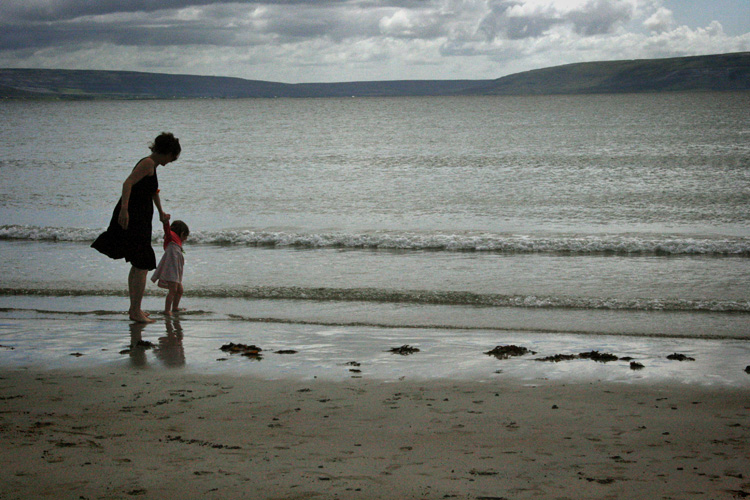
One doesn’t discover new lands without consenting to lose sight of the shore
for a very long time.
Andre Gide
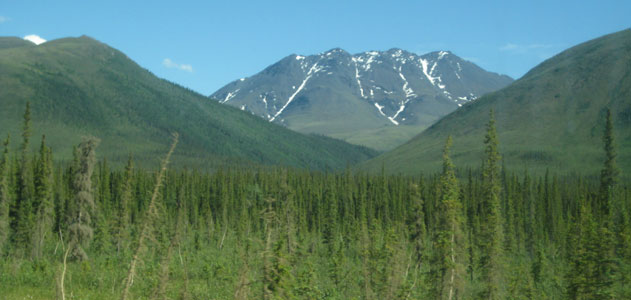
Sitting quietly, just breathing in and out, we develop strength, concentration and clarity.
So sit like a mountain.
No wind can blow the mountain down
Thich Nhat Hanh
 Mindfulbalance