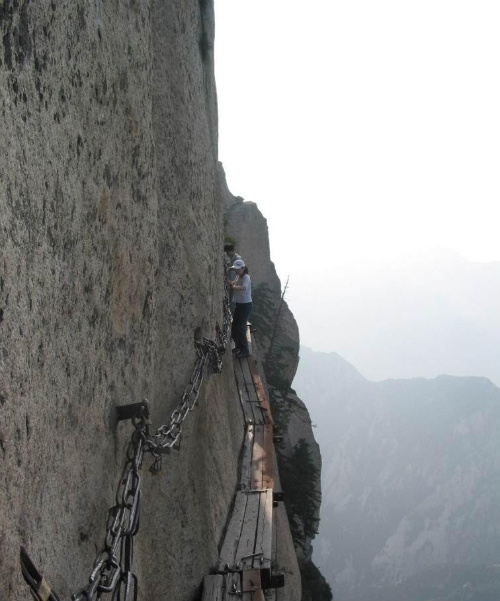
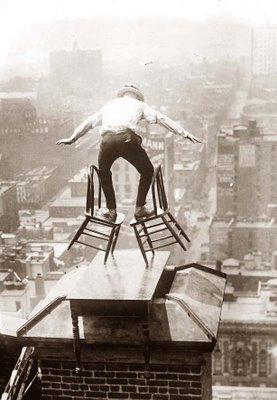
…and taking the first step.

Start with the ground you know,
the pale ground beneath your feet,
your own way of starting
the conversation.

Start with your own question,
give up on other people’s questions,
don’t let them
smother something simple.

To find another’s voice,
follow your own voice,
wait until that voice
becomes a  private ear
listening to another.

Start right now,  take a small step
you can call your own
don’t follow
someone else’s heroics, be humble
and focused,
start close in, don’t mistake
that other
for your own.

Start close in,
don’t take the second step
or the third,
start with the first thing
close in, the step
you don’t want to take.

David Whyte, Start Close in

Sunday Quote: Letting go of our stories…

[Penguin]

When we become fixed in our perceptions,

we lose our ability to fly

Yongey Mingpur Rinpoche

The not knowing which is somehow right

Most western therapies are based on theories of personality; they are geared toward knowing, rather than not-knowing. An unspoken assumption in the therapeutic world is that we should always know who we are, and if we don’t that a real problem. So when an old maladaptive identity starts to break down, this may be frightening for client and therapist alike…. At times like this I rely on my own realization that none of us really knows who we are, that this is the nature of our being, that if we have a true self at all, it somehow lies in the heart of the unknowingness that opens up when we inquire deeply into our existence, and that we can hang out on the edge of this unknown, we may discover how to let ourselves be, without having to be something.

John Welwood, Toward a Psychology of Awakening

Always learning

Our life is an apprenticeship to the truth, that around every circle another can be drawn;
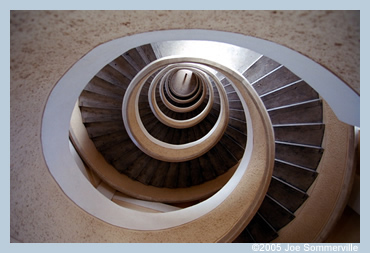
that there is no end in nature, but every end is a beginning; 

that there is always another dawn risen on mid-noon, and under every deep a lower deep opens.

Ralph Waldo Emerson,  Circles

Not having a fixed idea of progress

The individuation process, as the way of development and maturation of the psyche, does not follow a straight line, nor does it always lead onwards and upwards. The course it follows is rather “stadial”, consisting of progress and regress, flux and stagnation in alternating sequence. Only when we glance back over a long stretch of the way can we notice the development. If we wish to mark out the way somehow or other, it can equally well be considered a “spiral”, the same problems and motifs occurring again and again on different levels.

It is always a matter of something obsolete that must be left behind to die in order that the new may be born.

Jolande Jacobi, Jungian psychologist

A way to restore balance

To live well, we need to be able to see what’s happening, in us and around us. We also need to know how not to get impulsively drawn into unskillful, reactive patterns of behavior that don’t serve us or those around us well. Mindfulness offers us a way of paying attention to what’s actually going on, to know what’s happening at an experiential level. And that is something that we tend not to train ourselves in these days — instead our education system, our workplaces, our media, our governments, all tend to train us in creating and valuing concepts or products — we get stuck at a head level and a doing level, driven by thinking and activity. There’s nothing wrong with ideas or products, but there’s an imbalance in our culture whereby a more intuitive knowledge is ignored, or just not cultivated, and it is this kind of intuitive awareness that mindfulness practice can help us to unlock. So mindfulness could be a way for us to restore balance — to help us recalibrate in a way that enables us to connect with our deepest, most heartfelt values and to act in accordance with them more often. That in turn, could lead to us living happier, healthier lives in a happier, healthier world.

Ed Haliwell, author of The Mindfulness Manifesteto, Interview in Tricycle Magazine