In tune with our deepest nature, not what is expected

If you live the life you love, you will receive shelter and blessings.  Sometimes the great famine of blessings in and around us derives from the fact that we are not living the life we love; rather, we are living the life that is expected of us.  We have fallen out of rhythm with the secret signature and light of our own nature.

John O Donohue

The slow rhythms of nature


Everything that slows us down
and forces patience,
everything that sets us back
into the slow circles of nature,
is a help.

May Sarton

Sunday Quote: Questions and answers

There are years that ask questions and years that answer

Zora Neale Hurston, Their Eyes were Watching God

Naming what is dormant

Fall is when nature plants her seeds. And yet, the seeds of possibility planted with such hopefulness in the fall must eventually endure winter, a season when the potentials planted at our birth appear to be dead and gone. As we look out upon the winter landscape of our lives, it seems clear that whatever was planted is now frozen over, winter-killed, buried deep in the snow. Far too many teachers, physicians, and other professionals find the winter metaphor an all-too-apt description of the inner landscape of their lives.

But as we come to understand winter in the natural world, we learn that what we see out there is not death so much as dormancy. Some things have died, of course, but much that is alive goes underground in winter to await a season of renewal and rebirth. So winter gives us a chance to name, metaphorically, whatever may feel dead in us, to wonder whether it might be not dead but dormant — and to ask what we can do to help it, and ourselves, to “winter through” until spring. As adults, we like to think of ourselves as fulfilled, not partially dormant. When we drop that pretense and acknowledge how much remains unfulfilled in us, good things can happen, and not for us alone.

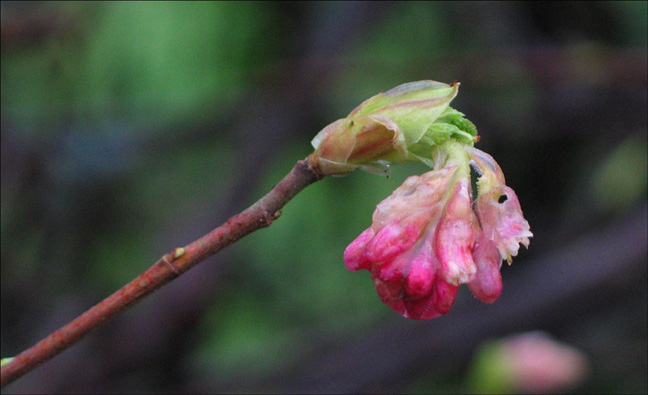
Spring is the season of surprise. Now we realize that, despite our winter doubts, darkness yields to light, and death makes way for new life. So one metaphor for this season is “the flowering of paradox”. As winter’s darkness and death give rise to their apparent opposites, spring invites us to contemplate the many both-ands we must hold to live life fully and well: the deeper our faith, the more doubt we must endure; the deeper our hope, the more prone we are to despair; the deeper our love, the more grief we are likely to know. Spring reminds us that, as creatures of the natural world, we know how to embrace paradox as instinctively as we know how to breathe both in and out. Our challenge is to stop using our minds to divide everything into forced choices, into either-ors. 

Parker Palmer, Teaching with Heart and Soul

Seeing that change is just part of life

Just as there are seasons in the world around us, so there are in our interior life.     Teresa of Avila

We can learn a lot around the change of the seasons, as in these days when Winter gives way to Spring. Not just the ongoing lesson about change and impermanence but from the fact that there is a parallel between our interior rhythm and the movement of the seasons. Winter is a time for conserving energy and reducing activity, whereas,  in some Eastern Wisdom traditions,  Spring is seen as having an energy which is expansive and outward moving. It is a time of new beginnings and potentially a renewal of spirit. And all around us we begin to see this, as there is a delicate but still fragile sense of renewal and new life. We see seeds beginning to sprout, flowers bloom, and the sun gently warming the earth. And we begin to see that despite the darkness and cold much has been going on unseen and underground for months. However, we also see the harm which the severe cold has done to some of the plants, who need cutting back or digging up. We too start again, making room for change, moving towards a sense of lightness, letting go of unhelpful habits of mind which hold us back or no longer give life.

There are seasons in your life in the same way as there are seasons in nature. There are times to cultivate and create, when you nurture your world and give birth to new ideas and ventures. There are times of flourishing and abundance, when life feels in full bloom, energized and expanding. And there are times of fruition, when things come to an end. They have reached their climax and must be harvested before they fade. And finally, of course, there are times of cold and cutting and empty, times when the spring of new beginnings seems like a distant dream.

These rhythms in life are natural events. They weave into one another as day follows night, bringing, not messages of hope and fear, but messages of how things are. If you realize that each phase of your life is a natural occurrence, then you need not be swayed, pushed up and down by the changes in circumstance and mood that life brings.

Chogyam Trungpa Rinpoche, How to Rule

Inner and outer life on the first day of Spring

This morning two birds
fell down the side of the maple tree

like a tuft of fire, a wheel of fire
a love knot out of control as they plunged through the air
pressed against each other
and I thought

how I meant to live a quiet life
how I meant to live a life of mildness and meditation
tapping the careful words against each other

and I thought—
as though I were suddenly spinning, like a bar of silver
as though I had shaken my arms and lo! they were wings—

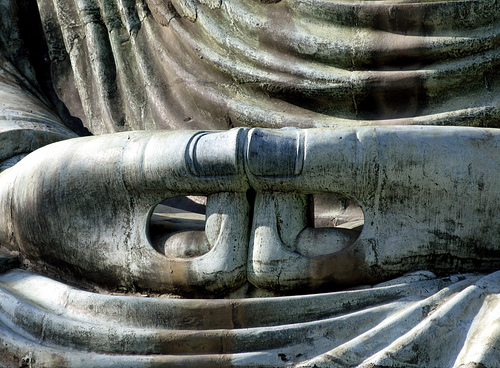
of the Buddha
when he rose from his green garden
when he rose in his powerful ivory body

when he turned to the long dusty road without end
when he covered his hair with ribbons and the petals of flowers
when he opened his hands to the world.

Mary Oliver, Spring