The return of Spring

I do not live happily or comfortably
with the cleverness of our times.
The talk is all about computers,
the news is all about bombs and blood.
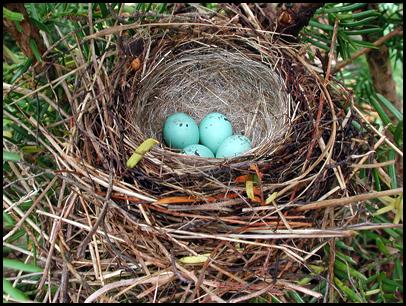
This morning, in the fresh field,
I came upon a hidden nest.
It held four warm, speckled eggs.
I touched them.
Then went away softly,
having felt something more wonderful
than all the electricity of New York City.

Mary Oliver, With thanks to the Field Sparrow, whose voice is so delicate and humble


Finding joy in what we are doing…

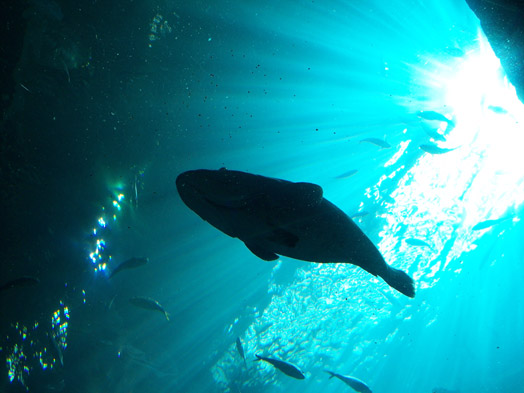
A fish cannot drown in water. A bird does not fall in air. Each creature God made must live in its own true nature. Mechthild of Magdeburg
Part of the blessing and challenge of being human is that we must discover our own true God-given nature. This is not some noble, abstract quest but an inner necessity. For only by living in our own element can we thrive without anxiety. And since human beings are the only life form that can drown and still go to work, the only species that can fall from the sky and still fold laundry, it is imperative that we find that vital element that brings us alive… the true vitality that waits beneath all occupations for us to tap into, if we can discover what we love. If you feel energy and excitement and a sense that life is happening for the first time, you are probably near your God-given nature. Joy in what we do is not an added feature; it is a sign of deep health.

Mark Nepo, The Book of Awakening

Protection schemes

It’s important to recognize that all the emotional and psychological wounding we carry with us from the past is relational in nature: It has to do with not feeling fully loved. And it happened in our earliest relationships — with our caretakers — when our brain and body were totally soft and impressionable. As a result, the ego’s relational patterns have largely developed as protection schemes to insulate us from the vulnerable openness that love entails. In relationship the ego acts as a survival mechanism for getting needs met while fending off the threat of being hurt, manipulated, controlled, rejected, or abandoned in ways we were as a child. This is normal and totally understandable. Yet if it’s the main tenor of a relationship, it keeps us locked into complex strategies of defensiveness and control that undermine the possibility of deeper connection. Thus to gain greater access to the gold of our nature in relationship, a certain alchemy is required: the refining of our conditioned defensive patterns.

John Welwood, Intimate Relationship as a Spiritual Crucible 

Not depending on something else to make us happy

In Tibet they have a saying, “The joy of a king is no greater than the joy of a beggar”.  It isn’t what we possess — it’s what we enjoy. This means the experience of genuine cheerfulness cannot be bought or sold. What makes it genuinely cheerful is that we are free from fixation and attachment. We are free of having to depend on something else to make us happy. We can bask freely in the natural radiance of our mind. This is the equanimity of true cheerfulness — nothing more, nothing less.

Sakyong Mipham Rinpoche, The Power of Being Cheerful

Running after our life

When I let go of what I am, I become what I might be.  Lao Tzu

At some point, our life can become machine like. We find ourselves running on automatic pilot, without any clear sense of purpose – our momentum fuelled by a chronic sense of need, a vague feeling that something is missing on our life. Nothing is enough to relieve the pressure that we feel. So we keep on with our superhuman efforts to design a life that looks like the happiness we imagine. But when it depends on material things or external valuations, happiness has a history of being short-lived.

Dzogchen Ponlop Rinpoche, Erring and Erring, we walk the Unerring Path

What holds us back

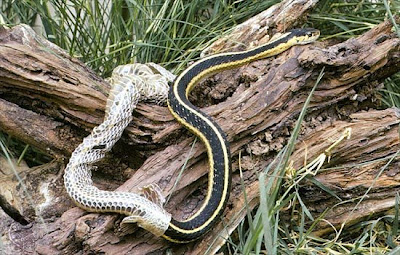
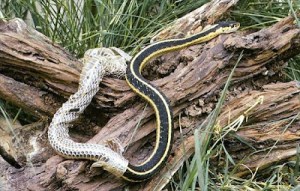
Just as a snake sheds its skin, so we should shed our past, over and over again.  The Buddha

Today is Ash Wednesday, traditionally the start of Lent – the season of preparation for Easter  The word “Lent” comes from the Anglo-Saxon word “lencten”,  referring to the lengthening of days in the Spring, thus placing the period in the context of growth and life. Lent became a time of reflection on freedom, seeing what the priorities in our life are and what needs to be let go of. As in other wisdom traditions,  it offers us a moment to enlarge our sense of things and go against the ways in which an unreflected life actually shrinks our heart. It reminds us to examine what is not essential, including the stories and habits which we have adopted over the years and which we come to see as fundamental to who we are.  It is an intensification of an insight that we see in our daily practice, namely,  that all things arise and pass away,  all things are impermanent.  So today, just as we begin to see Nature changing in the signs of Spring and new life, we try to internalize the understanding that we too are continually changing. This may mean that we need to let go of some elements of the past – which anyway is not happening any more except in the mind – in order for us to engage more fully with life in the present, in this moment.  It could be that we shed some aspects of what we hold as our solid self, and rather see  that we are more like a succession of selves.  Happiness in life comes not from holding onto the past but by living in the present with appreciation.

Detachment resembles the shedding of a number of coats of skin, until our senses are sharpened, or until “our inner vision becomes keen”. When we learn what to let go of, we also learn what is worth holding on to. Think of it in this way: it is simply not possible to share something precious or even to hold a lover’s hand, when we keep our fists clenched, holding tightly onto something. Detachment is not the inability to focus on things, material or other. It is the capacity to focus on all things, material and other, without attachment. It is primarily something spiritual; it is an attitude of life. And in this respect, detachment is ongoing, requiring continual refinement.

John Chryssavgis, In the Heart of the Desert