A love that does not have conditions

We can develop a love that is steadfast and universal. We develop it not because we force ourselves to love so fully. Rather, we discover that loving unconditionally is the greatest source of joy, and that we are the loser for any hesitation or interruption in that love, such as “I would really love you if you would just do your share of the cooking, if you would just do this, if you would be like that.”

Whenever we hesitate like that, we lose. This helps me remember not to mortgage away any of my days by having a grudge or a grievance or making myself distant. That would simply cause a rupture in that steadfast, universal love that is so joyful.

Sylvia Boorstein

The most common regret at the end of life

Over the past weeks I have been facilitating a support group for the volunteers who work in the Maison de Tara Hospice in Geneva, and I listen with them to the different conversations brought up by being close to people at the end of life. Because of this,  I was interested to read about the most common regrets which people have as they are dying. Australian Bronnie Ware began recording people’s last thoughts and now has written them down in a book called The Top Five Regrets of the Dying,  published last August. In it she says that she noted common themes emerging in the discussions she had with those who were dying and she lists the top five of these.

The most common regret which she found was “I wish I’d had the courage to live a life true to myself, not the life others expected of me”. This is not a surprise for me. One of the most important questions we can ask is  “Whose life am I actually living?”, thus ensuring as we go along that we are deepening our own sense of purpose.  However, what we can find is that we are actually stuck in a series of adaptations to others which may have made sense once, but which have outlived their survival value. In Winnicott’s description of child development,  if the parent is not present to the right degree for the child – maybe due to anxieties,  stresses or challenging moments in their own life –  the infant can lose touch with his or her  own needs and take on  the needs  of the parent or tune in excessively to the environment. In other words, we form  a “false self,” which is shaped in response to the demands and expectations of others,  which become for our young psyche more urgent and demanding of attention than our own needs, our “true self.”

As we move into adult life we can still have these internalized demands of other people, and shape our life,  our work, or even the relationship we choose  in response to them. For example, if the dominant concern or worry of the parents’ life centred around security, financial or otherwise, it is possible that the person’s adult life is somewhat guarded, seeking an elusive guaranteed safety. Initially this false self personality may be successful, as it finds energy to build up a career and a lifestyle that fulfills the inner demands. However, these ultimately fail to satisfy because we have become caretakers of another person’s development and  needs rather than truly following our own path. It is for this reason that many people wake up with a sense of emptiness and  loss and are led to question what they are missing. Their lives and lifestyle are not supporting their inner life. They have not set aside the necessary space to listen to their own deepest self, and a modern lifestyle does not support this reflection, with its emphasis on speed and external achievement. Thus a person can arrive at the end of life realizing that  they have not  “honoured even a half of their dreams, as Ms Ware recorded, or spent part of their time living another persons life. Their lives will remain uneasy, leading to an ongoing lack of satisfaction or to distractions in the way of over-activity, or addictions to drinking, television the internet or relationships. Engaging with the deeper questions – setting aside space and time to reflect on our own deepest needs – is central to  arriving at the end of a life without regrets, in order to establish a more courageous relationship first and foremost with ourselves.

To ask every day “What matters in the end” is to create the possibility of a differentiated choice, the potential to overthrow the tyranny of our history, so as to honor something that has been always there, waiting for our courage. If we limit our aspirations to good health or making money, then we might as well, in Jung’s words, “quietly shut up shop”. …If we make the effort to become conscious of our fragmented nature, we need not blindly act it out. We may thereby also be empowered to decide as grown ups, what , in the end, really matters to our soul

James Hollis, On this Journey We Call our Life

Making space for new words

Fare forward, travellers! Not escaping from the past Into indifferent lives, or into any future; You are not the same people who left that station Or who will arrive at any terminus.  T.S. Eliot, The Dry Savages

The Latin word “limen” means “threshold” . Liminality is an inner state ands sometimes an outer situation where people can begin to think and act in genuinely new ways. It is when we are betwixt and between, have left one room but not yet entered the next room, any hiatus between stages of life, stages of faith, jobs, loves or relationships. It is that graced time when we are not certain or in control, when something genuinely new can happen. We are empty, receptive, an erased tablet waiting for new words. Nothing fresh or creative will normally happen when we are inside our  self-constructed comfort zones,  only more of the same. Nothing original emerges from business as usual. It seems we need some anti-structure to give direction, depth and purpose to our regular structure. Otherwise, structure, which is needed in the first half of life, tends to become a prison as we grow older. Much of the work of …human destiny itself is to get people into liminal space and to keep them there long enough to learn something essential and genuinely new. It is the ultimate teaching space. In some sense it is the only teaching space.

Richard Rohr, Adam’s Return

Sunday Quote: Identity


Your identity is not equivalent to your biography

John O Donohue, The Inner Landscape of Beauty

Being patient and starting over

I was thinking about the GPS in my car. It never gets annoyed at me. If I make a mistake, it says, “Recalculating.” And then it tells me to make the soonest left turn and go back. I thought to myself, you know, I should write a book and call it “Recalculating” because I think that that’s what we’re doing all the time. If something happens, it challenges us and the challenge is, OK, so do you want to get mad now? You could get mad, you could go home, you could make some phone calls, you could tell a few people you can’t believe what this person said or that person said. Indignation is tremendously seductive, you know, and to share with other people on the telephone and all that. So to not do it and to say, wait a minute, apropos of you said before, wise effort to say to yourself, wait a minute, this is not the right road. Literally, this is not the right road. There’s a fork in the road here. I could become indignant, I could flame up this flame of negativity or I could say, “Recalculating.” I’ll just go back here. And no matter how many times I don’t make that turn, it will continue to say, “Recalculating.” The tone of voice will stay the same.

Sylvia Boorstein.

Early morning thoughts on travel

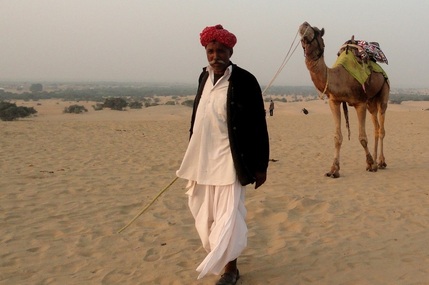
If a man travels faster than the speed of a camel he is in danger of losing his soul.    Arab proverb

I travelled home to Ireland at the weekend and, as always, noticed how the different experiences –  and the changes one sees in familiar places –  touch and impress themselves upon the mind. Even short journeys such as these can make us more reflective, conscious of how our life is always changing and moving – a reflection on identity really. This is partly brought on by the fact that our identity in the place where we live may be partly due to our work, familiar routines and feedback from people who live there, and all these things may fall away the minute we step on a plane and journey to a place where we do not have those roles to play. It helps us to see how conditioned aspects of our self  is, from this  place now which is our home to that place which was once our home and from this time to the last time.  And as the visit ended and I was squeezed into a seat on the plane after an early rising and rush to the airport with its impersonal rituals and rules,  feeling pushed and shoved at a speed I did not want to go at, I reflected how “old-fashioned” means of travel –  by boat, train or even on foot –  allowed for greater  processing of all the thoughts and stimuli that passes through the mind on a journey.  It is  this processing which allows all the experiences be integrated and understood.

It seems to me that something similar happens in our inner life. In these past days and weeks I have talked with people who are journeying in their lives, and who are finding that they are not able to keep all the parts of their development  together, and this makes them feel somewhat disoriented, or confused. The wise Arab parable above challenges us to reflect : the soul can only move slowly, at the pace of a camel. However, often, due to the pace of life today and its demands, lives move too fast for the inner self  to keep up, and one suddenly finds oneself in a landscape where one has lost ones bearings. Often the message is given that we must always be active, busy and that slowing down is a sign of laziness or lack of ambition. For some people this means that the gap between their inner pace and the activities of their outer lives, be it in work or at home,  becomes too great and the result is a sense of unravelling or even of something akin to depression. It could be that their job lost its connection to the reason why it was chosen in the first place, or that changes in relationships meant that their inner resources were not being replenished. The act of keeping busy, often by doing the necessary things of work and family life, means that they have moved away from what is real and fulfilling, and they feel lost.

What can we do at moments like this, for we all face them in greater or lesser way as we journey through life?  We can but hold open the space, to listen to what our inner life is saying, even though that may take time to clarify itself. In other words, we allow time for our true self find the voice it lost because things moved so fast.  Taking time, slowing down, doing activities that ground us, routine tasks that do not require too much energy. Thus slowly we allow a new path to emerge, and see that the feeling of being lost is a  necessary one,  if we are to find what truly gives us life. Above all, we trust and do not make impossible demands on ourselves. For we are in transition, and have arrived yet; the soul knows what it is doing and will catch up, even if it takes its time.