Why having no story can be good…

Everything is meant to be let go of.

Meister Eckhard

Listening to people this week I was struck by how frequently we tend to define ourselves in terms of solid, unchanging qualities. However, when we talk about ourselves in terms that are fixed, such as  “I’m no good at ……”, or “I am a timid person” … we freeze our whole selves into just one  limited part. Or if we attach our identity to some things that are fixed –  like a job,  a relationship as it is now, where we live or something that we have –  we are sooner or later going to run into difficulty because everything changes.  It is a good practice to keep defining ourselves in fluid terms, as always changing – continually constructing ourselves in way that is able to deal with the ongoing changes in life. We know that if we try to prevent change and freeze things as they are,  we are attempting something impossible.  So let us work on really understanding the inevitability of the change we see all around us by applying this to how we narrate our life story, even our story of just this week. In this way we  can more easily see our true underlying openness of mind,  which can be aware of all the words which we attach to ourselves.  This leaves us open to all possibilities in our future,  not limiting ourselves  or having just one fixed  identity or  goal.

Just as a snake sheds its skin, so we should shed our past, over and over again

The Buddha

Always judging our lives

We tend to run our whole life trying to avoid all that hurts or displeases us, noticing the objects, people, or situations that we think will give us pain or pleasure, avoiding one and pursuing the other. Without exception, we all do this. We remain separate from our life, looking at it, analyzing it, judging it, seeking to answer the questions, ‘What am I going to get out of it? Is it going to give me pleasure or comfort or should I run away from it?” We do this from morning until night.

Charlotte Joko Beck

Ways we try to solidify the self

Trying to solidify the self through accomplishments or material goods is a natural impulse in our uncertain, impermanent world. But it doesn’t help. It doesn’t make life perfect; it doesn’t make us immortal; it doesn’t lead to wisdom. In fact, achieving and gaining can cause new kinds of suffering, our responsibilities and our worries can be compounded.

Andrea Miller, Bird Songs

Keeping our selves fluid and not freezing

There are two conditions that need to be understood in learning about mindfulness. The first is that freezing or congealing around pain or pleasure brings “suffering”. When we have pain or discomfort and we freeze up in that moment, we suffer. When we have pleasure of even the subtlest sort and we grasp onto it, we suffer. We are cut off from the core of our being.

There are two ways to reduce suffering that is connected to pain or discomfort:decrease the discomfort or pain by changing our circumstances (possible only under some circumstances) or reduce the habit of congealing or freezing up around the discomfort (always possible). Similarly, there are two ways to increase our fulfillment in pleasure: increase the pleasure (not always possible and often leads to addictions) or learn to contact even the subtlest pleasure clearly, eliminating the congealing (always possible). Only with the second option do we have the true freedom that does not depend on situations or circumstances.

To reduce or eliminate our freezing, grasping or holding is what I will call “mindfulness skill”. When we have achieved this skill and can use it on a moment to moment basis in our feeling lives, we are free to be persons of complete feeling. Rather than rigidify and fixate on either fears of pain or desires for pleasure, we find ourselves “flowing” through our emotional lives feeling the incredible lightness of our being.

Shinzen Young

Not all growth is visible

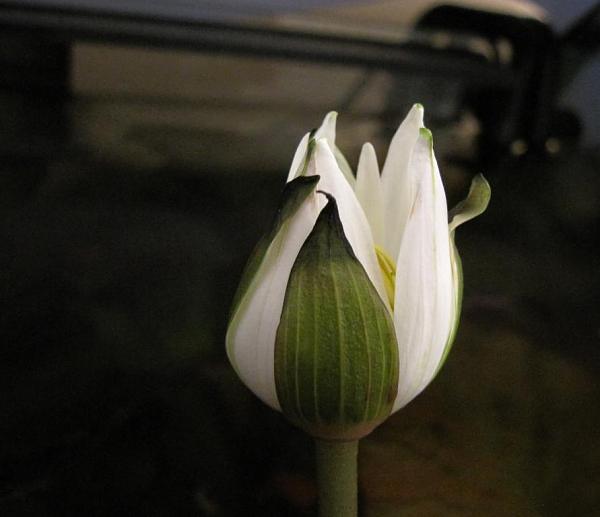
If we can possibly learn to trust darkness, to understand that life is a pattern of starts and stops, of celebrating the past,  of coming to terms with the present and of believing the future to be kind, then we can come to understand that the dark parts are only those closing-down moments, like flowers at night, till the sun shines again……Darkness deserves gratitude. It is the alleluia point at which we learn to understand that not all growth takes place in the sunlight. Then we come to understand that God is at work in our lives even when we believe that nothing whatsoever is going on.

Joan Chittister, For all that Has Been, Thanks

Not letting anxiety become fear

The truth is that you will never be absolutely safe. All things change constantly, even what is most precious. You know that you and those you love will die, but not when or how. This is the angst of life, the price of being a conscious human being. It is not a flaw, although many people cannot let loose of seeing it in such a manner. It is just the way life is constructed. When your awareness of this vulnerability is triggered, you can be swept into panic, collapse into depression, or desperately try to distract yourself. One of the values of  practice is that you are able to come to terms with this anxiety in a conscious manner. Your life becomes more integrated because you are no longer trying to deny or avoid what is true.

For instance, you simply forget a meeting, yet you are traumatized, certain that you are losing your ability to focus. Or someone disappoints you and you collapse into complete self-hatred, fearing that you have no worth to the other. With mindfulness practice, you learn to see how the untrained mind is agitated by the human condition and how not to allow this general anxiety to fuel your fear in a specific situation. You also gain tolerance for the unpleasantness of uncertainty and also the naturalness of your own imperfection. You have confidence that “life is like this.” You cannot and are not supposed to miraculously fix it; rather, you gain the insight that happiness and peace come from relating to life just as it is.

Phiilipp Moffit, Freedom from Fear