
Retreats

A lot going on these days. I am very excited as I have put my name down for a Retreat in Spirit Rock Meditation Centre in California in the summer. It will be run by Phillip Moffit, Sally Clough Armstrong and others. Phillip is the author of the excellent Dancing with Life: Buddhist Insights for Finding Meaning and Joy in the Face of Suffering and I also have always enjoyed the articles he writes for numerous magazines, including Yoga Journal and Body and Soul.

Why do we go on retreat? It gives us an opportunity for more in-depth practice. Even though, in a very real sense, our everyday life is our practice, we use the time out of a retreat to gain a clearer idea of how to practice and to find some perspective upon how we should integrate practice into our everyday life. We need, sometimes, to go greater in depth for a short period in order to sustain the width which is our ongoing daily life. There are not too many places near Geneva that offer English speaking retreats, so I hope to organize and offer a one day Day of Practice before the summer holidays and some regular one days in the Autumn. I will announce details on the blog.

However, you can check out what is offered in centres in Switzerland and England under the Pleaces to Deepen Practice links on the right hand side.

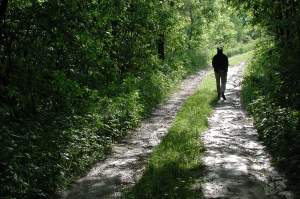
Staying with painful emotions

The more we practice, the more we are able to see our instinctive reactions to difficult moments, such as disappointments or inconsistency. These can provoke fear, annoyance or irritation in us. Because we practice, such emotions signal to us the places where we can grow.

Painful emotions are like flags going up to say, “You’re stuck!” We regard disappointment, inconsistency, irritation, and fear as moments that show us where we’re holding back, how we’re shutting down. Such uncomfortable feelings are messages that tell us to perk up and lean into a situation when we’d rather cave in and back away.

When the flag goes up, we have an opportunity: we can stay with our painful emotion instead of spinning out. Staying is how we get the hang of gently catching ourselves when we’re about to let resentment harden into blame, righteousness, or alienation.

Ordinarily we are swept away by habitual momentum. We don’t interrupt our patterns even slightly. With practice, however, we learn to stay with a broken heart, with a nameless fear, with the desire for revenge…. We can bring ourselves back to the spiritual path countless times every day simply by exercising our willingness to rest in the uncertainty of the present moment — over and over again.

Pema Chodron

Disappointments

Life is a great teacher, and provides regular opportunities for us to grow. Somtimes these can come in the shape of things not working out or people letting us down. Our initial reaction may be to see these as negative, but the focus in our practice is how we work with what is happening:

When there’s a disappointment,
I don’t know if it’s the end of the story.

It may be just the beginning of a great adventure.

Pema Chodron

Holding on: A dog and bone story

Just some thoughts prompted by recent days’ meetings. I am trying to break down my emotional life time into smaller and smaller units, and see that most states of mind only last for a short period of time. What I mean is that events have the power to hook and disturb me, causing an agitated reaction in the mind. Practice does slow that down but does not eliminate it. The natural, spontaneous, response to a painful event is to try and eliminate the source, as we move to maximize safety and minimize vulnerability. Sometimes we do that by attacking – complaining and blaming in our mind and replaying the scene, or by withdrawing. However, what I am concentrating on is the afterwards – letting go much more quickly than before, catching the reaction early by creating space in the mind.

In thinking this I remembered a sermon I heard given by an Augustinian priest in Dublin many years ago. He said that some people hold onto hurt like a dog who has buried a bone and goes regularly to dig it up and lick it lovingly. We can see this often in family disputes. At moments of hurt, strong emotions – such as anger and resentment – touch us so deeply inside that they can dominate the mind in a fixed fashion, and cause us to identify with them. This identification is static, so we tend to stay the same through time, not moving forward, but looking back. Sometimes the hurt is so deep that we have no choice but to let the event process slowly within us. In these cases moving on or forgiveness is very difficult because the event that caused the need for forgiveness has also meant that the mind is covered by pain, loss, and sometimes a sense of betrayal. However, it is also true, in many day-to-day hurts and slights, we have quite a lot of control over the amount of holding on we want to do.

No matter what the situation is,
we are responsible for our own mind states

Joseph Goldstein

Life events as our teacher: a cat story

One day I was sitting on my bed meditating, and a cat wandered in and plopped down on my lap. I took the cat and tossed it out the door. Ten seconds later it was back on my lap. We got into a sort of dance, this cat and I…I tossed it out because I was trying to meditate, to get enlightened. But the cat kept returning. I was getting more and more irritated, more and more annoyed with the persistence of the cat. Finally, after about a half-hour of this coming in and tossing out, I had to surrender. There was nothing else to do. There was no way to block off the door. I sat there, the cat came back in, and it got on my lap. But I did not do anything. I just let go. Thirty seconds later the cat got up and walked out.

So, you see, our teachers come in many forms.

Joseph Goldstein

Barney

For the last few months our cat Barney sits by me as I sit meditating. I always find it a comfort as he sits there, looking on. He brings to meditation, as he has brought to our lives since he arrived at our doorstep some thirteen years ago, a gentleness and strong support. He also could rest in himself and sleep, with one eye on me, without any concern or worry, without needing to wonder where his life was going.

Even as I was sitting beside him I could not match his contentment. I found it hard to leave my self-centred thoughts, those opinions and judgments about events and people which really have no solid reality one day after they appear. He rested, content, simple, of one piece; I spun around my petty concerns, my stories which I exaggerate, my scattered mind racing and worrying. He was a living lesson in meditation, in being content to rest in the warmth of the sun.

It reminded me of this early Irish Poem, written by a monk in the 8th Century about a cat called Pangur Ban, or White Pangur.

I and Pangur Ban my cat,
Tis a like task we are at:
Hunting mice is his delight,
Hunting words I sit all night.

Pangur bears me no ill will,
He too plies his simple skill.

Tis a merry thing to see
At our tasks how glad are we,
When at home we sit and find
Entertainment to our mind.

When a mouse darts from its den
O how glad is Pangur then!
O what gladness do I prove
When I solve the doubts I love!

So in peace our tasks we ply,
Pangur Ban, my cat, and I;
In our arts we find our bliss,
I have mine and he has his.

Practice every day has made
Pangur perfect in his trade;
I get wisdom day and night
Turning darkness into light.