Developing your Meditation Practice, Stage 1 continued

The first of these posts talked about placement – we consciously place our awareness on the breath, intentionally moving away from whatever activity we were doing before.  At the same time, just as we sit down to practice, we simultaneously form our intention. One Zen teacher once gave a conference speech in which he summed up the whole of meditation in two words – “intention” and “attention”. S o the first stage in meditation involves forming an intention, right at the start,  the moment one sits. Our intention should be something like, I will use this period to consciously observe the mind and get to know it better. In a sense, we set a gentle model for our activity over the next twenty or thirty minutes.
Why is this so important? Because if we rush into sitting without consciously being aware of changing our activity and forming our intention we can find the mind wandering very quickly. After a minute or two we find ourselves in the same daydreaming we were involved in for much of the day or continuing the activity we have just finished. We may very quickly fall into the activity of checking how we are doing in this meditation and comparing it to yesterday’s or to a model of meditation which we have in our heads.

So the first stage in meditation is focused on how we sit. It seems obvious but is of vital importance. If we start well there is a greater chance that our whole sitting will go well. In the next post we will look at stage two, how to work with thoughts.
The Wrong Trousers

Sometimes we get little reminders that our way of seeing the world is not always completely objective. We see the world not as it actually is, but as we are.

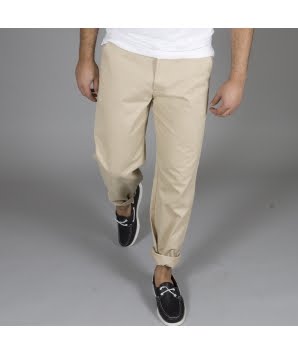
I recently bought some clothes, thinking that they looked nice. Shortly afterwards I was informed that the colour did not suit me and that they were a strange choice. For a moment I took refuge in the fact that maybe I have better taste, that I have an interesting dress sense, and anyway I don’t have too much interest in criteria like colour. I had a certain notion of how these clothes were right. Normally when our judgment is questioned we need to rationalize and reduce some dissonance between our “good judgment” and others’ opinions. However, I soon admitted to myself that others are probably more objective and that I was more than likely wrong.

I know that in most things, I see through my own subjective filters, so it is likely the same for my dress sense. We think we see something as it is. But really it is we see it through our own conditioning and history, and often through the story which is dominant in our life at that moment. Indeed, most thinking is not pure thought, but is rather a self-focused emotional activity. A similar process applies to the words we use. Something may be said to us with the best of intentions but we hear it through the emotional place we are standing. Or similarly, a simple email or text message which we send can be understood completely differently by the person receiving it, because of where they are at, and as a result they move to an interpretation which was never intended.

Practice is essentially clarifying our vision. We learn to sit still, to befriend ourselves. We return to sit each day in order to see through our mental processes, with all their noise; and to increasingly enter into reality as-it-actually-is. We see that we can hardly take a breath without a thought or opinion or judgment going through our head. We see that we prefer to relate to life through our thoughts and frequently our fears. Our natural calm mind is often clouded by the limited self-image created by habitual, obsessive, neuronal patterns. Practice works on this, allowing us let go of the fears that drive our thoughts, getting closer to the moment as it is. We observe the mind in order to not get lost in it. We learn to relate simply with the thoughts, feelings and experiences that arise as we sit. Slowly we get to see the world more objectively. To see things as they are, not as I want them to be.

Swimming

Some things are best learned early, but I never learned how to swim as a child. It is not easy; the secret is to relax and let go. I don’t know if I will ever swim like a fish but am  pleased with being able to keep my head under the water or move forward across the pool. For me it would be such a freedom to float on the water and not be afraid.

Learning to swim contains a lot of lessons which can be applied to practice and to life. In many ways we can approach our practice as if we are there to correct or fix something. We often start from the deep-down assumption that there is something wrong with us, that we need to change or get away from. So we seek out personal development programmes or practice in order to change ourselves, to get away from what we are not at ease with. Or we can seek outside ourselves, in work, projects or relationships, for something that will complete us.

What swimming teaches is that somethings go better when we just relax and let go. We can stop striving. We can release the need to ‘control’ everything in our lives. When we tense up and try to fix things, we create a whole new set of problems. Often when we are stressed out, we attract more stress into our lives. We end up trying to make ourselves different than how we actually are. Freedom starts with accepting ourselves and letting go, trusting that the water, or that life. will actually support us. We can let go of our fears.

Sometimes, in order to let go we must “unlearn” many of the things we have spent our entire life learning and which have been reinforced in relationships and life’s experiences. From an early age, we have been conditioned to worry about our family, our relationships, our jobs, our security, and everything else in our lives that we want to improve. We are taught to compete and to overcome our anxiety by doing better and striving harder. Ironically, when we stop the worry, stress, and fear, we allow our natural rhythm to flow into us and we drop into our deep inner resources. The greatest truth we learn from practice is that we are already perfect, just as we are. Nothing needs to be added to us in this moment. We can just float and let go.

The days I like best….

…are like today, filled with unexpected joys. Simple encounters. The kindness of friends. Good news. Real progress in plans.

Every day brings new experiences and change. Our practice is all about training the mind, and moving towards greater contentment that way. It means that we work on accepting whatever way things work out. However, when things go well, like today, the sense of contentment can be very deep. Practice works on how we see ourselves and life’s events. It helps us to see positive events as common, and positive aspects of ourselves as permanent. It allows us see negative events as mainly filtered through negative thinking, exceptions to the general rule, not affecting our sense of self. It gradually works on the fear which is always lurking in our lives and relases its grip on our actions and our view of ourselves.

Joy does not simply happen to us.
We have to choose joy
and keep choosing it every day.

Henri Nouwen

GPS

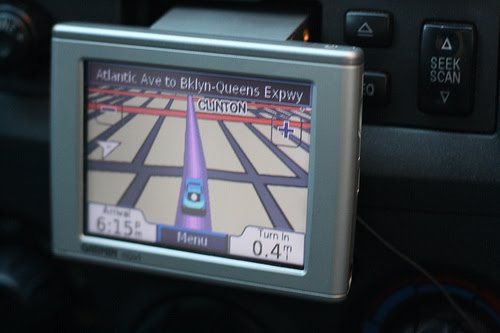
I used the GPS once or twice in the past weeks to get to a destination on the other side of Geneva that I was unfamiliar with. However, I did not use it wisely, preferring to follow my own way for the first part of the journey, intending to pay attention to the GPS only for the last complicated bit. This succeeded in confusing the system as I ignored instruction after instruction. So for most of the journey all I could hear was “Turn Left …. Recalculating…turn right ….recalculating…. recalculating ……. recalculating…”. If a device could be said to be frustrated this one certainly was.

I could have done with some sort of system in Berlin. I did not know the city at all and the traffic was quite intense. I could pass the same landmark a few times from different directions without knowing where I was. Then I would see it and say, “Ah yes, there’s the Potzdamer Platz, I know where I am”.

For a lot of the time it can feel as if our lives are like a busy street full of traffic, with cars, buses and trams going in every direction. It can be confusing, even disorientating. Maybe sometimes we can move in a straight line, like on the highway taking us home, but although we get there faster we still feel as if we have been running. Things are moving and changing almost continually so it is hard to step back and get our bearings. I certainly like to think I know where I am going, on a straight line with a clear direction and a firm sense of inner coherence. However, life often slips through my fingers, as much as I want to hold onto it, and assume that it is in my control. I can go round in circles for a period. Worse, I can ignore a deep inner voice thinking that I now know the way better.

However, gradually, if I stop and step back, I see gaps in the traffic. No matter how fast things seem to move, I am aware of myself as the one who is travelling, underneath all the movement. I can step back and slow down. In reality, on a day-to-day level, I think I am like the confused GPS. I spend most of the time recalculating. And I am at ease with that. Starting over and over again seems to be to be the heart of practice. I have given up on the belief of a fixed consistency, pushing on towards a definite goal. I now can see that, even when confused, I am learning something from a different but still a sure kind of knowing. A kind of knowing that guides us when we are travelling blind, because many things in our lives do not become clear until much later. And, in the end, the way we travel is more important than the destination.

Weather

What is up with the weather this week? Just one week ago one could not sleep with the heat and had to open windows to let some air in. This week people are talking about turning the heating back on. Wet and windy, even cold, more like late autumn than the summer of last week.

It points to a useful teaching. It alerts us to the natural tendency to try and hold on to. and make permanent, things that are going well. However, the only real reality is change. It is our basic instinct to search for happiness. And we can often think that a certain set of circumstances are necessary to achieve it. But then we find that the circumstances change. People change. Commitments change. It reinforces the basic truth that we face every time we sit: things arise and pass away.

Every time we have an experience that brings us face to face with the reality of impermanence, such as when someone moves away, we lose something we care about, or we hear something that changes completely our understanding of a situation, it is good that we take time to reflect on it, and on the way change happens in our life. The more we do that the more we find we are able to let things go. Everything is in transformation. When we can see that with a calm mind, and with an attitude of kindness, we can accept that change is inevitable, and move forward in peace. We can let go of last week and accept this week as it is.

Of course we all know that things change, that nothing endures. No one I know likes to go to the dentist, but everyone goes, more or less relaxed, even for complicated procedures. No one would go at all if appointments were open-ended, with no expectations of when, or even if, we would emerge. We remember things change when we go to the dentist, but we forget when we are confused. Grief confuses us, and loss and sadness frightens us. If we can keep at least a bit of the mind clear about temporality, we can manage complicated , even difficult, times with grace.

Sylvia Boorstein,
It’s Easier Than You Think – The Buddhist Way to Happiness