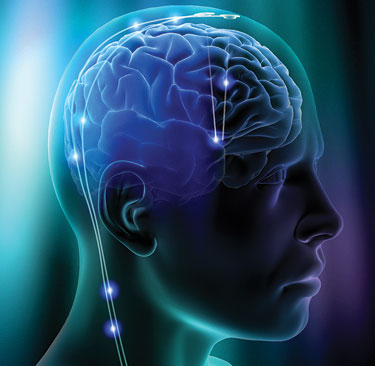
Studying meditation and its effect on aging

A link to a report in yesterday’s Guardian newspaper about the effect meditation may have on genes and aging. It describes one of the largest pieces of research currently undergoing on the benefits of meditation.

http://www.guardian.co.uk/lifeandstyle/2011/apr/24/meditation-ageing-shamatha-project

Meditation better than morphine for relief of pain

A new study conducted by Dr. Fadel Zeidan at Wake Forest University in North Carolina and published on Tuesday in the Journal of Neuroscience, has found that meditation is very effective for pain relief even in people who have just learned how to practice it, better than some of the most powerful drugs.

The study used 15 volunteers who had never meditated before. They attended four, 20-minute classes to learn a meditation technique known as focused attention.  In these training sessions the  participants were taught simply to concentrate on their breathing and to let go of distracting thoughts and emotions. Then a heated probe was pressed against their leg, steadily raising the skin temperature to a painful 32C, while scans measured activity in the brain. It was found that the perception of pain and its unpleasantness was greatly reduced.
According to lead author Dr Zeidan, the effect was a 40%  diminution in intensity of pain and 57%  reduction in pain unpleasantness. This compares with the effects of powerful drugs such as morphine, as Dr Zeiden went on to say:  Meditation produced a greater reduction in pain than even morphine or other  pain-relieving drugs, which typically reduce pain ratings by about 25 per cent. One of the reasons that meditation may have been so effective in blocking pain  was that it did not work at just one place in the brain but instead reduced  pain at multiple levels of processing. 

More on Mind-Body medicine: Meditation’s effect on the brain

This study on the effects of the MBSR Course on the Brain, is getting a lot of attention. I posted about it last week already. Here is a link, which Carol sent me,  to a very nice piece in the New York Times. It summarizes well the current debate about the effects of meditation on the brain and health and links to some hard data in the area of mind-body medicine.

http://well.blogs.nytimes.com/2011/01/28/how-meditation-may-change-the-brain/

Mindfulness meditation changes the brain

Participation in the 8 week MBSR programme affects the brain in areas which are responsible for memory, sense of self, empathy and stress, according to a new study due to be published next week in the Journal Psychiatry Research: Neuroimaging. The research was led by Sarah Lazar at the Massachusetts General Hospital and looked at MRI scans of participants before and after they took part in the MBSR Programme and compared them with a control group of non-meditators. They found, for example, that participant-reported reductions in stress  were correlated with decreased density in the amygdala, which is known to play an important role in anxiety and stress. This change was not found in the control group, meaning that it was not just due to passage of time.

As Britta Hölzel, PhD, first author of the paper states: It is fascinating to see the brain’s plasticity and that, by practicing meditation, we can play an active role in changing the brain and can increase our well-being and quality of life. What is interesting about this study is that it shows how the reported effects of the MBSR Course are now beginning to be tracked in the underlying structures of the brain.

You can check out a report of the study here:  http://www.sciencedaily.com/releases/2011/01/110121144007.htm

More health benefits of mindfulness: Mindfulness, therapy and getting over our fears

There was an article in last Sunday’s Wall Street Journal on how increasingly Mindfulness is being used to help people overcome negative thoughts and feelings, or what the article terms, “the Voice” –  that nagging, persistent commentary in your head. It describes mindfulness as an effective way of doing therapy with these negative, judgmental thoughts, by training us to simply observe them, rather than trying to deny them. Getting frustrated with aspects of our lives – such as our weight, our relationships,  or our self-confidence –   and suddenly trying to change them, (a frequent strategy around New Year),  often only strengthens the grip of negative thoughts. Mindfulness, on the other hand, is based on us  becoming non-judgmentally familiar with the stream of thoughts and emotions which pass through our mind every minute and – this is the key –  observe them without getting involved, almost as if we were observing a parade on the street or a soap opera on television.

The article concludes with a quote from Marsha Linehan, who was one of the first to apply mindfulness principles in her work with Borderline patients. She speaks about the importance of not judging ourselves, of simply being with whatever arises in the mind as a thought or an emotion: “Most of us think that if we are judgmental enough, things will change. But judgment makes it harder to change. What happens in mindfulness over the long haul is that you finally accept that you’ve seen this soap opera before and you can turn off the TV.”

The whole article is well worth the read: http://online.wsj.com/article/SB10001424052748704111504576059823679423598.html?mod=WSJ_hpp_sections_health

The benefits of meditation for depression: now available on the NHS

A report in the Sunday Observer newspaper bears witness to the ongoing research being done on the effectiveness of mindfulness meditation in cases of depression, leading to it being offered by the National Health Service (NHS)  in the U.K.  It refers to a new study published in the  December 2010 edition of the journal Archives of General Psychiatry which found that mindfulness meditation was as effective as the use of anti-depressants in remission from major depression. The study involved 84 persons in remission from a major depressive disorder and found that meditation offered protection against relapse or recurrence which was on a par with antidepressants.

The results of this and other studies has led the National Institute for Clinical Excellence to  recommend mindfulness meditation in cases of chronic depression. However, the article goes on to highlight one of the potential dangers coming from this increased popularity, namely, that people will see it as a quick fix. If not understood or practiced correctly there is a danger that people will think that “mindfulness” simply means being a bit more aware and that, with this understanding, it becomes diluted to mean almost anything in life. Suddenly having a nice meal, or seeing a beautiful sunset, becomes an act of mindfulness and the same results are expected from this broader understanding.

The article quotes Florian Ruths, who runs a mindfulness meditation programme at the Maudsley Hospital in south London, who reminds us that the benefits of meditation are best seen when practised properly in a clinical setting. He sees three main benefits in his work, namely, its focus on the present and not future worries, the passing nature of thoughts and the value of compassion towards ourselves.