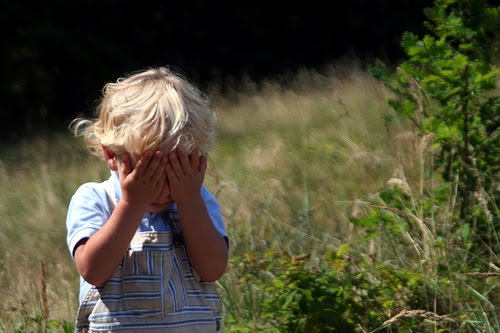
Seeing endings in a new light

Seeing beginnings and endings — the arising and passing away of all conditioned forms — is a vital step in developing the understanding that nothing exists apart from interdependent, cause-and-effect relationships. To see the beginnings and endings is also, in my experience, a great support in difficult times. Early on, as I began to trust in the fiber of my being that nothing lasts, I became less afraid of pain. The fact that everything has an end comforted me. “One way or another,” I would say to myself, “this too will pass.” I was glad I saw that. I didn’t think much, in those initial moments of insight, about how the pleasant things change as well as the difficult ones. I know that when I struggle with the pain of any loss, the struggle preoccupies my mind and leaves no room for hope. When I recognize the pain I feel as the legitimate result of loss, I am respectful of its presence and kind to myself. My mind always relaxes when it is kind, and around the edges of the truth of whatever has ended, I see displays of what might be beginning.

Sylvia Boorstein, How Endings Make Room for Beginnings
Our thoughts about our difficulties

We suffer a lot through our thoughts, more commonly so in the West nowadays than through physical problems. And in meditation we start to recognize that any physical pains that we do have can be made much worse by the attitude with which we hold them. Much the same goes for pain from a mental, perceptual source. Thinking forms a significant part of the way physical pain is held; it is charged with emotional drives that give rise to that ‘trapped, desperate, this shouldn’t be happening’ mood. Then there are the pleasant sensations or mental states accompanied by ‘more of this, this is the way it should be’ and the neutral accompanied by ‘well, shouldn’t something be happening?’ Although these moods do the holding, they in turn are backed up and incited by the thinking process. ‘I was feeling OK until I started thinking about the rotten deal I got, or what someone else is getting, or the way it was, or the way things ought to be…’

Ajahn Sucitto

A way of working with emotions when we feel flooded

As I referred to recently, I was in the UK last week on a retreat directed by Ajahn Sucitto. So I quote him here, partly in reference to the very unseasonal weather they are having there, with communities struggling with severe flooding. Like most weather conditions, flooding can help us in our reflection on the mind, on how to work with  things that we cannot control, or things in our life change without us expecting them.
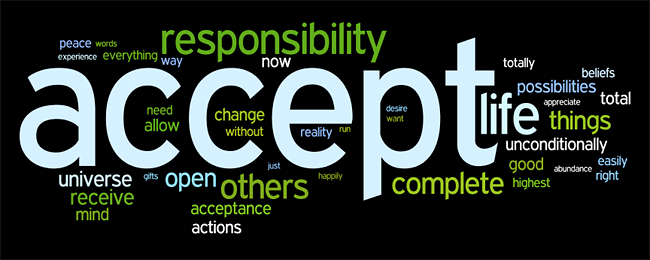
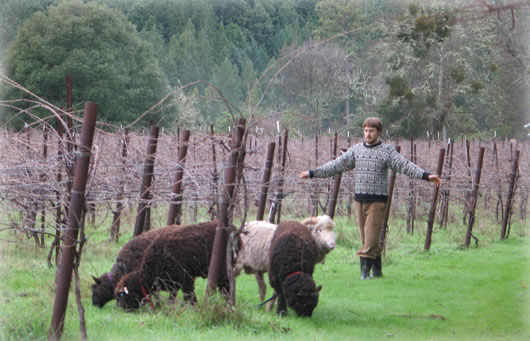
Mindfulness, the ability to bear witness is a tremendously powerful and skilful factor of mind. The Buddha called mindfulness the floodstopper. It stops the floods of greed, hatred and delusion. With mindfulness we give ourselves a choice with regard to following what arises in the mind; and keeping that choice available is something you want to go on doing because the mind almost longs to get trapped – and there are plenty of sights, sounds, flavours and ideas that can sweet you away out of aware responsibility. As we carry our body with us all the time, we can use that as a base for mindfulness; a place where we can stop the floods. We can turn our attention to the body and just refer to the body in the body, as it is – that is as sensations, energies and form, rather than the impressions of beauty or ugliness that identification imposes upon it.

Ajahn Sucitto, Seeing the Way.

Fearlessness

When we slow down, when we relax with our fear, we find sadness, which is calm and gentle. Sadness hits you in your heart, and your body produces a tear. Before you cry there is a feeling in your chest and then, after that, you produce tears in your eyes. You are about to produce rain or  waterfall in your eyes and you feel sad and lonely and perhaps romantic all at the same time. This is the first tip of fearlessness, and the first sign of real warriorship. You might think that, when you experience fearlessness, you will hear the opening to Beethoven’s Fifth Symphony or see a great explosion in the sky, but it doesn’t happen that way. Discovering fearlessness comes from working with the softness of the human heart.

Elizabeth Lesser

Working with the mind

Whatever our external circumstances, in the end happiness or unhappiness depends on the mind. Consider that the one companion whom we stay with, continually, day and night, is our mind. Would you really want to travel with someone who endlessly complains and tells you how useless you are, how hopeless you are; someone who reminds you of all the awful things that you have done? And yet for many of us, this is how we live – with this difficult-to-please, always-pulling-us-around, tireless critic that is our mind. It entirely overlooks our good points, and is genuinely a very dreary companion.

The point is that when our mind is filled with generosity and thoughts of kindness, compassion, and contentment, the mind feels well. When our mind is full of anger, irritation, self-pity, greed, and grasping, the mind feels sick. And if we really inquire into the matter, we can see that we have the choice: we can decide to a large extent what sort of thoughts and feelings will occupy our mind. When negative thoughts come up, we can recognize them, accept them, and let them go. We can choose not to follow them, which would only add more fuel to the fire. And when good thoughts come to mind – thoughts of kindness, caring, generosity and contentment, and a sense of not holding on so tightly to things any more, we can accept and encourage that, more and more. We can do this. We are the guardian of the precious treasure that is our own mind.

Jetsunma Tenzin Palmo, Into the Heart of Life

Seeing ourselves as we truly are

People who are suffering want to change, but they do not know how. They feel…that they have to go into their problems, or get rid of them entirely. They do not know that to bring about true healing they have to learn to see themselves as they truly are.……Powerful emotional reactions have the capacity to take hold of us and drive our behavior. We believe in these reactions more than we believe in anything else, but they become the means by which we both hide from ourselves and attempt to cope with a world of ceaseless change and unpredictability.

Mark Epstein, Going on Being:Buddhism and the Way of Change.