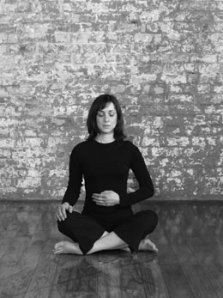
 I was reading recently neuroscientist Antonio Damasio’s work on the development of our sense of self. I find his emphasis on the body harmonizes very well with our practice, especially with how we work with difficult emotions. We frequently carry into the present unworked material from the past, which can be tied up with fearful emotions and inhibit our freedom. Our emphasis is on holding the emotions as they manifest in body sensations in awareness without feeling the need to fix them or judge them or push them away. This is because the body has a wisdom which is broader than the thinking, fixing part of the mind, and we can make use of the way our past manifests in the body, as it is the “pivot around which the conscious mind turns” and allow us get in touch with our primordial experience.
You may not yet be able to bring your unconscious mind activity into awareness as thoughts, but it will always be reflected in the body as an emotion, and of this you can become aware.
Eckhart Tolle
The body is a foundation of the conscious mind … the special kind of mental images of the body produced in body-mapping structures, constitute the protoself, which foreshadows the self to be … the body is best conceived as the rock on which the protoself is built, while the protoself is the pivot around which the conscious mind turns….I hypothesize that the first and most elementary product of the protoself is primordial feelings, which occur spontaneously and continuously whenever one is awake. They provide a direct experience of one’s own living body, wordless, unadorned, and connected to nothing but sheer existence ……..all feelings of emotion are complex musical variations on primordial feelings.
Antonio Damasio, Self comes to mind.
 Growth can often involves a letting go of old ways, especially those that have ceased to serve. However, when we are in the midst of it, it can be hard to appreciate it in this way. We are more inclined to hold on to what is familiar and keep to what we know. However, sometimes the depth of new life can only be seen when the current one is broken open. It is true that there are occasions when we only grow when we pass through difficulties. With growth we move toward fuller healing and wholeness. It’s as if they had been waiting all along, until you made room for them to come into your life.
 From a meditative perspective, various mind states including emotions, arise and pass away empty of any substantial nature. They come into being when certain conditions come together and disappear when the conditions change. None of them belong to anyone; they are not happening to anyone. In a very real sense each mind state is expressing itself: it is desire that desires, fear that fears, love that loves.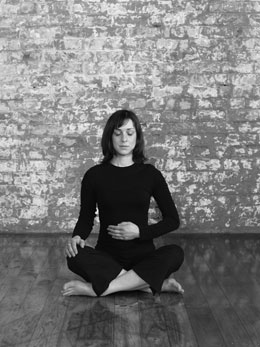

 Mindfulbalance