Why we are afraid to show our true selves

It is striking that the first words spoken by the angels in the Christmas story are “Do not be afraid”. It is as if one of the most important messages needed to be communicated to us is for us not to be limited by our fears. Everyday we see that the mind likes to dwell in fear. In fact, it is striking to notice how much of our day-to-day life is governed by an undercurrent of fear, which lurks behind a lot of our behaviours. This is why it is so hard to just sit still or stand still and just be ourselves — not doing anything to prove ourselves — without feeling anxious or fidgety. For these reason, we frequently develop a False Self when young, a mask which we think will be more acceptable to others. This False self is in response to failures encountered when we were growing, which led us to believe that we were not  acceptable just as we are. We feel we are not “good enough” and thus have to create a persona that we believe is better, maybe a “compulsive harder working self,” or an “always trying to please self”,  or an always” taking care of others while neglecting our own needs” self.

However, the different wisdom traditions teach that our True Self is worthwhile in and of itself.  Real freedom and joy is possible,  without hiding, and our exterior self can reflect our ture interior being, provided we know where to start. We need to begin with developing a kindness and warmth towards ourselves, by cultivating the eyes of these angels towards our inner self. Maybe these divine visitors see more clearly into our true nature, and remind us to look to that, and not to the fearful thoughts that discourage us. At times we find it easier to see ourselves in a limited and impoverished way, with our repeated patterns of thinking reminding us that we are weak or struggling. These texts remind us that there is a natural courage deep inside us. They encourage us to believe, to dare, to open up to possibilities. Fully becoming who we are begins with where we are, actually, at this point in our lives. If they can see goodness and courage in us, why can’t we?

When disappointment strikes

There are times when we are unsure of what exactly we can hold on to, when we feel on the borders of love and of meaning. The flow of life seems to pass our hearts by and we do not sense that we are where we should be. The ground is unsteady and we cannot see beyond this obstacle.

Obstacles occur at the outer and inner levels. At the outer level the sense is that something or somebody has harmed us, interfering with the harmony and peace we thought was ours. Someone has ruined it all. This particular sense of obstacle occurs in relationships and in many other situations; we feel disappointed, harmed, confused, and attacked in a variety of ways.

As for the inner level of obstacle, perhaps nothing ever really attacks us except our own confusion. Perhaps there is no solid obstacle except our own need to protect ourselves from being touched. Maybe the only enemy is that we don’t like the way reality is now and therefore wish it would go away fast. But what we find as practitioners is that nothing ever goes away until it has taught us what we need to know.

Even if we run a hundred miles an hour ot the other side of the continent, we find the very same problem awaiting us when we arrive. It keeps returning with new names, forms, and manifestations until we learn whatever it has to teach us: Where are we separating ourselves from reality? How are we pulling back instead of opening up? How are we closing down instead of allowing ourselves to experience fully whatever we encounter?

Pema Chodron, Comfortable with Uncertainty.

A short practice to increase our strength

O Adonai, and Leader of the house of Israel, You appeared to Moses in the burning bush,
and gave him the Law on Sinai: come and save us with an outstretched arm.

As Christmas draws closer,  the Christian liturgy chants the ancient “O Antiphons”  originating in the 5th Century. They testify to the desires of people down through the ages, and our ongoing human needs based on the different situations we find ourselves in. This one asks for  strength and protection, –  a strong arm to support us when we ourselves do not feel strong. It’s imagery comes from the story of the escape from slavery in Egypt and the journey across the desert.

There are so many times that we need to take in strength, to remind ourselves of our resources. One of the things which the mind does when we are stressed or depressed is to underestimate our resources and overestimate the threats which we feel. We divert our energies into the defense against threats, fearful that others may disappoint or take advantage of us.  These ancient words are a metaphor for what happens in those moments. The Hebrew word for Egypt – Mitzraim –  means “a narrow place.”  The escape from captivity in Egypt means the escape from the narrow places where we are stuck, to a wider place, a place where we can breathe freely. We can feel trapped in our lives,  in different forms of captivity. We can frequently feel as if we are travelling in unfamiliar territory, unchartered waters, and this can overwhelm us. We feel fortunate if we get through a day, or through the night when our fears come to worry us,  let alone know where we are going in our lives.

At times like this, we need to keep our focus on words and ideas that give us strength, that link us into to our fearless nature. We can try this simple exercise to increase awareness of the resources we have:

Find a quiet place and sit, gently closing your eyes. Become aware of your normal breathing and the wider sense of your body sitting here. See if you can sense the energy  in the core of your body. Notice your breathing, how it is constant and has a strength of its own. Feel the solidity in your posture, the strength in your upright back and shoulders, the dignity in the way you are sitting, the support in the contact with the chair or the floor. Become aware of the way your body functions in getting you around day after day. Consciously focus on your own strength, savouring this awareness, taking it in and drawing it out.

Now, picture in your mind something in nature that feels strong, like a mountain, noticing how massive and unmoving it is. In your mind’s eye, bring the mountain into your own body so that you become the mountain – your head the top,  your body the solid base,  rooted on the cushion or on the chair. See if you can imagine a sense of uplift, the strong quality of the mountain deep in your own spine. Invite yourself to become like a breathing mountain, unshakeable and still.

Now let that sense of strength sink into you and rest in you. Imagine it and prolong it. Breathe it into your emotions. Feel it in your spine, your head,  your chest, the muscles of your face. Let it become part of you, breathing it in deeper and deeper. Gently, let it touch the places in your life where you feel challenged or weak. Keeping the sense of the mountain in your awareness, seeing if you can place the difficulties in relation to that, almost like the clouds that pass over a mountain without affecting the mountain itself. See if you can make the awarenss of strength the present reality, even if just for a moment. If this is too difficult just do it briefly and return to the awareness of the mountain.

Rest in this awareness for five or ten minutes, if it feels right. Make conscious,  as best as possible,  the strength which is in your body and in your mind. Register it in your bones and in your muscles, your thoughts and your emotions. Continue to breathe gently as you finish the exercise and resume your daily activities.

With emotions that cause stress, we have a choice

I read an interview with Dr. Jill Bolte Taylor,  neuroanatomist and spokeswoman for the Harvard Brain Tissue Resource Center. She had a stroke that damaged her left hemisphere and for a while she could not walk, talk, read, write, or remember many of the incidents of her life. She underwent major surgery to remove a clot in her brain. She describes her experiences in the book My Stroke of Insight: A Brain Scientist’s Personal Journey.

In the book she draws attention to brain patterns – or “circuity” –  and states that we actually have much greater choice in the circuits we run than we think we have. For example,  when we get sad, angry or afraid she says we have a choice – to run with that circuity or to not identify with it, to step back and observe it. There is not doubt that it can be easier to engage the circuitry. When this happens we identify with the emotion – I am my anger, I am my sadness, I am my fear.

However, there is another approach which is coincidentally developed in mindfulness practice. In it we work at being aware of what is going on in our mind at any moment. We learn to say – I am in this moment running this circuitry; is this the circuitry I really want to run? And how long am I going to run it? Dr Taylor  states that we can have a real choice on which way we want to go. For example, when something happens which provokes us,  we can be aware of the process of anger and see it as the brain working in a certain way. She puts it this way – “I’m running my anger circuitry, I can feel what this is like in my body”. Then we can develop the gap between ourselves and the strong emotion and decide if we want to stay with it or not.

She goes on todescribe some very practical, everyday ways in which we can develop our  capacity to observe our brain circuity. We just need to pay greater attention to what we are doing in this present moment:

I think the most important thing is to consciously choose to bring your mind to the present moment. How do you do that? You decide that you’re going to see what your eyes are looking at; you bring your consciousness to the present moment. When you are going up the stairs, you look at the steps, you look at the handrail. Most of us unconsciously climb the steps, never think about the steps, can’t even say what the color of the carpet is, if there is a carpet, because we’re somewhere else.

Pay attention to the present moment. Bring your mind, bring your ears to the present moment, start savoring the awareness of the information you perceive in the present moment, and let that grow. And it’s like with any circuitry: the more you concentrate on it and experience it, the more it will develop itself.

For more about Dr Taylor you can visit her website:  www.drjilltaylor.com

Quotations taken from interview “Balancing the Brain towards Joy” :

www.spiritualityhealth.com/spirit/archives/balancing-brain-toward-joy

How to work with difficult emotions 2

When we wake up to how human life on this planet actually is, and stop running away or building walls in our heart, then we develop a wiser motivation for our life. And we keep waking up as the natural dukkha [suffering] touches us. This means that we sharpen our attention to catch our instinctive reactions of blaming ourselves, blaming our parents, or blaming society; we meditate and access our suffering at its root; and consequently we learn to open and be still in our heart. And even on a small scale in daily life situations, such as when we feel bored or ill at ease, instead of trying to avoid these feelings by staying busy or buying another fancy gadget, we learn to look more clearly at our impulses, attitudes, and defenses. In this way dukkha guides and deepens our motivation to the point where we’ll say, “Enough running, enough walls, I’ll grow through handling my blocks and lost places.”

Ajahn Sucitto, Turning the Wheel of Truth

If I let go will I float?

Everything is meant to be let go of.

Meister Eckhard

Got some reminders today that changes of direction and endings are an inevitable part of our lives, touching our plans, our enthusiasms,  our things, our friendships. In fact, one of the core things we realize in meditation is that nothing is permanently satisfying or reliable. This challenges our need to be in control at all times, a need which is often driven by fear. The opposite of this need for control – of the future, our our plans, of others – is to trust, to let go. Deep down there is nothing to hang on to. Our mistake is that we look for certainty, for solid ground, when in actual fact, the deep reality which we come to accept is that nothing is really lasting or solid. Ironically, realizing that brings us the greatest freedom.

And to die, which is the letting go
of the ground we stand on and cling to every day,
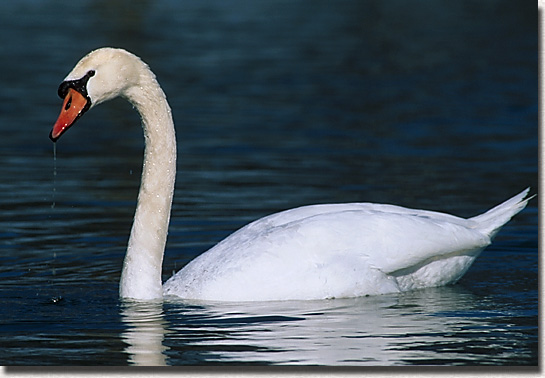
is like the swan, when he nervously lets himself down
into the water, which receives him gaily
and which flows joyfully under
and after him, wave after wave,
while the swan, unmoving and marvelously calm,
is pleased to be carried,
each moment more fully grown,
more like a king, further and further on.

Rilke