Travels outward and inward

It is no easy matter to stop short at just seeing.  Mahasi Sayadaw.

These days a lot of us are travelling, or on holidays, and come face to face with new environments or with sights of great beauty.  Breaks are good as they allow us discover a new gear between the full fast-forward at which life is normally conducted and full reverse – a kind of slowed-down,  steady pace of reflection and ease. However, sometimes the travel and the changes involved, or even seeing places of great beauty can trigger sadness or lead us into a sense of questioning or comparing the current state of our life and its history to date. This is maybe not surprising since all travel is perhaps related to our inner sense of “home”. So we notice that it is sometimes hard to just see things directly, without them setting off the continual chatter and commentary that accompanies our daily experience.  I once read Thomas Merton where he stated that he longed for some moments in which he was able to live a life without always examining it. It seems to me that we are all striving for that inner peace that allows us inhabit our lives without regret. To this end, the ascetic Bahiya came to the Buddha with the simple request – one which we all share  – to teach him the path that leads to happiness. The Buddha’s reply was incredibly simple and seems in some ways uninspiring : “When seeing, just see; when hearing, just hear; when knowing, just know; and when thinking, just think.”.  However, there is a great practical wisdom here that both points to the end result and is at the same time the method that leads to contentment. Real happiness can be learnt. It is related to the peace we get when we reduce the inner questioning and critical commentary, allowing us pay complete attention to whatever is before us, and thus live each moment fully, for what it is.

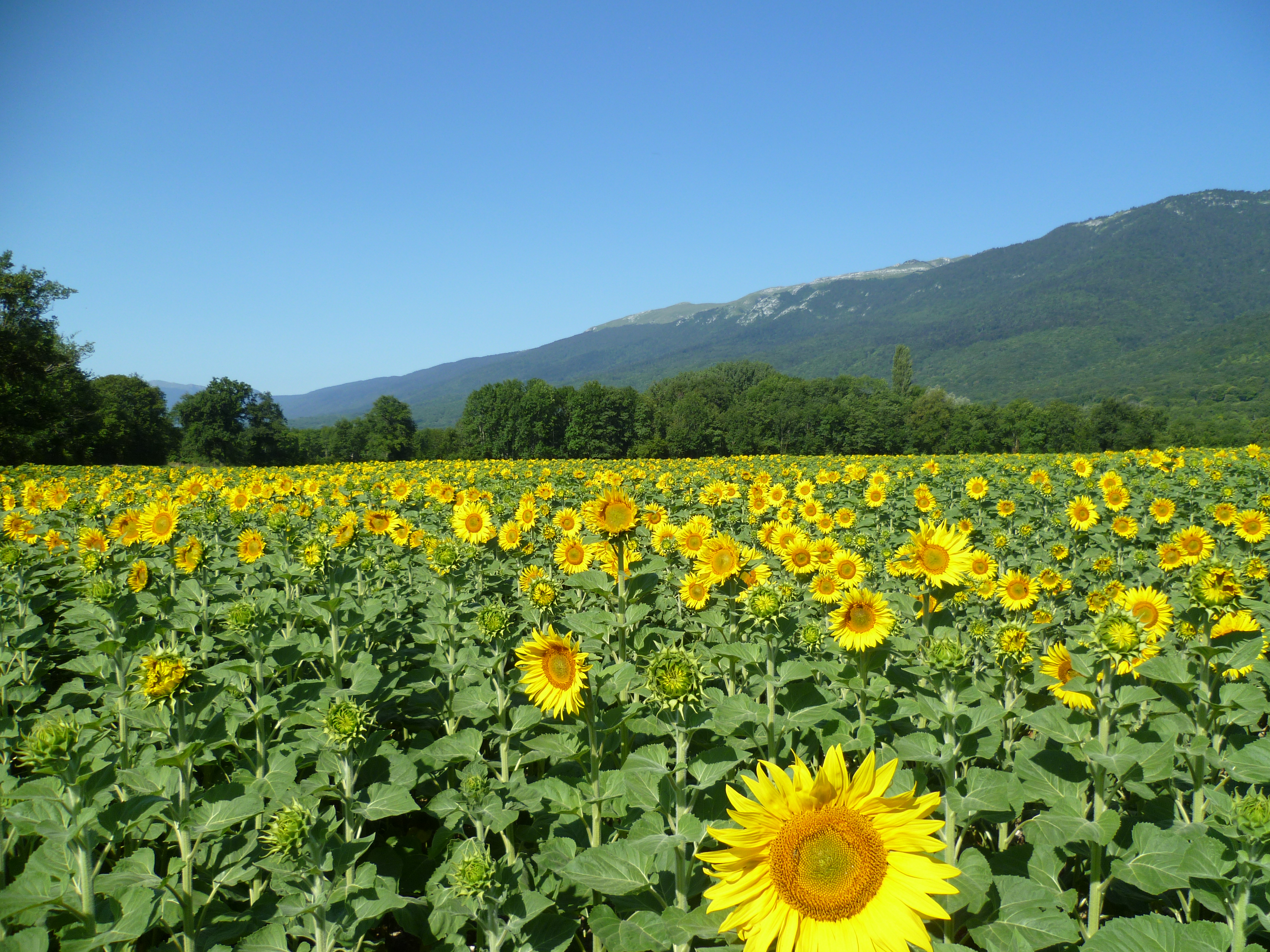
I should be content

to look at a mountain

for what it is

and not as a comment

on my life.

David Ignatow

Life is continually changing

No matter how much we want it to be otherwise, the truth is that we are not in control of the unfolding of our experiences. Despite our search for stability and prediction, for the center of our lives to hold firm, it never does. Life is wilder than that – a flow that we cannot command or stave off. We can affect and influence and impact what happens, but we can’t wake up in the morning and decide what we will encounter and feel and be confronted by during the day.

Sharon Salzberg, Faith.

The body needs a song, a soul….

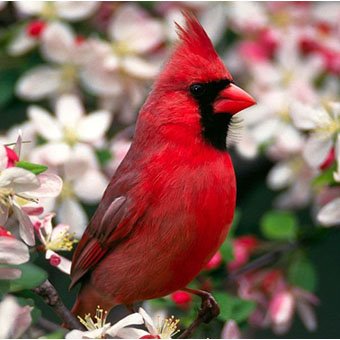
Have posted this poem before, but I saw this bird – the American Northern Cardinal – for the first time last week. Although, unlike Mary Oliver, I did not hear it sing, its bright colour still taught something about life, the heart, and the relationship between the body and the mind .

And this was my true task, to be the
music of the body
.
Do you understa
nd? for truly the body needs a song, a spirit, a soul.
And no less, to make this work,
the soul has need
of a body,
and I am both of the earth and I am of the inexplicable beauty of heaven where I fly so easily, so welcome, yes,

and this is why I have been sent,
to teach this to your heart.

Mary Oliver,  Red Bird

Internal focus

Mindfulness practice tells us that the best way to work with the changes that face us today is to look inside,  and that a large part of our contentment comes from the internal ways we work with what faces us. As I was reminded in a talk I heard last week, a fundamental characteristic of life is not just that it is continually changing but that it does so in ways we cannot predict. It is an ongoing challenge to remain curious and increase our interior freedom in the face of these surprises. However, this curiosity can help us to avoid holding onto situations or seeking alternatives that are actually unhealthy. This is expressed extremely well in this quotation which outlines the underlying principles beneath this day-to-day practice.

The compulsion to change the world  to calm our desires is based on an idea of how things should be, and as such is dependent upon the degree of wisdom we can bring to bear at any moment. Because we are so imbued with this notion that happiness is something to be pursued by the continual transformation of the external, it can sound odd to hear the Buddha talk of uncovering happiness within. He acknowledged the inevitable presence of disequilibrium, which he called dukkha or suffering, but suggested we seek out its internal causes, understand them and solve the problem by means of internal adjustments. According to his analysis, it is not the objective discrepancy between the internal and the external condition that is the source of unhappiness; it is the desire for the external to change (or not to change as the case may be) which is itself an internal state. Conditions in the world are notoriously unstable and subject to forces beyond our control, while internal desire are more intimate and more accessible. It is simply more efficient to adapt to the world than to alter it.

Andrew Olwendzki, Unlimiting Mind

Noticing

The beauty even in the most ordinary.

Wonder even in the most commonplace:

Every blade of grass has its angel that bends over it

and whispers, “Grow, grow”.

The Talmud

Sunday Quote: Be still and move forward

We must be still and still moving

Into another intensity 

For a further union, a deeper communion.

T.S. Eliot,  East Coker