Facing our pain

Some of us have a hard time believing that we are actually able to face our own pain. We have convinced ourselves that our pain is too deep, too frightening, something to avoid at all costs. Yet if we finally allow ourselves to feel the depth of that sadness and gently let it break our hearts, we may come to feel a great freedom, a genuine sense of release and peace, because we have finally stopped running away from ourselves and from the pain that lives within us.

Wayne Muller, Legacy of the Heart

Today – notice something you never noticed before

….Go into the fields, consider
the orderliness of the world. Notice
something you have never noticed before….

A lifetime isn’t long enough for the beauty of this world
and the responsibilities of your life.

Scatter your flowers over the graves, and walk away.
Be good-natured and untidy in your exuberance.

In the glare of your mind, be modest.
And beholden to what is tactile, and thrilling.

Live with the beetle, and the wind.

Mary Oliver, The Leaf and the Cloud: A Poem


Heaven, Hell and Limbo

Contemplate beginning. When you think of birth you think of ‘I was born’, but that is the great birth of the body, which we can’t remember. The ordinary birth of ‘me’ which we experience, in daily life is ‘I want, I don’t want, I like, I don’t like.’ That’s a birth, or seeking to be happy. We contemplate the ordinary hell of our own anger, the anger that arises, the heat of the body, the aversion, the hatred we feel in the mind. We contemplate the ordinary heaven we experience, the happy states, the bliss, the lightness, the beauty in the here and now. Or just the dull state of mind, that kind of limbo, neither happy nor unhappy, but dull, bored and indifferent. In meditation we watch all these within ourselves.  So in practice we are looking at the universe as it is reflected in our own minds..

Ajahn Sumedho

A mind like a child’s

The quality of mind we are talking about……. is a mind which responds to something with attention and then returns to its own natural state. It doesn’t elaborate on it, doesn’t get caught up in it, doesn’t get excited about it. It just notes that this is what is happening. Every time it happens, it notes it. It doesn’t get blasé. It doesn’t become conditioned. In this way, it is like a child’s mind. When something interesting happens, it will note it and then let it go and move onto the next thing. This is what is meant by a childlike mind. It sees everything as if for the first time. It doesn’t have this whole backlog of preconditioned ideas about things. You see a glass and you see it as it is, rather than seeing all the other glasses you have seen in your life, together with your ideas and theories about glasses and whether you like glasses in this or that shape, or the kind of glass you drank out of yesterday. We are talking about a mind which sees the thing freshly in the moment. That’s the quality we are aiming for. We lose this as we become adults. We are trying to reproduce this fresh mind, which sees things without all this conditioning.

Tenzin Palmo, Reflections on a mountain lake: teachings on practical Buddhism

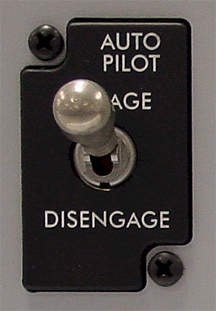
Study shows we are on autopilot most of the time

I came across this study,  carried out by Dan Gilbert and Matthew Killingsworth,  just yesterday, even though it was published last November.  It confirms that most of us are ‘mentally checked out’ for a good portion of the day, operating on a type of autopilot which does not lead us to feeling very content.  For 46.9% of the time during their waking hours people are engaged in ‘mind wandering’,  not really focusing on the outside world or the task at hand, but rather looking into their own thoughts. And what this study of 2,250 people shows is that this activity  – despite its obvious attraction – doesn’t make us feel happy.

The study was designed to find out what kind of activities people did throughout a day, and which made them happiest.  So people were asked to indicated what they were engaged in at different random moments chosen during the day.   Mind wandering was just one of 22 possible activities people could list, but turned out one of the most common. And here is the interesting part – the participants reported being unhappy during the periods of mind wandering. Thus how people deal with mind wandering is a better predictor of happiness than many other indicators which we normally use, such as relationships, careers or the  actual activities people are engaged in. The study is another support for the effectiveness of mindfulness meditation, with its emphasis on just staying in the present moment and recognizing our stories as stories, as an aid toward greater happiness.

Following our heart

We must be willing to get rid of the life we’ve planned,

so as to have the life that is waiting for us.

Joseph Campbell