 It’s a transformative experience to simply pause instead of immediately filling up the space.
By waiting, we begin to connect with fundamental restlessness as well as fundamental spaciousness.
Pema Chödrön
It’s a transformative experience to simply pause instead of immediately filling up the space.
By waiting, we begin to connect with fundamental restlessness as well as fundamental spaciousness.
Pema Chödrön
Someday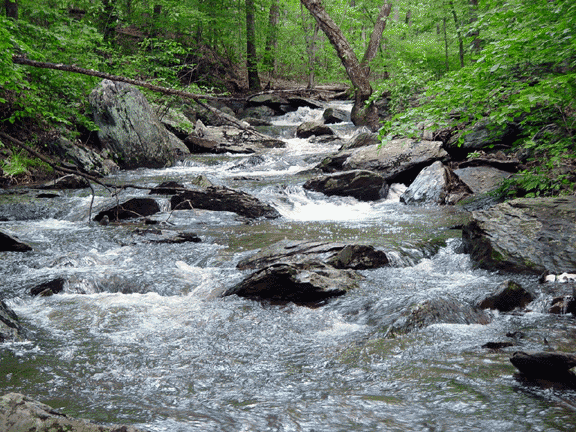 s we find ourselves with confusion in our lives. We are not clear about things or wish for more direction. When that happens I often find that I rush to impose order, in order to make me feel better. But confusion often prompts thoughts, worrying and stories about the future. Staying close to the present moment in nature can ground us and give perspective.
I awoke to the confusion of a new day,
The scraps of dreams, memories of yesterday,
And new cravings creeping onto awareness,
The sun spilling its light over all but the shadows and a cacophony of sound.
From outside and in.
What to make order of? What to let go?
And who makes the choice?
I think I will go down to the river and just watch it flow,
It’s been a long time since I have done
something really important.
David Sluyter
One of the most b eautiful in the English language. In ancient Celtic myths the swan was associated with music, faithfulness and with purity. They frequently symbolized the inner life or the soul. They were especially associated with this time of year and with the Celtic Feast of Samhain, celebrated at the end of October. In the poem they lift off dramatically, migrating and moving on, inspiring us by their beauty but always, ultimately, out of reach.
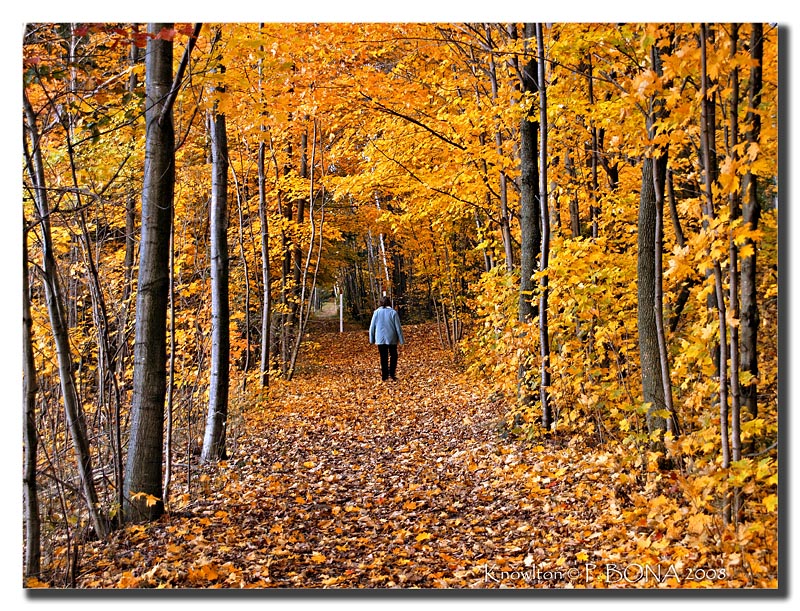
The trees are in their autumn beauty,
The woodland paths are dry,
Under the October twilight the water
Mirrors a still sky;
Upon the brimming water among the stones
Are nine-and-fifty Swans.
The nineteenth autumn has come upon me
Since I first made my count;
I saw, before I had well finished,
All suddenly mount
And scatter wheeling in great broken rings
Upon their clamorous wings.
I have looked upon those brilliant creatures,
And now my heart is sore.
All’s changed since I, hearing at twilight,
The first time on this shore,
The bell-beat of their wings above my head,
Trod with a lighter tread.
Unwearied still, lover by lover,
They paddle in the cold
Companionable streams or climb the air;
Their hearts have not grown old;
Passion or conquest, wander where they will,
Attend upon them still.
But now they drift on the still water,
Mysterious, beautiful;
Among what rushes will they build,
By what lake’s edge or pool
Delight men’s eyes when I awake some day
To find they have flown away?
 Until recently, psychologists believed that the degree to which a person can naturally experience happiness, referred to as a “set point”, was innate and unchangeable. We now know that, like weight, it’s more of a predetermined range of potential rather than a single fixed number. Genetics influence about half of a person’s total happiness level and circumstances another 10 percent.
But the other 40 percent is affected by “intentional activity”, meaning anything we do consistently and on purpose, whether a positive habit, such as regularly meditating, or a negative one, such as drinking excessively every night
Terri Trespicio, “Thank-You Therapy”, Body & Soul Magazine, Spetember 2008
 What this means is that we can find our own happiness and peace of mind
just as we are in this very moment, because it is within us. We don’t have to change our thoughts or change ourselves into someone else.
We don’t need to think that who we are, this “me,” is not good enough, smart enough, or lucky enough to be happy.
Dzogchen Ponlop Rinpoche, Resting the Busy Mind
 Some kind of meditative practice is found in all the world’s wisdom traditions, and has been around for thousands of years, says Shauna Shapiro of Santa Clara University, co-author with Linda Carlson of the book The Art and Science of Mindfulness. Most include focusing attention and letting thoughts and emotions go by without judgment or becoming involved.
However, it is striking to note how in recent years meditation is progressively going mainstream, and is now the subject of research in scientific journals. A U.S. government survey in 2007 found that about 1 out of 11 Americans, more than 20 million, has meditated in the previous year. And a growing number of medical centers are teaching meditation to patients for stress and pain relief, as conventional medicine increasingly embraces healing methods once dismissed as “alternative medicine” and combining them with standard treatment. Jon Kabat-Zinn credits the “colossal shift in acceptance” of meditation to accelerating research on the benefits of meditation.
His enthusiasm is shared by practictioners on the ground, like Dr. Barrie R. Casselith, from the Memorial Sloan-Kettering Cancer Center’s Integrative Medicine Service in New York: ”It’s not invasive, it has no side effects, it has tremendous benefits that are very well documented and it’s something patients can do on their own so it doesn’t cost anything. It’s not a cancer treatment….but… ‘it deals with quality of life and helps with symptoms. It can relieve pain, lower blood pressure and heart rate. It can make people feel calmer, it enhances mood. It does lots of good things.”
www.usatoday.com/news/health/2009-06-07-meditate_N.htm
http://www.nytimes.com/1999/11/23/health/a-therapy-gains-ground-in-hospitals-meditation.html

