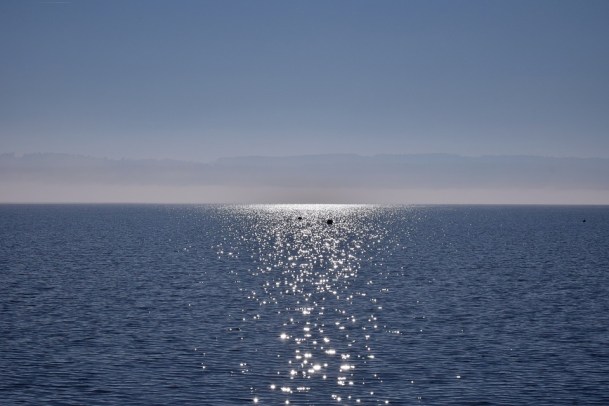
It’s hard to tell the difference between sea and sky,
between voyager and sea.
Between reality and the workings of the heart.
Haruki Murakami, Kafka on The Shore
It’s hard to tell the difference between sea and sky,
between voyager and sea.
Between reality and the workings of the heart.
Haruki Murakami, Kafka on The Shore

I find myself more and more teaching what seems most essential; to help people access intelligent and comfortable awareness. If this awareness becomes a steady orientation, it’s possible to live and grow in this personal world; here is a sense of safety with its fundamental goodwill. The tricky detail being that it is not personal; it’s before the personal conditions arise.
And this means that the sources of the programs and attitudes that become a person get revealed: dis-ease, restlessness and having to do something, or feeling guilty and inadequate that one isn’t doing (or in fact being) whatever it is that one should be – while not knowing what that is. Not that any of that is your fault. Essentially this dukkha (suffering) is not personal, not specific; and it isn’t resolved by doing anything other than tackling its program. It’s non-specific because its source is the pressurised space of one’s unsettled awareness. That then colours everything that the personality forms out of.
Ajahn Sucitto

Anxiety, heartbreak, and tenderness mark the in-between state. It’s the kind of place we usually want to avoid. The challenge is to stay in the middle rather than buy into struggle and complaint. The challenge is to let it soften us rather than make us more rigid and afraid.
Pema Chödrön, The In-Between state
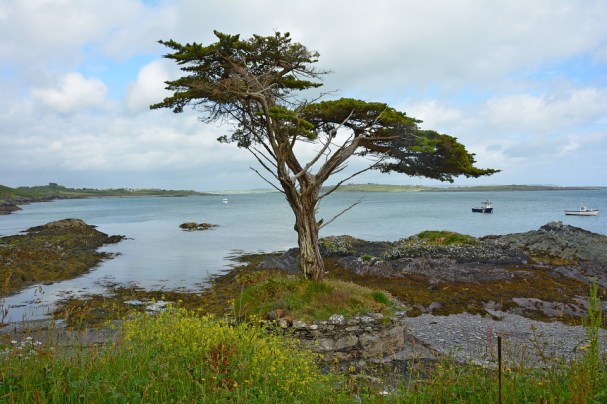
It takes time and patient practice to develop qualities that make for a lasting effect. This idea is not easy to hold on to in a society that prizes immediate results. Emptying the mind of the need to be noticed, or thought as special, allows us to just be ourselves in a simple way:
The sage Chuang-Tzu was walking with a disciple on a hilltop. They saw a crooked, ancient tree without a single straight branch. The disciple said the tree is useless, nothing from it can be used. Chuang-Tzu replied: That’s the reason it is ancient. Everyone seems to know how useful it is to be useful. No one seems to know how useful it is to be useless.

The saddest aspect of life right now is that science gathers knowledge
faster than society gathers wisdom.
Isaac Asimov
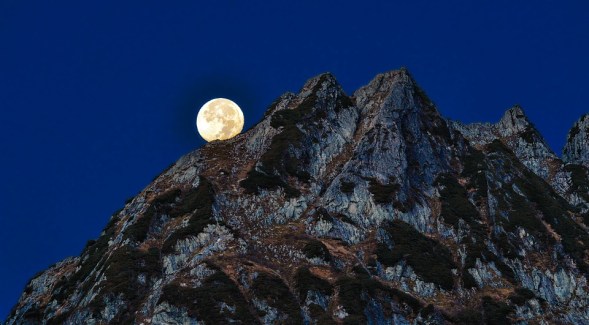
Many paths lead from the foot of the mountain,
but at the peak we all gaze at the single bright moon.
Ikkyu, 1394 -1481, Japanese Zen Buddhist priest

