Admitting we all struggle from time to time

Learn the alchemy true human beings know.  The moment you accept what troubles you’ve been given, the door will open. Rumi

The irony of hiding the dark side of our humanness is that our secret is not really a secret at all. How can it be when we’re all safeguarding the very same story? That’s why Rumi calls it an Open Secret. It’s almost a joke — a laughable admission that each one of us has a shadow self — a bumbling, bad-tempered twin. Big surprise! Just like you, I can be a jerk sometimes. I do unkind, cowardly things, harbor unmerciful thoughts, and mope around when I should be doing something constructive. Just like you, I wonder if life has meaning; I worry and fret over things I can’t control; and I often feel overcome with a longing for something that I cannot even name. For all of my strengths and gifts, I am also a vulnerable and insecure person, in need of connection and reassurance. This is the secret I try to keep from you, and you from me, and in doing so, we do each other a grave disservice.

Rumi tells us that moment we accept what troubles we’ve been given, “the door will open.” Sounds easy, sounds attractive, but it is difficult, and most of us pound on the door to freedom and happiness with every manipulative ploy save the one that actually works. If you’re interested in the door to the heavens opening, start with the door to your own secret self. See what happens when you offer to another a glimpse of who you really are. Start slowly. Without getting dramatic, share the simple dignity of yourself in each moment—your triumphs and your failures, your satisfaction and your sorrow. Face your embarrassment at being human, and you’ll uncover a deep well of passion and compassion. It’s a great power, your Open Secret. When your heart is undefended you make it safe for whomever you meet to put down his burden of hiding, and then you both can walk through the open door.

Elizabeth Lesser, The Open Secret


Opening to the new year in front of us

When we can establish an embodied openness, it’s a relief to have the personal world replaced with clear open space. When the movie of who we are turns off, there’s just the open mystery – and that’s wonderful. That’s how you really wake up; life is most alive when you can be present at the edge of the unknown. Death, separation, uncertainty – they’re all part of life……We have the original potential to handle, and in fact blossom, in the face of these. We don’t have to feel threatened, anxious, needy or inadequate. With wise openness, the main causes and conditions for human misery cease.

The gates to the good life are open. It’s only because we place so much emphasis on knowing what can’t be known – like the future (you can’t even know the next moment) and how other people are – that we close them. But when all is uncertain, all is possible. In such a light, wise openness is the most obvious faculty to develop, because the unknown is right here within and around us.

Ajahn Sucitto, Original Openness.

Why resolutions can often just increase problems

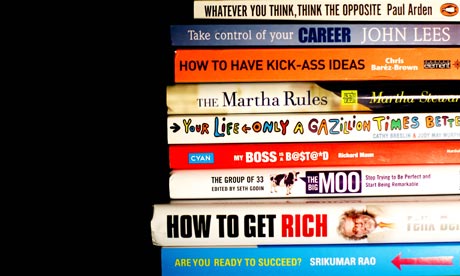
Carl Rogers suggested that a lot of the distress or anxiety in our lives comes when there is incongruence between the ideal image of the self which we have,  and our actual lived experience. This anxiety is expressed differently in each person, due to the many ways that the self-image is formed. Around New Years Day we are encouraged, even on some well-meaning sites, to form resolutions for the coming year, to look at the many ways in which we need to change. Now,  reflecting on the discipline needed to establish healthy practices in our lives is a good thing, as is being inspired by other people. And there is often a desire in the winter months to reflect on what brought the deepest joy over the past year and  shed dead wood in preparation for new growth  – or symbolically throw old plates out the window, as the Italians do. So working at our edge gently is always necessary in our lives.  However, over the years, I have come to believe that, instead of helping, a lot of these notions –   and the pre-digested strategies offered –  actually feed the problem, by strengthening the thoughts about an ideal self which we wish to have, and our need to fix ourselves to get it. Ironically, continually setting expectations of sudden growth – frequently encouraged in today’s society – can introduce a subtle violence in how we relate to ourselves and prevent us from deeper happiness, because it feeds three tendencies which our minds have. The first is the temptation to believe that there is a magic time in the future – maybe next year – when we are going to get it “all together”, and our lives will be perfect,  once we do such and such a practice or adopt some latest idea. Second, it encourages us to move away from the life which we actually have , and spend our time in thoughts about the life we would like to have. And,  as we notice again and again in practice, the mind prefers to spend more time in thinking about life than in working with what is actually in front of us, right now.  Thirdly, it stimulates the “comparing mind”, which is happy to evoke a better version of ourselves, which seems a good thing but frequently triggers discouragement and fear rather than a real ability to change. Often making expectations for the future is just a way of running away from relating to the life we actually have.  So,  maybe the best “resolution” is to give up on this notion of fixing oneself, and  rather focus on how we can deepen our lived experiences right now, with all their imperfections.  For most of us, that is where we are called to grow, and our slow commitment to more conscious living is better served by that, rather than by seeking magic changes in the coming weeks which will bring us suddenly to perfection.

Give up on yourself. Begin taking action now, while being neurotic or imperfect, or a procrastinator, or unhealthy, or lazy, or any other label by which you inaccurately describe yourself. Go ahead and be the best imperfect person you can be and get started on those things you want to accomplish before you die.

Shoma Morita

How to get the most from the holidays: Holding who you are

All the Buddhas of all the ages have been telling you a very simple fact:  Be – don’t try to become.

Within these two words, be and becoming, your whole life is contained.

Being is enlightenment, becoming is ignorance.

Osho

Freedom comes from accepting limitations

When the stories of our life no longer bind us, we discover within them something greater. We discover that within the very limitations of form, of our maleness and femaleness, of our parenthood and our childhood, of gravity on the earth and the changing of the seasons, is the freedom and harmony we have sought for so long. Our individual life is an expression of the whole mystery, and in it we can rest in the center of the movement, the center of all worlds.

Jack Kornfield, A Path with Heart

Not waiting until everything is perfect

It’s odd in a way, this business of Perfect Christmasses. The story of the first Christmas is the story of a series of completely unplanned, messy events – a surprise pregnancy, an unexpected journey that’s got to be made, a complete muddle over the hotel accommodation when you get there… Not exactly a perfect holiday.

But it tells us something really vital. We try to plan all this stuff and stay in charge, and too often (especially with advertisers singing in our ears the whole time) we think that unless we can cook the perfect dinner, plan the perfect wedding, organise the perfect Christmas, we somehow don’t really count or we can’t hold our heads up. But in the complete mess of the first Christmas, God says, ‘Don’t worry – I’m not going to wait until you’ve got everything sorted out perfectly before I get involved with you. I’m already there for you in the middle of it all, and if you just let yourself lean on me a bit instead of trying to make yourself and everything around you perfect by your own efforts, everyone will feel a little more of my love flowing’.

Archbishop of Canterbury, Pause for Thought, BBC Radio 2.