Letting neutral times be neutral

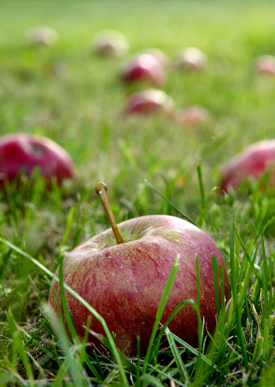
Autumn sees Nature winding down and moving towards a fallow period, a period of rest, a time when seeds lie buried deep in the earth, and growth happens in a different way.   This helps us to see that times when things are not exciting or noticeable – neither markedly pleasant or unpleasant  – are an integral part of life. There are significant parts of each day when our experience is not strongly flavoured in one way or another. We have periods when little happens, when we rest or stand still.  This is normal, and it doesn’t mean that our lives have lost their focus. If we have a tendency to interpret these periods as if something is wrong,we can generate significant suffering as we are going against a fundamental aspect of human nature itself. As always, the practice is simply to be aware of the feelings as neutral, to not run a storyline around them,  and to rest in them, letting them become calm and peaceful.

If we do not cultivate mindfulness, and we feel a neutral feeling, it can turn into an unpleasant feeling because of its association with boredom. We will feel that nothing special is happening – nothing specially good, nothing specially bad, and from that we will often generate painful stories about being a boring person, having a boring life, the world being boring and actually end up in a painful place. Sometimes it seems that we prefer to have painful feelings because they are somewhat exciting and we seem to feel more alive in them  than with neutral feelings that we equate with non-existence.

Martine Batchelor, The Spirit of the Buddha
Doing the ordinary

Stanley Hauerwas, the American theologian,  said that God “takes time for the trivial.” And yet most of the messages we receive today suggest that ordinary life, with its predictable routines,  and not-so-dramatic activities,  demonstrate that our life has lost its direction. Exciting comparisons are held up in advertising, film and the media, which the mind likes to use to convince us that there is something lacking in our life, that we are somehow not doing “well enough”. This can give rise to a feeling within us that without some diversion and drama the ordinary can weigh us down, and we need to continually be on the look out  – normally somewhere else – for a life with more passion, greater creativity, and celebration. The trivial is not where we expect to find God or anything miraculous. So we have a tendency to get it out-of-the-way as quickly as we can in order to make time for our “real” life.  However, we often hear from people who have had an enforced period away from their normal life – for example, hostages who have come back home from their ordeal, or a prisoner released from prison after a wrongful conviction, or someone recovering from an illness – that they look forward to simply sitting in their garden, or walking the dog, or having a cup of tea or coffee in the kitchen. For them, because it was taken away from them, the possibility to do simple daily things is the ultimate treasure. It shows us that the attitude we take, and the story we tell ourselves about, say,  peeling the vegetables or doing grocery shopping,  is the key towards finding a happiness hidden not only in special moments.

Moving close to fear

Whenever fear arises – either in a sudden wind of panic or a low-grade brooding anxiety – the approach of mindfulness is to fully feel the fear, to move towards it rather than running away. The fire of fear is usually mixed up with the smoke of explanations, abstract considerations that attempt to tame the fear through various storylines about the fear. These storylines move us away from feeling directly.

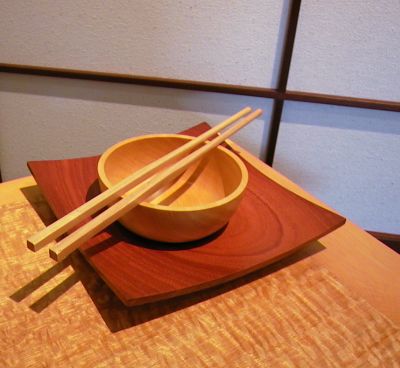
The healthiest way to be with fear is simply that – to be the fear rather than trying to solve it or successfully manipulate it from a distant vantage point. Approaching fear from a distance is like having a giant pair of chopsticks – fear is at the end of them, twenty-five feet away from us, and we keep trying to move the fear from kitchen counter to dining table and back again. No wonder it keeps spilling onto the floor! Instead we could approach fear as a finger food – using the bare hand to pick it up directly, place it in the mouth, chew and swallow.

Gaylon Ferguson, Natural Wakefulness

Noting, rather than reacting

Buddhadasa Bhikkhu said, “If there was to be a useful inscription to put on a medallion around your neck it would be ‘This is the way it is’.” This reflection helps us to contemplate: wherever we happen to be, whatever time and place, good or bad, ‘This is the way it is.’ It is a way of bringing an acceptance into our minds, a noting rather than a reaction.

The practice of meditation is reflecting on ‘the way it is’ in order to see the fears and desires which we create. This is quite a simple practice. Many methods of meditation are very very complicated with many stages and techniques – so one becomes addicted to complicated things.  However, the more simple we get, the more clear, profound and meaningful everything is to us.

So with the breath of the body, the weight of it, the posture of it, we are just witnessing and nothing, observing how it is, now, in this moment. The mood of the mind, whether we feel bright or dull, happy or unhappy, is something we can know – we can witness. And the empty mind, empty of the proliferations about oneself and others, is clarity. It’s intelligent, and compassionate. The more we really look into the habits we have developed, the more clear things become for us.

Ajahn Sumedho, The Way it is

Sunday Quote: Loving the moment for what it is.

We could learn a lot from what Wordsworth observed in his mother. She did not demand more than what was contained in each moment:

Nor with impatience from the season asked
More than its timely produce; rather loved
The hours for what they are.

Wordsworth, The Prelude, Book Five

A still centre within

One of my favorite Buddhist paramitas (virtues or ideal qualities) is Patient Forbearance, also known as Courageous Acceptance; it helps me befriend all the aspects of myself and various facets of life, both pleasurable and painful, wanted and unwanted. Cultivating this inner strength within my heart and mind brings indescribable peace, balance and harmony to my life and all my relationships, and provides a still centre within…Patient Forbearance is the antidote to anger and violence, as no one can make us angry if we don’t have seeds of anger in our own heart. Michelangelo said that “genius is infinite patience”. Patience is truly the virtue to cultivate for making peace with change and time.

Lama Surya Das, Buddha Standard Time