Seeing the beautiful in the difficult

Sometimes we do not fully understand why things have turned out as they have. At times like this we understand that we cannot make life problem-free, but our focus is to try and give to our everyday life a depth and value. To do this we may have to sit with the difficult moments without understanding why they are there. Rilke suggests that we love the difficult. It is not easy, but his words encourage us to believe that there is meaning underneath what is happening.

What is required of us is that we love the difficult and learn to deal with it. In the difficult are the friendly forces, the hands that work on us.  Right in the difficult we must have our joys, our happiness, our dreams: there against the depth of this background, they stand out, there for the  first time we see how beautiful they are.

Rilke

Even welcoming our fears?

In our practice we work at turning toward every aspect of our experience and holding it in awareness. At times this is hard and we can only do it for a brief moment. Some of the things that happen in a day can be unwanted, and we cannot truly say that we “welcome” it.  But try this: See if you can be more aware of what your mind quickly labels as “unpleasant” or not what you “wanted” at this moment. Then see if you can name what is happening in your body and in your mind in that instant. Maybe creating this momentary space could help you see the thoughts, feelings and sensations as passing events in the field of awareness, and to not over-identify with them or be overwhelmed by them. Practicing in this way,  we try to be present with all the experiences of our day rather than avoiding, contracting or pushing them away.

Can you accept the moments of anger and fear as guests,
be willing to receive them with kindness without feeling obliged to serve them a five-course meal?

Christina Feldman

Searching to be something

We practice in order to become more awake. This includes becoming more aware of the various strategies we use to avoid being with a basic fear. We have numerous ways to deflect any sense of insecurity,  of not being in control, of not always being sure of where we are going. So we have a tendency to look to ourside sources or achievements for support, to define ourselves by what we do or by some labels or badges. We are often afraid of just being ourselves, because we have learnt to believe that it is not enough. And one of the preferred ways to deal with this today is that we try harder, we do more.

However, what we find when we practice is that there is nothing to do, and even less to hold on to. There is simply this moment, this breath. Nothing needs to be added to make it compete.  We rest in it, and in some way we are complete in it too.  We do not have to place more demands on it.  We slow down the chatter in the mind. We do not have to search in order to be. And that is the greatest liberation.

The arrogant mind never stops looking for identity, and this identity always defines itself through atributes: “the beautiful one”, “the smart one”, “the creative one”,  “the successful one”………. We are always searching for something to be.

Dzigar Kongtrul,  Light Comes Through

I have spoken at times of a light inside, a light that is uncreated and uncreatable to the extent that we can deny ourselves and turn away from things, we shall find our unity in that little spark inside, which neither space nor time touches.

Meister Eckhart

Just get it done

A small quote from my favourite book of the last few months, which I read on my summer holidays, and return again and again. It is a commentary on  the Buddha’s first sermon, containing the foundation of Buddhist thought and practice. I recognize the truth in the words stating how a lot of our efforts are leaning forward, looking to some future pleasant feeling, reducing our awareness of what is actually happening.

Our attitude is frequently one of wanting to get it done, wanting to have it finished in order to be peaceful, to relax, or to enjoy ourselves…. We want to be a feeling.

Rushing along to be something in the next moment, we fail to open and appreciate this moment

Ajahn Sucitto, Turning the wheel of Truth

Do not be ashamed

A reminder to drop the “comparing mind” that leads us to evaluate our life in relation to others’ successes, lives or even opinions.  It is good to develop a security in our sense of self that does not overly concern itself with how others regard us, but is founded in our own goodness. When we have this there is no need to hide or cover ourselves, to avoid others seeing us.

Many of us have hearts that are overlaid with anxieties, fears, and other defensive behaviours which arose in our attempts to deal with disappontment. One of these is a strong protected sense of personal space,  constructed to ensure that others do not get too close. This can be rooted in shame, which is often related to how we sense our own competence. It is a way in which we learnt to deal with the disappointment of realizing that our needs were not noticed by our parents, leading to us growing up feeling inferior and unlovable.  Thus we arrive with a mind that judges, compares and endlessly works and worries to make life be a certain way, to ensure our core self stays hidden. Meditation practice allows us to  slowly let go of some of our defensiveness. It nourishes a trust that the strength and compassion  we need are already within us, just as we are. It allows us to stop hiding from ourselves, and lets us stand confident before others.

When you are content to be simply yourself

and don’t compare or compete,

everybody will respect you.

Lao Tzu

Why we need to be patient

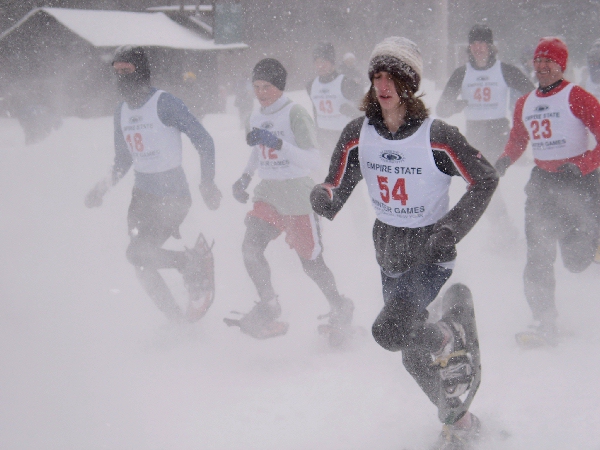
Sometimes we have to be patient. We cannot see the whole picture or understand why things are happening. Moments may seem dark and we can feel like identifying with what is going on in our lives now and getting fixed there. We can be tempted to hate parts of ourselves or our life,  turn in on ourselves and close down. Instead, let’s try and keep our roots deep in the goodness underneath, and not in what passes through the mind.  We do not need to fill the space. Some kinds of unknowing are right. We try to trust even if we cannot see.  What is coming to pass will gradually reveal itself.

I prefer winter ……when you feel the bone structure of the landscape- the loneliness of it, the dead feeling of winter.

Something waits beneath it, the whole story doesn’t show.

Andrew Wyatt,  American Painter