
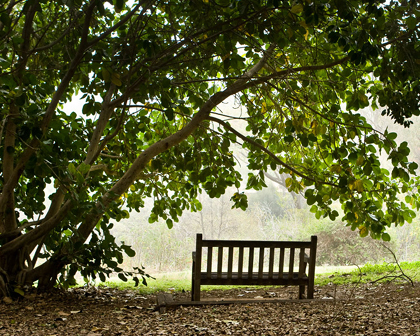
From a different tradition to this morning’s post, but with a similar point to make. Catholic writer Henri Nouwen encourages the development of patience in order to fully enter into and see what is in front of us. Too often we rush and do not allow the moment, the person, or the event reveal themselves as they are. We dismiss the moment as not interesting, or see it from our own place, not able to leave it “right there, right there” as the Buddha said this morning.
If we cannot be patient, we cannot become patient. We cannot be compassionate. If we ourselves are unable to suffer, we cannot suffer with others, which is the meaning of compassion. Patience is the capacity to see, hear, touch, taste and smell as fully as possible the inner and outer events of our lives. It is to enter our lives with open eyes, ears, and hands, so that we really know what is happening. Patience is an extremely difficult discipline precisely because it counteracts our unreflective impulse to flee or to fight. Patience requires us to go beyond the choice between fleeing or fighting. It is the third and most difficult way. It calls for discipline because it goes against the grain of our impulses.
Henry Nouwen, Compassion
photo schnaggli
 We might ask, “Given my present situation, how long should I stay with uncomfortable feelings?” This is a good question, yet there is no right answer. We simply get accustomed to coming back to the present just as it is for a second, for a minute, for an hour — whatever is currently natural — without its becoming an endurance trial. Just pausing for two to three breaths is a perfect way to stay present. This is a good use of our life. Indeed, it is an excellent, joyful use of our life.

 Mindfulbalance