 Our practice throughout our lifetime is just this: At any given time we have a rigid viewpoint or stance about life; it includes some things, it excludes others. We may stick with it for a long time, but if we are sincerely practicing our practice itself will shake up that viewpoint; we can’t maintain it. As we begin to question our viewpoint we may feel upset, as we try to come to terms with this new insight into our life; and for a long time we may deny it and struggle against it. That’s part of practice. Finally we become willing to experience our suffering instead of fighting it. When we do so our standpoint, our vision of life, abruptly shifts. Then once again, with our new viewpoint, we go along for a while – until the cycle begins anew. Once again the unease comes up. And we have to struggle, to go through it again. Each time we do this – each time we go into the suffering and let it be – our vision of life enlarges. It’s like climbing a mountain. At each point that we ascend we see more; and that becomes broader with each cycle of climbing… And the more we see, the more expansive our vision, the more we know what to do.
Charlotte Joko Beck, Everyday Zen: Love and Work
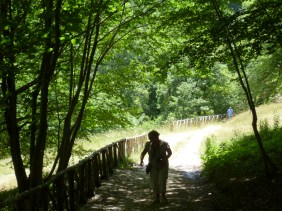


 As you meditate, keep bringing your attention back to what is happening in the moment: the breath, a feeling in the body, a thought, an emotion, or even awareness itself. As we become more mindful and accepting of what’s going on, we find—both in meditation and in our lives—that we are less controlled by the forces of denial or addiction, two forces that drive much of life. In the meditative process we are more willing to see whatever is there, to be with it but not be caught by it. We are learning to let go.
 As the holidays season approaches we may be finding time to wind down, rest, and simply be, without the constant demands to do and to achieve. Our restless, always-switched-on society does not encourage the development of time spent strengthening our capacity to be with ourselves. As a result we see the sad effects isolation and alienation, as well as the difficulties that occur in a world that tends to define people in relation to they appear to others. When we practice meditation we are showing a profound act of gentleness towards ourselves, because we allow ourselves to simply be, without any need to achieve or do, or any link to appearing special. It can be one means of transforming our deep aloneness into a kind solitude rather than into the fearful, judgemental, loneliness which many feel:
 Mindfulbalance