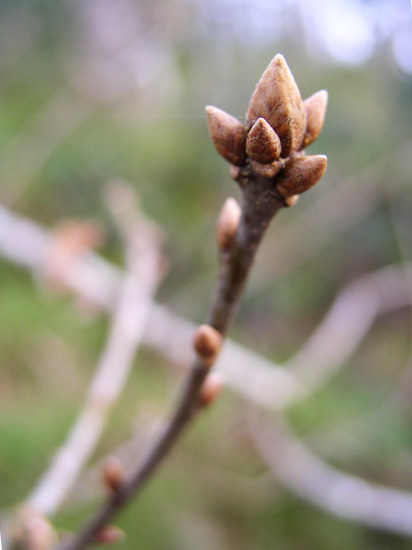
A meditation exercise in times of transition

Bring your awareness to focus on something in your life that is changing or ending or dying right now. Breathe gently as you consider whatever transition is most significant right now in your life. Note any feelings that arise – trepidation, excitement, resistance, anger, annoyance, or grief. Every time your feelings get the better of you, become aware of your breathing. Meet your troubled and contracted feelings with your calm and expansive breath. Breathe, sigh, and stretch out on the river of change. Remember times when you have resisted change in the past. Regard how things turned out in the end – maybe not how you thought they would or you wanted them to, but in the end, there you were. Wiser, stronger, still alive. Smile. Relax. Allow yourself to break open. Sit tall, with dignity and patience, watching your breath rise and fall, rise and fall. Pray for the courage to welcome this new change with openness and wisdom.

Then, open your eyes, go back into your life, and do what you have to do, but do it with grace, with hope, and with a lighter touch.

Elizabeth Lesser

A faulty basic belief

It’s the belief that we shouldn’t have any problems, any discomfort, any pain, that makes modern life seem so distressing. Life doesn’t match our image of how it should be, and we conclude that life itself is wrong. We relate to everything from the narrow, fearful perspective of ‘I want’ — and what we want is to feel good. When our emotional distress does not feel good, we recoil from it. The resulting discomfort generates fear, then fear creates even more distress, and distress becomes our enemy, something to be rid of. Let us instead examine our basic requirement that life should be comfortable. This one assumption causes all of our endless difficulties.

Ezra Bayda, Saying Yes to Life (Even The Hard Parts)

Responding or reacting

The two modes of living, Responsive and Reactive, are the foundation of human nature. We have no choice about the vital aims they serve – avoiding harms, approaching rewards, and attaching to others – nor about the brain’s capacity to be in either mode. Our only choice is which mode we’re in.

Happily, the Responsive mode is the resting state, the default, of body and mind. It’s what you return to when you’re not rattled. In the language of systems theory, the Responsive mode is the most fundamental “strange attractor” in the dynamic processes of your brain. Therefore, this mode is your underlying nature – not the Reactive one. You don’t have to scratch and claw your way to the mountaintop; if whatever is disturbing you comes to an end, you’ll soon come home to the lovely sunny meadow that has always been here – even if was hidden by the fogs and shadows of a troubled body or mind. Your deepest nature is peace not hatred, happiness not greed, love not heartache, and wisdom not confusion.

Rick Hanson

Staying awake in difficult times

I am fascinated by what it takes to stay awake in difficult times. I marvel at what we all do in times of transition — how we resist, and how we surrender; how we stay stuck; and how we grow. Since my first major broken-open experience — my divorce — I have been an observer and a confidante of others as they engage with the forces of their own suffering. I have made note of how fiasco and failure visit each one of us, as if they were written into the job description of being human. I have seen people crumble in times of trouble, lose their spirit, and never fully recover. I have seen others protect themselves fiercely from any kind of change, until they are living a half-life, safe yet stunted. But I have also seen another way to deal with a fearful change or a painful loss. I call this other way the Phoenix Process — named for the mythical phoenix bird who remains awake through the fires of change, rises from the ashes of death, and is reborn into his most vibrant and enlightened self.

Elizabeth Lesser, Broken Open

Making friends with yourself

In meditation practice, you work directly with your confused mind-states, without waging crusades against any aspect of your experience. You let all your tendencies arise, without trying to screen anything out, manipulate experience in any way, or measure up to any ideal standard. Allowing yourself the space to be as you are — letting whatever arises arise, without fixation on it, and coming back to simple presence — this is perhaps the most loving and compassionate way you can treat yourself. It helps you make friends with the whole range of your experience.
           
As you simplify in this way, you start to feel your very presence as wholesome in and of itself. You don’t have to prove that you are good. You discover a self-existing sanity that lies deeper than all thought or feeling. You appreciate the beauty of just being awake, responsive, and open to life. Appreciating this basic, underlying sense of goodness is the birth of maitri — unconditional friendliness toward yourself.

John Welwood, The Practice Of Love

Working with “waiting” today

When we look closely, we find that we pass a great deal of time within the mental frame of being “on our way to the next thing”— completing a task that has been hanging over us, getting to our next meal, disengaging from a phone conversation. Now is not as important as doing something to relieve the stress we feel from unmet wants and gnawing fears. We don’t like the feelings that arise inside us when we are forced simply to wait.

But in life we have to wait a lot. According to one study, the average person in our culture spends eleven days a year just waiting in lines — and this doesn’t count time in planes and cars waiting to “get there.” Nor does it include hours of listening to electronic messages or waiting for TV commercials to end so that we can get back to the main feature.  Throughout our day, red lights get in our way. Waiting is stressful, but it is part of the life of all creatures. As long as we have wants and fears, we are waiting for fulfillment or relief. The big question in spiritual practice is, how do we react to biological and psychological stress? Do we think having to wait and tolerate discomfort is a mistake, a glitch in the system?

Tara Brach, Blessings of a Patient Heart