Comparing and complaining

The comparing mind frequently takes us away from the unique form of our own life …

One morning the teacher announced to his disciples that they would walk to the top of the mountain. The disciples were surprised because even those who had been with him for years thought the teacher was oblivious to the mountain which looked serenely down on their town.

By midday it became apparent that the teacher had lost direction. Moreover, no provision had been made for food. The disciples grumbled but he continued walking, sometimes through underbrush and sometimes across crumbling rock.

When they reached the summit in the late afternoon, they found other wanderers there ahead of them who had strolled up a well-worn path.

The disciples complained to the teacher. He only said, “Those others have climbed a different mountain.”

From James Carse, Breakfast at the Victory: The Mysticism of Everyday Life
On seeing the tree blossom

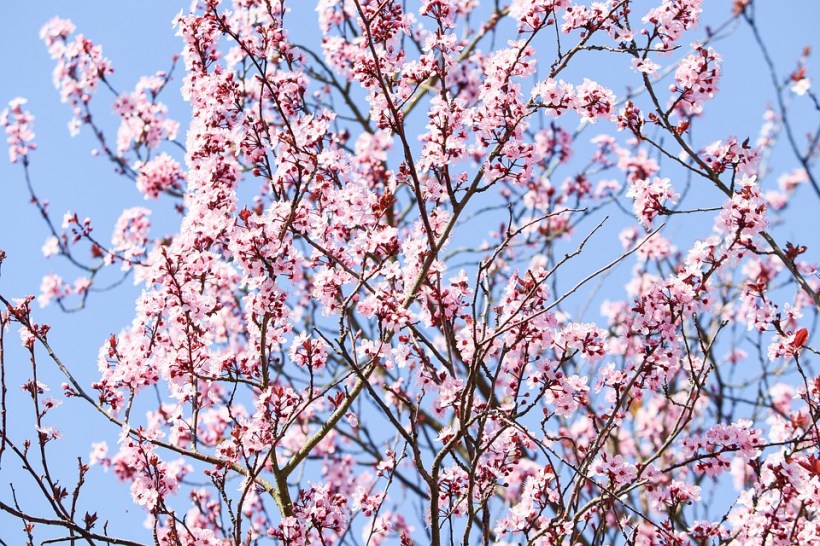
I was reminded of these texts – one Christian, one zen – driving to work on Monday and seeing the blossoms and buds return to the trees. Both speak of profound inner experiences – one when just 18, the other after 30 years of searching – just on seeing the blossoms bloom, the leaves fall, the branches grow, and the new leaves appearing. Miracles in everyday life which we rush past each day. 

In the winter I saw a tree stripped of its leaves and I knew that within a little time the leaves would be renewed, and that afterwards the flowers and the fruit would appear. From this I received a profound view of the care of God which has never since left my soul. The view I grasped that day freed me completely and kindled in me such a love for God that I cannot say that  it has increased during the more than forty years since that time.

Brother Lawrence, 1693, The Practice of the Presence of God. 

For thirty years, I have been looking for the sword,
How many times have the leaves fallen and the branches grown anew?
But then once I saw the peach blossoms,
 and from then up to now, I have never had any more doubts.

Lingyun Zhiqin, dates unknown,  Searching for Thirty Years

In the concrete

Money is human happiness in the abstract;

He, then, who is no longer capable of enjoying human happiness in the concrete devotes himself utterly to money.

Schopenhauer

Encompassed

All beings are encompassed within one all-encompassing great energy:

This I understood from the coolness of this morning’s passing breeze

Wu-men Hui-k’ai, 1183 -1260, Chinese Chan Master

What is this?

A classic practice in the Korean Zen tradition – may help with staying open to our experience today

In the Korean Zen tradition, one generally meditates on the koan, What is this? This question derives from an encounter between the Sixth Patriarch, Huineng (638–713 C.E.), and a young monk, Huaijang. The most important part of the practice is for the question to remain alive and for your whole body and mind to become a question. In Zen they say that you have to ask with the pores of your skin and the marrow of your bones. A Zen saying points out: Great questioning, great awakening; little questioning, little awakening; no questioning, no awakening. 

Martine Batchelor, What is this?

In a daze

Day and night gifts keep pelting down on us. If we were aware of this, gratefulness would overwhelm us. But we go through life in a daze. A power failure makes us aware of what a gift electricity is; a sprained ankle lets us appreciate walking as a gift, a sleepless night, sleep. How much we are missing in life by noticing gifts only when we are suddenly deprived of them.

 David Steindl-Rast