A place of compassion

File:Monkey baby 3.jpg

The mind isn’t always a shining light, is it? Even if you don’t act upon them, becoming aware of jealous, moaning, manipulative, greedy or fearful states of mind is uncomfortable. We tend to ignore such moods or bury them under activity or distraction, but as long as they’re not dealt with, we’re divided internally. So what would it take to become whole and peaceful? Isn’t that about relating to how it is right now from a place of compassion and non-identification? Isn’t that the faculty that could be developed to a lasting excellence, which would provide us with a good perspective and attitude?

Ajahn Sucitto, Good Enough

photo Shawn Allen California USA

A spacious awareness

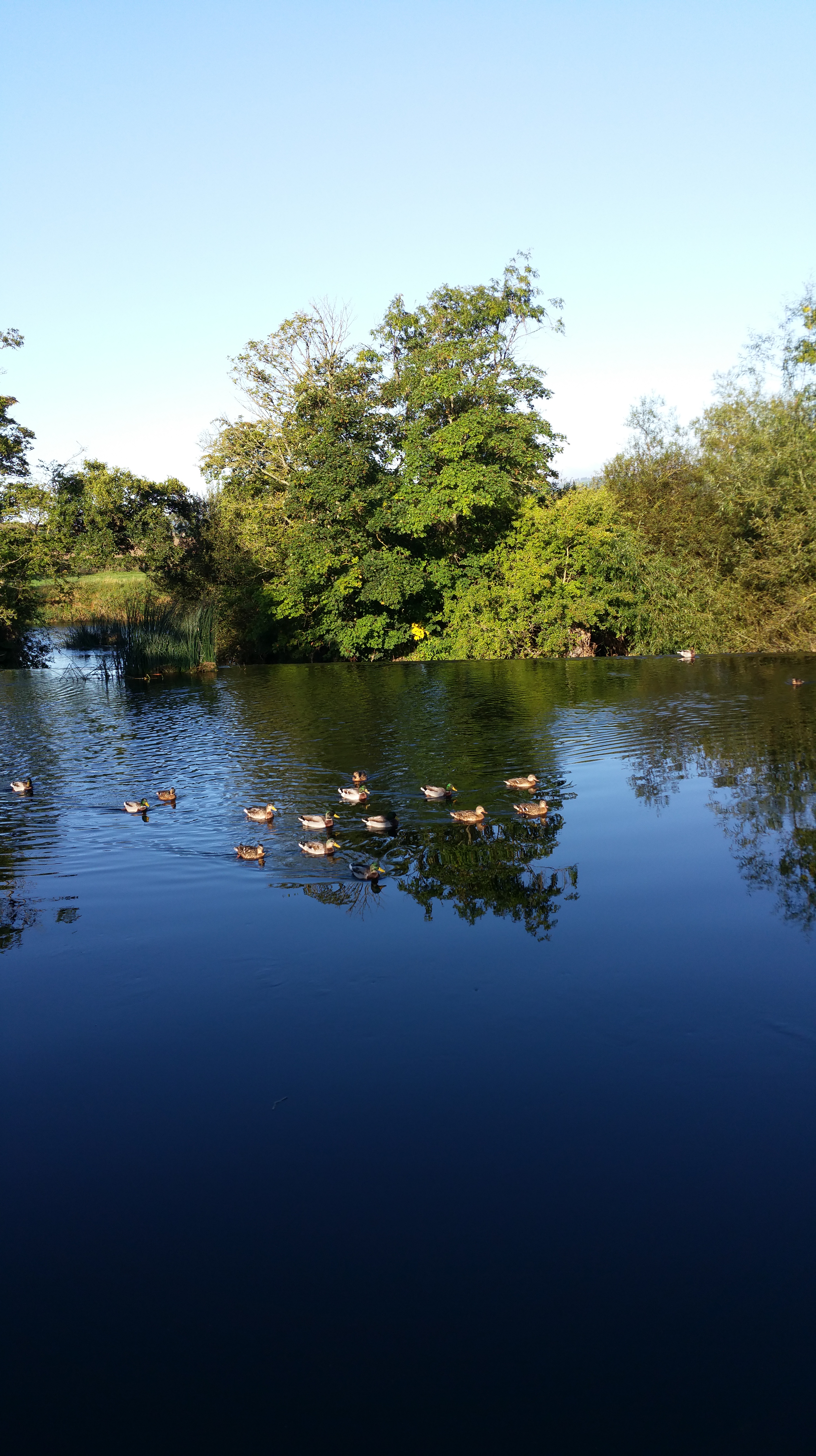
Lac Leman

Clearly recognizing what is happening inside us, and regarding what we see with an open, kind and loving heart, is what I call Radical Acceptance. If we are holding back from any part of our experience, if our heart shuts out any part of who we are and what we feel, we are fuelling the fears and feelings of separation that sustain the trance of unworthiness. Since non-acceptance is the very nature of the trance, we might wonder how, when we feel most stuck, we take the first step out of it. The very nature of our awareness is to know what is happening. Like a boundless sea, we have the capacity to embrace the waves of life as they move through us. Even when the sea is stirred up by the winds of self-doubt, we can find our way home. We can discover in the midst of the waves, our spacious and wakeful awareness.

Tara Brach

With thanks to Ellen van Kalmthout for sending me the beautiful photo of Lac Leman for use on the blog.

Losing our way and finding our home

File:Swallows' nest.jpg

When we moved into our house last autumn there was the remnants of a swallows nest in the porch over the door. And shortly after the first swallows  were seen back in Ireland this year, two of them started rebuilding the nest and getting it ready for use once again.  We look up at them and are heartened. They know how to get from somewhere far away all the way back here. They are faithful to a place and constant in their determination. And that clarity seems to us to be something desirable. We frequently lose our way and – more often than we would like to admit –  change our mind and our mood, sometimes from hour to hour. For most of us,  finding the correct path seems quite hard. We do not get it right unerringly year after year. We are a mix, we stumble, make mistakes and often have to change direction. Life is, in many ways, a long trek, and we all have periods when we are not sure who we are or where we are going, or even where we have come from. There are no maps, no clear GPS directions. And furthermore, there is no-one with a crystal ball who can show us the future or guide our current choices or give us the best answers to the mysteries which confront us.

So firstly, we have to be gentle with ourselves as ones who frequently get lost. But we also have to be clear on how much certainty and control we can get on our journey. The notion that we can ever find a full sense of security,  a firm hold on where we are going may not, in fact,  be as important as letting go and being found, of having something that holds us. It may be the case that trust in the present moment, rather than full knowledge, is the way we travel here. Even if it feels shaky, here and now is always the steadiest place to start, not our ideas about how we are doing. We can have an awareness of whatever is happening, including the sense of being lost, and that awareness is our place of refuge. It give us a sense of groundedness which is a necessary counterbalance to the constant sense of movement which is associated with time. Gradually it becomes a spacious home inside ourselves, even as we travel along  – a place of inner peace,  that the changing mind states on our journey  cannot trouble.

My real dwelling

Has no pillars

And no roof either

So rain cannot soak it

And wind cannot blow it down.

Ikkyu, 1394 – 1481, Japanese Zen Buddhist monk and poet

A good medallion

File:Rembrandt Harmensz. van Rijn - Old Man with a Gold Chain - Google Art Project.jpg

A skillful reflection is: ‘This is the way it is’. Venerable Buddhadasa Bhikkhu, the renowned Thai sage, said, “If there was to be a useful inscription to put on a medallion around your neck it would be ‘This is the way it is’.” This reflection helps us to contemplate: wherever we happen to be, whatever time and place, good or bad, ‘This is the way it is.’ It is a way of bringing an acceptance into our minds, a noting rather than a reaction. The practice of meditation is reflecting on ‘the way it is’ in order to see the fears and desires which we create.

Ajahn Sumedho, The Way it is

Aware of patterns

mosaic-lg

We all have well-established habits of thought, emotion, reaction and judgement,
and without the keen awareness of practice, we’re just acting out these patterns.

When they arise, we’re not aware they’ve arisen.
We get lost in them, identify with them, act on them
— so much of our life is just acting out patterns
.

Joseph Goldstein

Our restless heart

tree

I love you, gentlest of Ways,
who ripened us as we wrestled with you.

you, the great homesickness we could never shake off,
you, the forest that always surrounded us,

you, the song we sang in every silence,
you dark net threading through us,

on the day you made us you created yourself,
and we grew sturdy in your sunlight…

let your hand rest on the rim of heaven now and mutely bear the darkness we bring over you.

Rainer Maria Rilke, Book of Hours,  translation anita barrows and joanna macy