Totally still

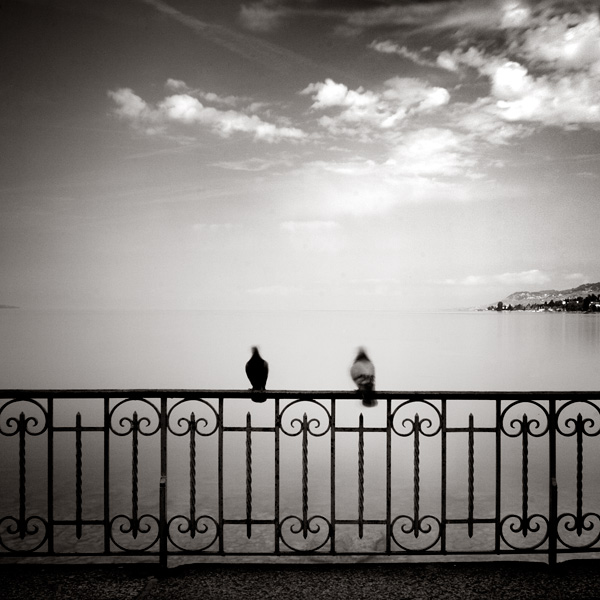
File:Still Water At Dusk.jpg
Ajahn Chah would ask “Have you ever seen still water?” They would nod, “Yes, of course, we’ve seen still water before.” Then he would ask, “Well then, have you ever seen flowing water?”  They’d respond, “Yes, we’ve seen flowing water.”“So, did you ever see still, flowing water?” “No. That we have never seen.”   He loved to get that bewilderment effect.

Ajahn Chah would then explain that the mind’s nature is still, yet it’s flowing. It’s flowing, yet it is still. He would use the word “citta” for the knowing mind, the mind of awareness. The citta itself is totally still. It has no movement; it is not related to all that arises and ceases. It is silent and spacious. Mind objects — sights, sounds, smell, taste, touch, thoughts, and emotions — flow through it. Problems arise because the clarity of the mind gets entangled with sense impressions. By contemplating our own experience, we can make a clear distinction between the mind that knows (citta) and the sense impressions that flow through it. By refusing to get entangled with any sense impressions, we find refuge in that quality of stillness, silence, and spaciousness.  This policy of  non-interference allows everything and is disturbed by nothing.

Ajahn Amaro,  Small Boat

photo Miguel Virkkunen Carvalho

False friends

File:Lobster trap.jpg

The greatest trap in life is not success, popularity or power, but self-rejection, doubting who we truly are. Success, popularity and power can indeed present a great temptation, but their seductive quality comes from the way they are part of the much larger temptation to self-rejection. When we have come to believe in the voices that call us worthless and unlovable, then success, popularity and power are easily perceived as attractive solutions.

Henri Nouwen

Becoming the observer

Movie hobbies
The reason we often can’t see the true nature of things is thatwe’re involved with them too subjectively and are afraid of whatthey might reveal about our egos. But if we step back from these phenomena, they become not so much ‘my story’ as just ‘a story’. It’s similar to watching a movie that’s extremely enjoyable – when it ends you can say, ‘Well, that’s not my story. That’s not me.’ You may have been taken through all kinds of impassioned human emotions (if the film is really good), but then you can go peacefully back to your own ordinary life.
Ajahn Thiradhammo, Contemplations on the Seven Factors of Awakening

In whatever circumstances

File:Annecy-vieilles-prison-ancient-jails-2.jpg

La joie réside au plus intime de l’âme; on peut aussi bien la posséder dans une obscure prison que dans un palais.

(Joy dwells in the deepest part of the soul; one can have it in an obscure prison just as much as in a palace)

St Therese of Lisieux

photo of the former prison in Annecy by Emmanuel Boutet

Holding tension

File:GocheGanas - View on walking activity.jpg

We must cultivate the ability to hold tension in life-giving ways. Our lives are filled with contradictions — from the gap between our aspirations and our behavior to observations and insights we cannot abide because they run counter to our convictions. If we fail to hold them creatively, these contradictions will shut us down and take us out of the action. But when we allow their tensions to expand our hearts, they can open us to new understandings of ourselves and our world, enhancing our lives and allowing us to enhance the lives of others. We are imperfect and broken beings who inhabit an imperfect and broken world. The genius of the human heart lies in its capacity to use these tensions to generate insight, energy, and new life.

Parker Plamer, Healing the Heart of Democracy

photo gocheganas

Sunday Quote: Wisdom

File:Wonder eye.png

If the doors of perception were cleansed,

every thing would appear to man as it is,

infinite

William Blake

photo: jalal volker