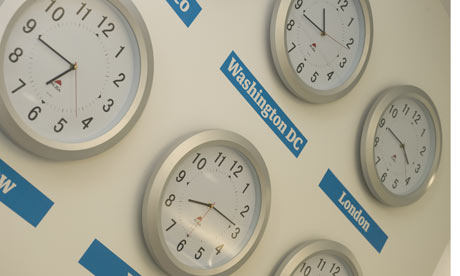
…… is equally important

Clocks-set-to-internation-001

To apprehend

The point of intersection of the timeless

With time, is an occupation for the saint.
T.S.Eliot: The Dry Salvages V

In Ireland, and the rest of Europe, the clocks went back last night (whatever that means) and we have an extra hour today. It happens next week in the US.  Arbitrary distinctions, but they prompt us to be more aware of time. Two minutes before midnight 2012 is not much different from two minutes after midnight 2013 and yet we assign huge meaning to certain transitions. To help us deal wisely with the passing of time we concern ourselves with the present moment, in whatever form it takes. We loosen the meanings we assign to it, which often distract us from being fully engaged. We practice sticking close to how things actually are, rather than how they “should” be:

Sometimes we divide our time into categories: you have time for work, time for exercise, time for eating, time for your partner, time for the children and finally, you hope, time for yourself. But the ….attitude [behind mindfulness]  is that all time is for yourself: whatever you’re doing, however trivial, is equally important to everything else. No time is wasted. We should give total respect and attitude to whatever we are doing.

Larry Rosenberg, Living in the Light of Death.

Sunday quote: All time….

Pumpkin View

People sacrifice the present for the future.

But life is available only in the present.

Thich Nhat Hanh

Finding through losing

feet3

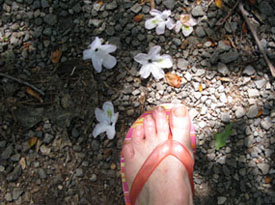
This is the simple truth

– that to live is to feel oneself lost – 

He who accepts it has already begun to find himself to be on firm ground.

José Ortega y Gasset, Who Rules the World.

Seeing life freshly

child

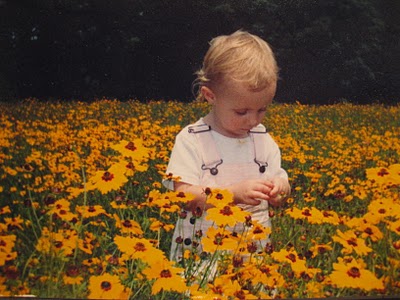
It’s a Bank Holiday, or long weekend,  here in Ireland, so one immediately feels as if there is more time to slow down and take a break from the rushing which the working week inevitably impresses on the mind. A certain space enters, allowing us to see things more lightly, or to see them with eyes that have the room to appreciate them:

Childhood is not a state which only applies to the first phase of our lives in the biological sense.

Rather it is a basic condition which is always appropriate to a life that is lived aright. 

Karl Rahner, Catholic Theologian, 1904 – , 1984

What is this

tea22

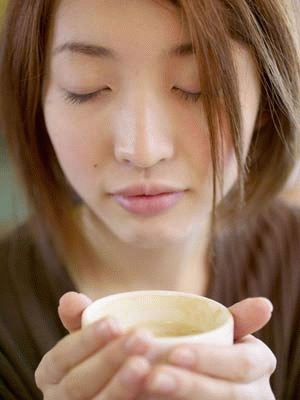
At a retreat once in the UK with Martine Bachelor, I heard her talk of a practice which was taught in the monastery where she was as a nun. It seemed simple  – to keep repeating the words “What is this” when involved in the different activities of the day. It was an exercise designed to allow the person create a gap or a pause, and notice what was before them, therefore encouraging them to enter more deeply into whatever was happening in that moment. It is a good practice for getting in touch with the felt sense in our body. It slows down the tendency to spin off into our stories and our fears. It develops our ability to fully experience the moment we are having, and this may strengthen our capacity for joy.

All religions point to the fact that being fully present is the only state in which you can wake up—not by somehow leaving.

So you have to find your own simple, grounded language to say that to yourself,

What is this moment, this situation, or this person trying to teach me?

Another one that I love is “This is a unique moment. Maybe I’m not so glad about it because it’s painful, but I don’t want to waste it, because it’s never going to happen again this way.

So let’s taste it, smell it, experience it”.

Pema Chodron

Working with our patterns

Mindfulness and some anxiety problems

Sometimes it is hard to let go and let the future evolve, or let set-backs simply pass through, as the brain’s default pattern tends to be negative and we are always scanning for danger. Our habit of comparing ourselves with others evolved as a necessary survival skill, essential to see who was stronger – and a threat – or to identify potential allies. This survival necessity became deeply embedded in our consciousness as an alertness, a certain vigilance. However, for some people,  –  depending on the level of constancy they experienced in the first years of life with their parents – this low-level hum of vigilance can be replaced by a continual anxious scanning for danger and  everyday experiences  can start the neurons in the brain gossiping and worrying.

It is not easy to work with the mind when it is triggered into deep anxieties. However, Pema Chodron’s quote this morning encourages us to identify this frequently active comparing mind and to try cultivating a “don’t know” mind.  The more we can see these mental energies for what they are – perceptions and judgments of the mind – the less they have the capacity to pull us out of the moment. Outside of our mind, the relative concept of “better” has no sense.

For many of us, feelings of deficiency are right around the corner. It doesn’t take much — just hearing of someone else’s accomplishments, being criticized, getting into an argument, making a mistake at work — to make us feel that we are not okay. As a friend of mine put it, “Feeling that something is wrong with me is the invisible and toxic gas I am always breathing.” When we experience our lives through this lens of personal insufficiency, we are imprisoned in what I call the trance of unworthiness. Trapped in this trance, we are unable to perceive the truth of who we really are.

Tara Brach, Radical Acceptance