What are you waiting for?

I only recently discovered this beautiful poem, on not living in the future, or waiting for some other moment to begin living fully. As Jon Kabat Zinn frequently says, nothing needs to be added to this moment to make it complete. And yet we often fall into the trap of thinking that sometime in the future, the conditions will come together, and we will start to fully live. As the poem says, there will be nothing in that future moment that is greater than now, than this day, when you stop reading this.

Starting here, what do you want to remember?

How sunlight creeps along a shining floor?

What scent of old wood hovers, what softened

sound from outside fills the air?

Will you ever bring a better gift for the world

than the breathing respect that you carry

wherever you go right now? Are you waiting

for time to show you some better thoughts?

When you turn around, starting here, lift this

new glimpse that you found; carry into evening

all that you want from this day. This interval you spent

reading or hearing this, keep it for life –

What can anyone give you greater than now,

starting here, right in this room, when you turn around?

William Stafford, You Reading this, Be Ready

Photo courtesy photos-public-domain.com

Poisoning ourselves: Continually judging

Feeling that we are continually falling short

is like a toxic gas we breathe,

making it difficult to be truly intimate with others

and at home in our body, mind and heart.

Tara Brach.

On using our time responsibly

Western laziness is quite different. It consists of cramming our lives with compulsive activity, so that there is no time left to confront the real issues. If we look into our lives, we will see clearly how many unimportant tasks, so-called “responsibilities” accumulate to fill them up. One master compares them to “housekeeping in a dream.” We tell ourselves we want to spend time on the important things of life, but there never is any time. Helpless, we watch our days fill up with telephone calls and petty projects, with so many responsibilities  – or should we call them “irresponsibility’s”?

Sogyal Rinpoche

Running from shadows

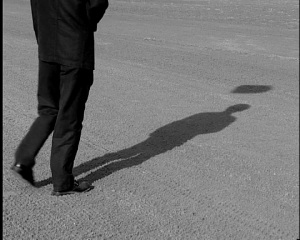
I remember, when I was a very small child, often trying to jump into the middle of my shadow, but however hard I jumped I just landed on the shadow’s feet. And I would run after my shadow and then jump  – but where would I land? Just in the same place all over again. And this is what we do with our lives  – the things that we desire, it’s like running after shadows. You try to catch hold, reaching for the desire so close, and then you grasp it and then . . .and you haven’t really got it. Somehow it’s not what you expected, it’s different, not what you really wanted. And then to run from your shadow  – to be afraid, you keep turning around: ‘It’s still behind me, run faster, got to get away.’ When we stop and look though, we realize: ‘Well, it’s just my shadow.’ You can’t get away from it, but there’s nothing in it to be afraid of, it’s just a shadow. So when we stop and rest in the stillness of knowing, we know in our hearts that all we desire, all we fear, are just shadows. There is no substance there – nothing which can make us more complete and nothing which can threaten us. This is the real freedom of mind.

Ajahn Amaro, Real Freedom

Don’t get caught up today

What we need is to be interested and to watch, but not interfere or be caught up in what we are thinking. Don’t think of the past, don’t anticipate the future, don’t get fascinated by the present.

See it as it is. Just be there with it. A thought is just a thought. An emotion is just an emotion.

It is like a bubble. It will burst and another one will come up.

Ani Tenzin Palmo, Reflections on a Mountain Lake

On not criticizing oneself

As I have said before, I often find in Ajahn Sumedho’s writings a clarity which cannot be matched. It is the case here. Simply stated, it gets to the heart of the dynamic which causes us so many problems – our tendency to add on to and identify with what passes through the mind and make it into a criticism of ourselves. I recognize these phrases he uses here as ones I use myself and which I frequently hear in talking with people.

You can’t get more simple than mindfulness because it is not anything you can create. It is just a matter of paying attention and being present, it’s not a complicated technique or a complexity. It’s so simple, but we are conditioned for complexity, so we tend to make things complex all the time. You are sitting and observing and then a negative thought arises in your mind and you think “That’s bad”. ‘That’s a compounding. The act of judging it, of putting the label “bad” onto it, makes it more than what it is.

Mindfulness is just aware of presences and absences. It is not concerned whether they are good or bad. It is not looking at them from that critical position. So “bad” is a criticism, or “that’s good”, “that’s right” and “that’s wrong”. And then it goes into “I’m good”, “I’m bad”, “I shouldn’t feel like this” ,  “I shouldn’t have these thoughts or desires”, ” I should be more compassionate and patient”. So you see it gets increasingly more complicated with judgments, criticisms and a sense of self that is identified with these different conditions. It gets even more complicated. If you have a bad thought you think “I am bad, I am a bad person, I am not very good…[then] These thoughts arise because people are inconsiderate and don’t respect me. And because of their lack of sensitivity and understanding, I have these bad thoughts”,  so it gets increasingly more complicated.

Ajahn Sumedho, The Sound of Silence