Preparing for a new year

As yesterday’s post said, people begin to look forward to the new year as an opportunity to start again. This is natural, but frequently does not lead to any real change, unless we understand the patterns within our own heart. Any lasting growth comes from  an understanding of our heart, with all its needs and hopes, its vulnerabilities and wisdom.  This means that we can drop all pretense and the need to blame others for what is lacking in our lives.  In many cases the desire for change around this time is based on comparing our lives with others and feeling we are lacking.  Instead of looking outward, we turn within and gently look forward – not based on fear of where we are now or criticism of this past year – but rather accepting who we are and opening to the new opportunities which will unfold.

Your vision will become clear only when you look into your heart.

Who looks outside, dreams. Who looks inside, awakens.

C.G. Jung

In our darkest night

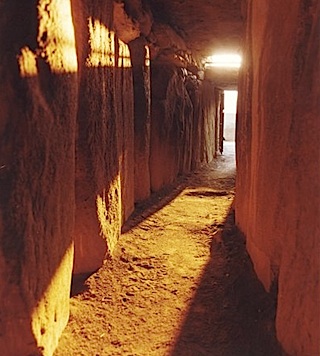
Being Irish,  I always remember Newgrange on this day. It is an enormous burial tomb, built over 5000 years ago,  before Stonehenge and the Pyramids. It has with a small, dark inner chamber where the light penetrates just once a year at the dawn of this day,  to warm those who have died for a few moments.

The Ancient Celts knew intimately the passage of the sun and the sacredness of certain days. Today, the darkest and shortest day of the year, they ensured that the sun still touched where they were buried. For us too, no matter how dark our interior life becomes, or how deeply we feel buried,  light can still enter and illuminate. No matter how frozen we feel or how we shut ourselves off in fear of expoitation by others, we can be warmed and opened.

May hope and light,  in some way,  touch us all today.

Peace comes dripping slow

Some sense of longing seems to be a part and parcel of human nature, and will never go away. It comes from the fact, as John O’Donoghue wrote in Anam Chara, that the human person is a threshold where many infinities meet. This can explain why, for many of us, a deep lasting peace is very hard to find in a world which is finite.

We intuitively know it exists, and look to find it in many ways.  However, it seems to me that true rest, in a lasting and definitive sense, is something which slips from our grasp. As much as we try to realize it and make it our own, it never seems to linger with us very long. It stays a while with us and then takes flight. We are restless and often struggle to find security within ourselves, to get our lives together, to create a real home for ourselves. However, even when we have fulfilling days, or a job that goes well, we can still go around with a subtle awareness that there are unfinished tasks, unrealized possibilities.  We have a feeling that there is something else that we should have remembered, done, or said. An underground sense of being unfulfilled underlies our filled lives.

Some profound sense of restlessness remains and will always do so. Recognizing that a complete answer to our deepest longings cannot be found in how hard we work, or how much we possess,  is a fundamental first step to attaining deeper peace. It means, paradoxically, accepting that we will always be somewhat unfinished.

However, there are real ways that we can increase our actual fulfillment and contentment in our day-to-day lives. Often it requires that we shift our focus, away from making life problem-free, to giving our ordinary,  everyday life a depth and value. In a sense,  we have to turn away from always looking for certainty and fulfillment, and instead, look more deeply at the reality of what is actually happening in our life. A focus on something external keeps us from resting on our own centre, leaving us outwardly turned and inwardly disconnected. If we imagine that others will be the source of our complete fulfillment we are attaching our hopes onto something that can lead to betrayal and let down. We have to stay with what actually is,  not what we would like to be there. And not just the parts which we like. Because if we keep running away from what is unpleasant, thinking that we should only have pleasant, and put an emphasis on control, then we have a recipe for a a cycle of unhappiness and disappointment, which leads to us feeling weaker and weaker.

The ways and means vary as to how this peace comes to us, how we find it. Amidst the hectic activities of our days, and the rush of modern life, we try to clear some space to be alone, to still the chatter in our heads and to taste a little bit of solitude. Peace comes dripping slow, as Yeats reminds us. We cannot rush it by grasping after it.
Learning from whatever happens

We also try to listen to whatever is going on in our lives, and whoever we encounter in a day. Opportunities for growth come in many shapes and sizes, sometimes unexpected or not quite what we would like.

The present moment is the perfect teacher. And lucky for us, it’s with us wherever we go.

Pema Chodron

How to transform your work

Even if you have a lot of work to do,
if you think of it as wonderful,
and if you feel it as wonderful,

it will transform into the energy of joy
and fire, instead of becoming a burden.

Tulku Thondup Rinpoche

Be happy

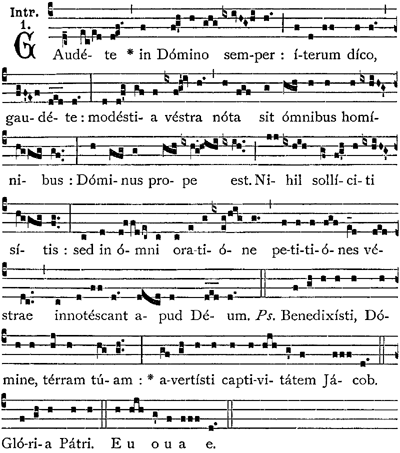
The third Sunday of Advent, is traditionally called Gaudete Sunday, or Be Happy Sunday.  For those preparing for Christmas,  this joy comes from knowing that the coming of Jesus is near. which puts the up’s and down’s of daily life be put into context.  This exhortation is shared by most wisdom traditions.  We are reminded  of a fact, sometimes forgotten by earnest religious practioners, that at the heart of all inner practice is joy, which leads us to understand the true nature of happiness.

Joy does not come from having everything perfect as we want it, by having a preconceived perfect day, but by accepting how life actually is and not fighting against it. It is possible even in the midst of difficult moments. It comes from seeing deeper into the heart of things. understanding that it is born from within and not from the external conditions of our lives.  It is based on choices we make. It has its roots in the security we find within ourselves and from love:

Joy is the experience of knowing that joy and freedom comes from knowing you are unconditionally loved and that nothing — sickness, failure, emotional distress, oppression, war, or even death — can take that love away.

Joy is not the same as happiness.  We are inclined to think that when we are sad we cannot be glad, but ….. sorrow and joy can exist together. That isn’t easy to understand, but when we think about some of our deepest life experiences, such as being present at the birth of a child or the death of a friend, great sorrow and great joy are often seen to be parts of the same experience. Often we discover the joy in the midst of the sorrow. I remember the most painful times of my life as times in which I became aware of a spiritual reality much larger than myself, a reality that allowed me to live the pain with hope. I dare even to say: ‘My grief was a place where I found joy.’ Still, nothing happens automatically in the spiritual life. Joy does not simply happen to us. We have to choose joy and keep choosing it every day.

Joy is what makes life worth living, but for many it seems hard to find. They complain that their lives are sorrowful and depressing. What then brings the joy we so much desire? Are some people just lucky, while others have run out of luck? Strange as it may sound, we can choose joy. Two people can be part of the same event, but one may choose to live it quite differently than the other. One may choose to trust that what happened, painful as it may be, holds a promise. The other may choose despair and be destroyed by it.

What makes us human is precisely this freedom of choice.

Henri Nouwen