Out of the depths

The most beautiful people we have known are those who have known defeat, known suffering, known struggle, known loss, and have found their way out of the depths. These persons have an appreciation, a sensitivity, and an understanding of life that fills them with compassion, gentleness, and a deep loving concern. Beautiful people do not just happen.

Elisabeth Kübler-Ross,  Death: The Final Stage of Growth,

Herding thoughts and emotions

When I am not present to myself, then I am only aware of that half of me, that mode of my being which turns outward to created things. And then it is possible for me to lose myself among them. Then I no longer feel the deep secret pull of the gravitation of love which draws my inward self. My will and my intelligence lose their command of the other faculties. My senses, my imagination, my emotions, scatter to pursue their various quarries all over the face of the earth. Recollection brings them home. It brings the outward self in line with the inward spirit, and makes my whole being answer the deep pull of love that reaches down into the mystery of God.

Thomas Merton, No Man is an Island

Growth


Even when we cannot see the while picture, it is good to have an underlying trust.

Let me fall if I must.

The one I will become will catch me

Baal Shem Tov, 1698 – 1760, Jewish rabbi and mystic, founder of Hasidic Judaism

Underneath

Don’t base your identity on your imperfection.

You aren’t your imperfections,

you are the being that is aware of your imperfections.

Haemin Sunim

Drop the knife

Once a young woman said to me, “Hafiz, what
is the sign of someone who knows God?”

I became very quiet, and looked deep into her
eyes, then replied,

“My dear, they have dropped the knife. Someone
who knows God has dropped the cruel knife

that most so often use upon their tender self
and others.”

Hafiz, Persia, 1315 – 1390

Turning people into trees

This is a lovely idea…

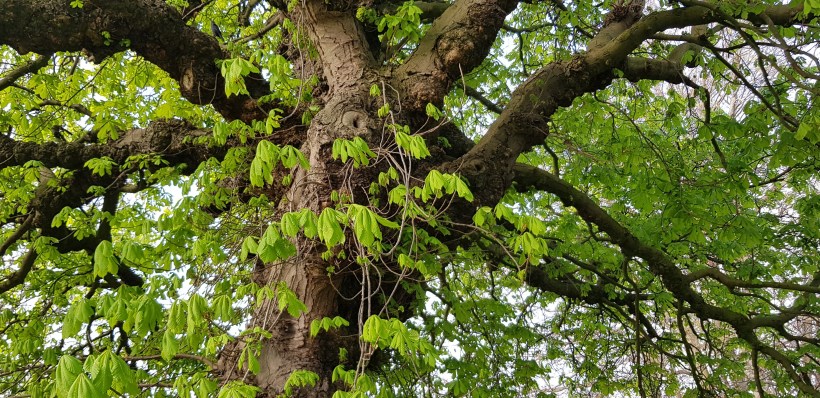
When you go out into the woods and you look at trees, you see all these different trees.

And some of them are bent, and some of them are straight, and some of them are evergreens, and some of them are whatever.

And you look at the tree and you allow it. You appreciate it. You see why it is the way it is.

You sort of understand that it didn’t get enough light, and so it turned that way. And you don’t get all emotional about it. You just allow it. You appreciate the tree.

The minute you get near humans, you lose all that.  And you are constantly saying “You’re too this, or I’m too this.”

That judging mind comes in.

And so I practice turning people into trees. Which means appreciating them just the way they are.

Ram Dass, On Self-Judgment