
A thousand secrets are hidden in simply sitting still.
Karlfried Graf Dürckheim, German psychtheorapoist and zen teacher
A thousand secrets are hidden in simply sitting still.
Karlfried Graf Dürckheim, German psychtheorapoist and zen teacher

Just this day, with its work, and travel, its meetings and discussions, and its weather, roads, stones and plants. We do not need to add more.
Mind as fences, walls, tiles, and pebbles
is nothing other than fences, walls, tiles, and pebbles.
There is no additional mud or water.
Dogen.
photo ardfern.

In meditation practice, we neither hold the mind very tightly nor let it go completely.
If we try to control the mind, then its energy will rebound back on us. If we let the mind go completely, then it will become very wild and chaotic. So we let the mind go, but at the same time, there is some discipline involved …
The basic practice is to be present, right here.
The goal is also the technique: precisely being in this moment, neither suppressing nor wildly letting go, but being precisely aware of what you are.
Chögyam Trungpa Rinpoche
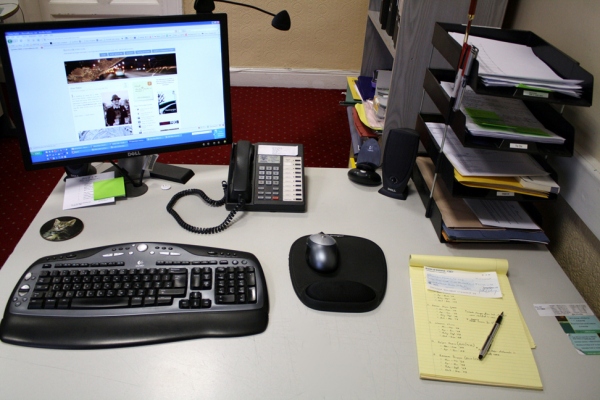
“When you are walking, walk. When you are sitting, sit,” is ancient wisdom. Hopping rapidly from one thing to the next, answering the phone while we’re shuffling papers while we’re sipping a latte, we fritter away our attention and forget more easily. ….. That is why learning to be a unitasker in a multitasking world is so vital. Rather than divide our attention, it is far more effective to take frequent breaks between intervals of sustained, one-pointed attention. Debunking the myth of multitasking, we become much better at what we do and increase the chance of being able to remember the details of work we have done in the past.
Sharon Salzberg, Real Happiness at Work
My thought is almost never directed on knowing myself as I am in this moment…and again in this moment. It is difficult for the thought to remain on what is, because it is based on memory and is constantly visualizing the possibility of becoming. How to …resist the desire to become, in favor of simply what is? It is difficult for my thought to stay in front of the unknown. This means abandoning belief in everything it knows, even the trace of the preceding moment. To stay in front of the unknown my mind must be profoundly silent. This is a silence that is not obtained by suppressing or by sacrifice. I do not make the silence. It appears, when the mind sees that by itself alone, it cannot be in contact with something it cannot measure, something higher. Then the mind no longer seeks, it does not try to become.
Gurdjieff’s pupil, Jeanne De Salzmann, (1889 – 1990) Reality of Being

Don’t recall. Don’t imagine. Don’t Think. Don’t examine. Don’t control. Rest.
Tilopa ( 988–1069 } passed on this advice on mahāmudrā meditation to Naropa, his successor.
In the original Tibetan it contains just six words. The following translation attempts to tease out their full meaning:
Let go of what has passed.
Let go of what may come.
Let go of what is happening now.
Don’t try to figure anything out.
Don’t try to make anything happen.
Relax, right now, and rest.
Translation: Ken McLeod in Unfettered Mind
photo nevit dilman

