No longer trying to become

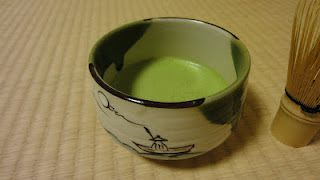
zen tea

My thought is almost never directed on knowing myself as I am in this moment…and again in this moment. It is difficult for the thought to remain on what is, because it is based on memory and is constantly visualizing the possibility of becoming. How to …resist the desire to become,  in favor of simply what is? It is difficult for my thought to stay in front of the unknown. This means abandoning belief in everything it knows, even the trace of the preceding moment. To stay in front of the unknown my mind must be profoundly silent. This is a silence that is not obtained by suppressing or by sacrifice. I do not make the silence. It appears, when the mind sees that by itself alone, it cannot be in contact with something it cannot measure, something higher. Then the mind no longer seeks, it does not try to become.

Gurdjieff’s pupil,  Jeanne De Salzmann,  (1889 –  1990)  Reality of Being

Six words to live by

File:Zen 07289 nevit.jpg

Don’t recall. Don’t imagine. Don’t Think. Don’t examine. Don’t control. Rest.

Tilopa ( 988–1069 } passed on this advice on  mahāmudrā meditation to Naropa, his successor.

  In the original Tibetan it contains just six words. The following translation attempts to tease out their full meaning:

Let go of what has passed.
Let go of what may come.
Let go of what is happening now.
Don’t try to figure anything out.
Don’t try to make anything happen.
Relax, right now, and rest.

Translation: Ken McLeod in Unfettered Mind

photo nevit dilman

We will never be here again

File:Cây Cổ Thụ đẹp nhất Việt Nam.jpg

The gods envy us.

They envy us because we’re mortal, because any moment may be our last.

Everything is more beautiful because we’re doomed.

You will never be lovelier than you are now.
We will never be here again.

Homer, The Iliad

photo huykhanhthai

The space in between

File:Glendalough, Ireland.jpg

I spent yesterday morning in the lovely retreat house at the Tearmann Spirituality Center  in Glendalough,  Co. Wicklow,  with the MBSR group I am currently working with. A quiet morning of sitting meditation and walking, and space in the wide expanses of the mountains and the forest. We tend to get consumed by the activities we do,  the words we say, the thoughts we think,  and the things we have. Our minds get drawn there, and not to the spaces before and after that hold them. What if the gaps were more important? What if we practiced  focusing more on the spaces around moments, nurturing them and making wider the gaps within and without? These are the home of the spirit. They nourish us, widening the heart and giving life.

Ezekiel excoriates false prophets as those who have “not gone up into the gaps.” The gaps are the thing. The gaps are the spirit’s one home, the altitudes and latitudes so dazzlingly spare and clean that the spirit can discover itself like a once-blind man unbound. The gaps are the clefts in the rock where you cower to see the back parts of God; they are fissures between mountains and cells the wind lances through, the icy narrowing fiords splitting the cliffs of mystery. Go up into the gaps. If you can find them; they shift and vanish too. Stalk the gaps. Squeak into a gap in the soil, turn, and unlock — more than a maple — universe.

Annie Dillard, Pilgrim at Tinker Creek

photo,  Glendalough,  pixie from he

The simplest practice

File:A U.S. Air Force trainee gasps for breath after completing the underwater swim portion of his physical ability and stamina test at Little Rock Air Force Base, Ark., June 2, 2010 100602-F-MM528-122.jpg

That is the wonderful thing about the breathing, and the reason it is such a helpful object of attention. It is both perfectly ordinary (we are all doing it, all the time) and extremely special (if we weren’t doing it, we’d be dead)… Everybody breathes. It is also extremely portable. We take it everywhere we go. So if you choose to practice with the breathing, it has the advantage of always being there. No matter how many times you forget it throughout the day, you can always take it up again. There’s another in-breath. There’s an out-breath.

Larry Rosenberg, Breath by Breath

Depth and richness

sitting2

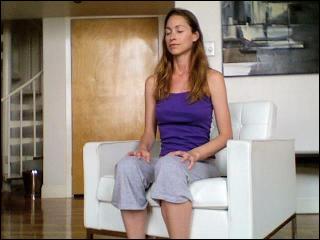
Settle down in your room at a moment when you have nothing else to do. Say “I am now with myself,” and just sit with yourself. After an amazingly short time you will most likely feel bored. This teaches us one very useful thing. It gives us insight into the fact that if after ten minutes of being alone with ourselves we feel like that, it is no wonder that others should feel equally bored! Why is this so? It is so because we have so little to offer to our own selves as food for thought, for emotion and for life. If you watch your life carefully you will discover quite soon that we hardly ever live from within outwards; instead we respond to incitement, to excitement. In other words, we live by reaction… We are completely empty, we do not act from within ourselves but accept as our life a life which is actually fed in from the outside; we are used to things happening which compel us to do other things. How seldom can we live simply by means of the depth and the richness we assume that there is within ourselves.

Archbishop Anthony Bloom, Learning to Pray