Sweeping out clutter

path

But it’s not so simple, this sort of “quiet hour” : it has to be learnt. A lot of unimportant inner litter and bits and pieces have to be swept out first. Even a small head can be piled high inside with irrelevant distractions. True, there may be edifying emotions and thoughts, too, but the clutter is ever-present. So let this be the aim of the meditation: to turn ones innermost being into a vast empty plain, with none of that treacherous undergrowth to impede the view so that something of “God” can enter you, and something of “Love” too.

Etty Hillesum, An Interrupted Life

Balance, rooted in the body

File:Zwei Stare.JPG

Healing is a natural  result of finding true balance.

If we relate to a balanced ease in the body, it brings us into the balance of our minds, and it is only from that basis that we can get a feel, through the tangle of anxieties and mood swings, of a simple thread of emotional ease and psychological space. It’s a shift from being tense or on guard, to something more trusting. And it’s through attending to this that we can step back from the biases and old narratives.

Ajahn Sucitto, Kamma and the End of Kamma

Going with the flow

https://mindfulbalance.org/wp-content/uploads/2013/01/river-e1358798833371.jpg

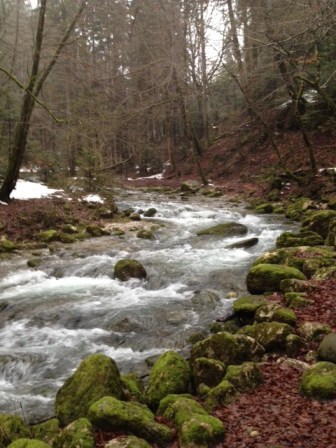
All of us rock back and forth between the tendency to hold on to ideas, experiences and emotions, and the ability to glide through the changes of our life. One reminder that can be helpful for being more fluid is to recognize our own watery-ness. We are also made up of earth (no wonder we get stuck sometimes), air (can’t make a commitment?), fire (sometimes passion helps), and space (ahhh…). But an overwhelming percentage of our physical make-up is water….Relating to waves of movement is what allows us to stay steady and sustain balance. The word “balance” comes from the Latin balare, meaning “to dance.” [And] you know what happens to water if it stays still —  it either turns into ice or becomes brackish and unhealthy. The same thing happens when we try to latch on to a prescribed feeling or experience. If we can only relax a bit we will see that our feelings, both emotional and physical, are flowing all the time.  It’s fun to think of your own body as a tiny part of the whole world of tides, rains, rivers and other people’s ninety-percent-water bodies. Can you let your body be the water bed that your heart and mind rest on?

Cyndi Lee, Go with the Flow

Running and missing

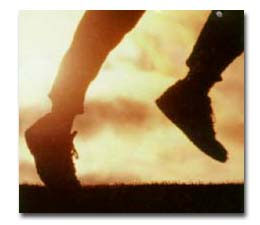
runningFrequently for us time is money. We must save as much time as possible, so that we have free time for more important things. The question is – what is more important to us? Often we cannot do much at all with all the time “saved”. We are habitually in a rush. But where to? We’ve become victims of our own frenzy – we rush at all times including our free time. He too we want to do more ever faster. But this constant rushing takes away our ability to feel and to experience the things we do. Increasingly we only feel alive in the midst of the hustles and bustles. We no longer feel ourselves, our breathing, our body, or the stirring of our heart. As the poet Ingeborg Bachman once said: “Idleness is the beginning of all love”

Anselm Gruen, Angels Calling

A prayer for the journey

hills3

I no longer ask you for either happiness or paradise; all I ask of You is to listen and let me be aware of Your listening.

I no longer ask You to resolve my questions, only to receive them and make them part of You.

I no longer ask You for either rest or wisdom, I only ask You not to close me to gratitude, be it of the most trivial kind, or to surprise and friendship.

Holocaust Survivor Elie Wiesel, One Generation After

Curious about the mind

File:Curiosity in children.jpg

The path of meditation and the path of our lives altogether has to do with curiosity, inquisitiveness. The ground is ourselves; we’re here to study ourselves and to get to know ourselves now, not later.  One of the main discoveries of meditation is seeing how we continually run away from the present moment, how we avoid being here just as we are. That’s not considered to be a problem; the point is to see it.

Pema Chodron.

photo Vitold Muratov