Tonight we’re going to party….

The expectations which a new year creates can sometimes heighten the sense of  disappointment or insecurity which we feel regarding where our life actually is.

There are a number of ways in which we can respond to this insecurity. One is to say “Tonight we are going to party like it’s ….” In other words, focus on what needs to be added to your life and throw yourself into something different. Convince yourself that what is required is to go out and find a party or new friends and surround yourself with life and music, get a new look and start all over again. In this way you can leave behind the past year/ person/ relationship/ bad patch (insert your own version here……….) and break free, finally, once and for all.  Now,  this not the worst of ideas, and I too will celebrate the evening in a party with friends.  However, if the underlying causes are not faced most likely it just offers relief for a few hours. Most things started in haste or under pressure tend to pick up at the same level of development we are at when we jump into them, and thus can just prolong the same issues.

A different response is to turn on yourself, focus on what is lacking, feel bad about who you are, dissect the reasons as to why you have reached the end of another year and yet are no further on than last year, and push harder. This pushing can take the shape of finding the root causes for your problems, such as having too many unhealed problems since childhood. Or it can simply focus on now, demanding more, pushing harder, renewing your positive thoughts or ambitions for the next twelve months. This is the way to be more focused/ more balanced/have a better body/ find a new relationship (insert your own version here………..) However, pushing ourselves towards perfection is unrelenting, and, as hard as we try, we are unlikely to turn off the critical messages in our heads that say “this is never good enough” or “what will those looking at me say?” And any desire for change which is based on unrelenting standards towards ourselves tends to maintain the same division between the “I” that observes and the “I” that is not good enough and thus just perpetuates the same perspective into the future.

There are some strange contradictions inherent in change and happiness. Change comes from accepting ourselves – resting with our imperfections and recognizing that we are already enough – and seeing that we are worthy of love and belonging.  All moving forward needs to be based on our capacity to sit still, accepting what we have. Happiness comes when we do not make it the focus of our efforts, but accepting that it comes even when we are not completely satisfied with where we are at any given moment.

Give up on yourself. Begin taking action now, while being neurotic or imperfect, or a procrastinator, or unhealthy, or lazy, or any other label by which you inaccurately describe yourself. Go ahead and be the best imperfect person you can be and get started on those things you want to accomplish before you die

Shoma Morita
Stille Nacht or finding inner peace at Christmas time

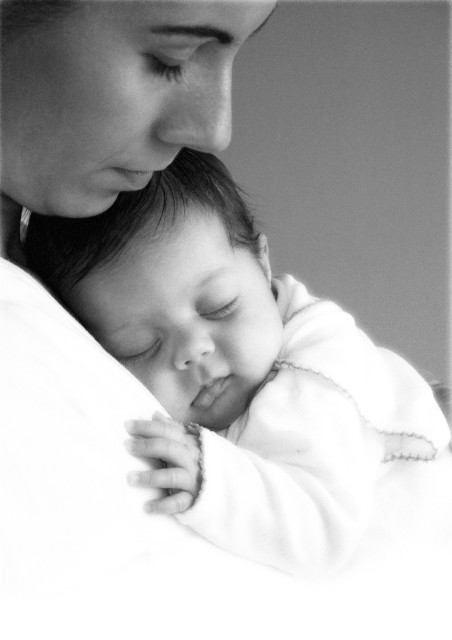
All around the world the popular Christmas song, Stille Nacht/Silent Night is sung on this day. The German word stille has some deeper connotations than what is conveyed by the English word “silent”. It has its roots in the verb “stillen”, meaning to suckle, to quieten a child and put to rest. The mother feeds and comforts the hungry child so that it becomes calm and content, able to close its eyes and sleep. For us too, the calm which we all desire inside our hearts is related to our awareness of being safe,  which allows us to become still inside.

As an adult, can we ever get back to this early awareness of calm? Maybe never fully, but there are some things we can do. It seems that this interior stillness is related to exterior quiet. It has been found that noise raises cortisol levels, the hormone related to stress and anxiety and that taking some quiet time lowers these levels. It has even been measured. Apparently 12 minutes of quiet will bring down cortisol levels in the brain and lay the foundation for calm. However, these days, this is not se easy to do. We are continually bombarded by noise: the TV, radio, iPods, mobile phones, and computers hardly stop for a second. We also live in an age of visual stimulation that leaves us craving louder and brighter, kinds of entertainment. These means that a lot of us are extremely uncomfortable with silence and have become so unfamiliar with it that even momentary periods of quiet are quickly filled with sound or anxiety.

And yet, we all long to silence the noisy chatter of our thoughts, the crying of our needs and emotions, and develop a place of quiet and calm within us. A place which is safe, away from the judgments, expectations and demands placed on us by our own critical mind or by others. At some times in our lives we find it relationships with others, or in the embrace of our family. However, what this day and all the wisdom traditions remind us, is that real, lasting peace is to be found within our hearts, a quiet space where nothing can harm us, untouched by all the stuff that others may wish to impose upon us.  If we do not find that stillness within, it is hard to find it in the outside circumstances of our lives. Only when we have found this inner place of peace can we have contact with others without anxiety. We can rest, and be still, without fear of being hurt.

Trying to escape

When a major event is celebrated, such as Christmas, we often get into a state of anticipation, of waiting. It is as if we think something is going to be suddenly different in the future. Often we use the busyness of everyday work to mask what we really feel underneath. Then we look forward to the special day or to the vacation, thinking that it will somehow fix whatever out of balance in our lives. However, there is a danger in this, as we can fall into the trap of linking our happiness to some future moment, which only leads us to feel more discontent when we see that nothing has changed. This type of fantisizing about the future is normally a way of avoiding some difficulty about our life in the present. True contentment comes from working with our life as it as –  from surrendering to what is –  and not trying to escape from it.

Peace can only exist in the present moment. It is ridiculous to say “Wait until I finish this, then I’ll be free to live in peace”. What is “this”? A diploma, a job, a house, the payment of debt? If you think that way peace will never come. There is always another “this” that will follow the present one. If you are not living in peace at this moment, you’ll never be able to. If you truly want to be at peace, you must be at peace right now. Otherwise there is only hope for peace “some day.”

Thich Nhat Hahn, The Sun my Heart

Do not be ashamed

A reminder to drop the “comparing mind” that leads us to evaluate our life in relation to others’ successes, lives or even opinions.  It is good to develop a security in our sense of self that does not overly concern itself with how others regard us, but is founded in our own goodness. When we have this there is no need to hide or cover ourselves, to avoid others seeing us.

Many of us have hearts that are overlaid with anxieties, fears, and other defensive behaviours which arose in our attempts to deal with disappontment. One of these is a strong protected sense of personal space,  constructed to ensure that others do not get too close. This can be rooted in shame, which is often related to how we sense our own competence. It is a way in which we learnt to deal with the disappointment of realizing that our needs were not noticed by our parents, leading to us growing up feeling inferior and unlovable.  Thus we arrive with a mind that judges, compares and endlessly works and worries to make life be a certain way, to ensure our core self stays hidden. Meditation practice allows us to  slowly let go of some of our defensiveness. It nourishes a trust that the strength and compassion  we need are already within us, just as we are. It allows us to stop hiding from ourselves, and lets us stand confident before others.

When you are content to be simply yourself

and don’t compare or compete,

everybody will respect you.

Lao Tzu

Passing away

November is traditionally the month for remembering those who have passed away. It is a practice in harmony with this time of year, as the days shorten and the cold of winter approaches. There seems to be a broad antropological basis for this awareness,  as it can be found in the Celtic calendar around this time also.  Keeping an awareness of the impermanence of all things is one of the basic practices in most of the wisdom traditions. One of the reasons that we struggle is that we give things more solidity than we should, including the problems and worries which pass through the mind as thoughts or emotions. I think the most important lesson learned in sitting meditation is that nothing stays the same for long, including the activity of the mind. Learning the truth of that in a real, felt way,  leads to equanimity. Trying to hold onto things that are changing, even good things, pinning our happiness onto things being exactly as they were, leads us to be less present with how things actually are. However, I do not find this practice easy or something I realize in a once-off manner. I would love if enlightenment came that way. However, for me it is a slow-learned knowledge, that I am working with day-to-day. Looking out on the mountains around my house this morning gently teaches me. The trees let go of their leaves, the mountain allows the mist to descend and rise. I too try to let go, not trying to make this or that moment last forever.

In the deepest forms of insight we see that things change so quickly that we can’t hold onto anything, and eventually the mind lets go of clinging.

Letting go brings equanimity. The greater the letting go, the deeper the equanimity. In practice we work to expand the range of life experiences in which we are free.

U Pandita

Allowing ourselves to be relaxed

Many of us don’t allow ourselves to be relaxed.

Why do we always try to run and run, even while having our breakfast, while having our lunch, while walking, while sitting? There’s something pushing and pulling us all the time. We make ourselves busy in the hopes of having happiness in the future. In the sutra “Knowing the Better Way to Live Alone,” the Buddha said clearly, “Don’t get caught in the past, because the past is gone. Don’t get upset about the future, because the future is not yet here. There is only one moment for you to be alive, and that is the present moment. Go back to the present moment and live this moment deeply, and you’ll be free.”

How do we liberate ourselves in order to really be in the here and the now? Meditation offers the practice of stopping. Let’s try not to run. We run because we’re too afraid.

Thich Nhat Hahn