Noticing the flower


Flowers_growing

What flower will we miss today, because we wish we were elsewhere or think we have something “better” to do?

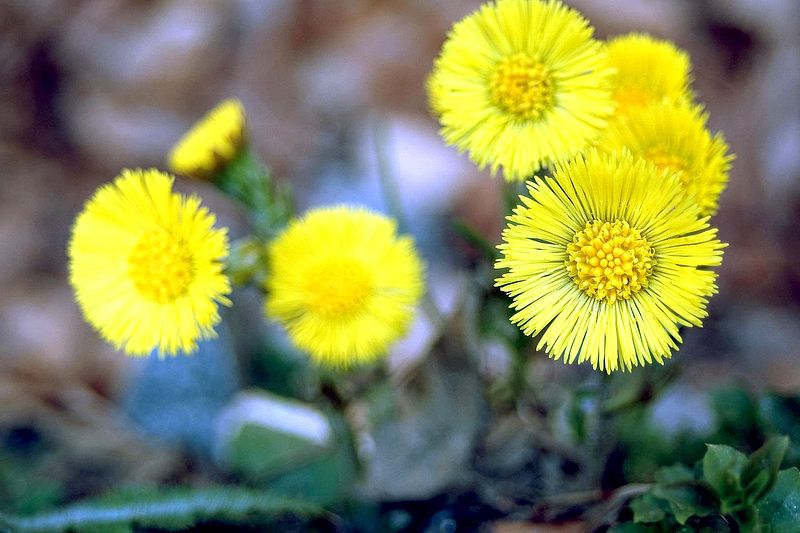
One day the Buddha held up a flower in front of an audience of 1,250 monks and nuns. He did not say anything for quite a long time. The audience was perfectly silent. Everyone seemed to be thinking hard, trying to see the meaning behind the Buddha’s gesture. Then, suddenly, the Buddha smiled. He smiled because someone in the audience smiled at him and at the flower.

To me the meaning is quite simple. When someone holds up a flower and shows it to you, he wants you to see it. If you keep thinking you miss the flower. The person who was not thinking, who was just himself, was able to encounter the flower in depth, and he smiled. That is the problem of life. If we are not fully ourselves, truly in the present moment, we miss everything.

Thich Nhat Hanh,  Peace Is Every Step


What we label today

Label

The only reality we know is our concept of it.

Life is nothing till we call it something, and this is where mind training comes in.

Through it we learn to hold our concepts loosely, particularly those that allow unhelpful emotions to take over and cause us problems.

Karuna Cayton, The Misleading Mind

Learning to stay

Still-WaterSilence is simply a state we reach when, like a fire deprived of fuel, distractions and restlessness naturally fade away. When a desert monk complained that he could not control his wayward thoughts, his teacher answered “Keep on sitting in your cell and your thoughts will come back from their wanderings“. In a way then there is nothing to achieve in prayer; we do not have to try to be quiet in order to be silent, we just have to be. Silence is a state of non-being that is being itself.

Nicholas Buxton, Tantalus and the Pelican

Let go

Stillness_Speaks_Eckhart_Tolle-resized-600

As the days begin to shorten, we are reminded that darkness is as much of life as is light. And each day we have moments of birth and moments of loss. They give an opportunity in the practice of taking some aspects of ourselves and our lives with less importance, of letting go or dying to our fixed sense of self:

Die while you’re alive
and be absolutely dead.
Then do whatever you want:
it’s all good.

Bunan,  17th century Zen Master.

The third noble truth says that the cessation of suffering is letting go of holding on to ourselves. By “cessation” we mean the cessation of hell as opposed to just weather, the cessation of this resistance, this resentment, this feeling of being completely trapped and caught, trying to maintain huge ME at any cost.

Pema Chodron, The Wisdom of No Escape and the Path of Loving-Kindness

…leading to long, slow conversations

File:Old couple in love.jpg

Our culture is so focused on … youth, that we don’t have a good model for what aging and dying could be like. All we feel is the lack of things: we’re not as youthful as we were, we’re not as limber as we were, we’re not as this, we’re not as that. Almost everything that we hear and see in the media is about how to maintain your youth as long as possible. All this focus on stopping aging implies that someone made a big mistake in the universe. It’s as if we should be getting younger instead of older.

But we’re missing a very important point. There’s something beautiful about quiet and peace. There’s something beautiful about not trying to do anything, but simply, in some way, your heart joining  the whole world. There’s a time in life for building something up in this world: a family, an institution, a business, a creative life: there’s a time for that. There’s also a time for becoming quiet, a time for slow conversations with people that we love, and a time for reflecting on all the things that we’ve seen in many years of living. When the time for those things comes, it’s beautiful.

Norman Fischer, Suffering and Possibility

photo ian mckenzie

Reading the world

File:Male House Sparrow (2).jpg

The storm which arrived in Ireland and England yesterday and overnight helps us to be more aware of the world of nature and its power. However, it is always there, even in its smallest, quietest  elements:

Reading the world
As if it were a book
Written before words —

That sparrow perched
On the withered stalk
In the garden — isn’t
The bird itself
A song to the beloved

Even before it sings?

Gregory Orr, American Poet, 1947 –

photo Linda Tenner