Notice when you are rushing

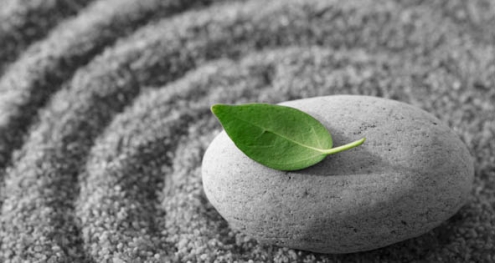
Most of the time we go through the day, through our activities, our work, our relationships, our conversations, and very rarely do we ground ourselves in an awareness of our bodies. We are lost in our thoughts, our feelings, our emotions, our stories, our plans. A very simple guide or check on this state of being lost is to pay attention to those times when you feel like you are rushing. Rushing does not have to do with speed. You can rush moving slowly, and you can rush moving quickly.

We are rushing when we feel as if we are toppling forward. Our minds run ahead of ourselves; they are out there where we want to get to, instead of being settled back in our bodies. The feeling of rushing is good feedback. Whenever we are not present, right then, in that situation, we should stop and take a few deep breaths. Settle into the body again. Feel yourself sitting. Feel the step of a walk. Be in your body.

Joseph Goldstein, Transforming the Mind, Healing the World
A new day, a new week


Abba Poemen said Abba Pior
made a fresh start every morning.

Sayings of the Desert Fathers

Each Morning we are born again.
What we do today is what matters most

Jack Kornfield

Being, before doing

When you are feeling overwhelmed, you’re trying too hard. That kind of energy does not help the other person and it does not help you. You should not be too eager to help right away. There are two things, to be and to do. Dont think too much about to do – to be is first. To be peace. To be joy. And then to do joy, to do happiness – on the basis of being. Being fresh. Being peaceful. Being compassionate. This is the basic practice. It’s like a person sitting at the foot of a tree. The tree does not have to do anything, but the tree is fresh and alive. When you are like that tree, sending out waves of freshness, you help to calm down the suffering in the other person.

Thich Nhat Hahn, Be Beautiful, Be yourself

Bare Attention

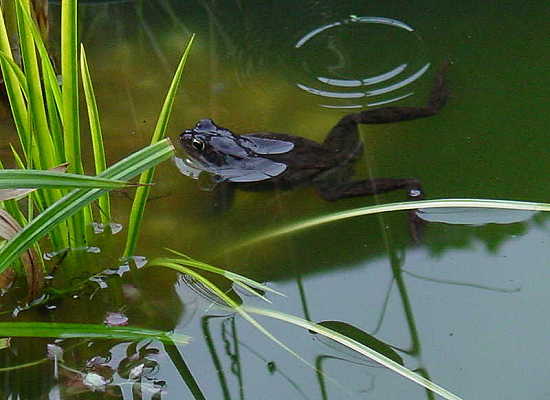
The Old Pond. A Frog jumps in. Plop. Matsuo Bash0, 1644 – 1694

How do we tame our minds? How do we train ourselves to stay open to our experience from moment to moment? The answer lies in the mind state called  “bare attention”. “Bare” means simple, direct, without trappings of judgment or interpretation. “Attention” means mindfulness, awareness; not forgetting to be present. A famous Zen haiku reads: “The old Pond. A Frog jumps in. Plop”

This is a wonderful description of bare attention. The old pond is not necessarily beautiful or covered with lily pods or green or blue. The poet, Basho, goes directly to the essence of his experience: the pond, frog, plop. We can say that in meditation we are developing “plop mind”. We are stripping away everything that is extraneous to our immediate experience and simply being present with what is happening. This is bare attention: direct, essential, noninterfering.

Joseph Goldstein, Bare Attention

Remember, when stressed today…

 
Sometimes the most important thing
in a whole day
is the rest we take between two deep breaths.
 
Etty Hillesum
 

The mind and direct experience

The challenge is to let go of our ideas about life, in order to more fully live. Our stories and mental images can often create a frame which dictates how we relate to each moment, or create expectations which we then use to judge how we are doing, causing frustration and self-doubt. The direct experience of each moment leads us into unfamiliar but rich territory. We practice letting go of our ideas and making room for what is here in this moment, a space to listen outside the confines of our fears and internal scripts.

We tell ourselves stories in order to live. We look for the sermon in the suicide, for the social or moral lesson in the murder of five. We interpret what we see, select the most workable of possible choices. We live entirely by the imposition of a narrative line upon disparate images, by the ideas by which we have learned to freeze the shifting phantasmagoria which is our actual experience.

Joan Didion, The White Album