Walking through this world

A final post this week with connection to Saint Francis of Assisi, this time a poem about an imagined walk through the world. We walk quickly, to get to our destination. We keep our eyes on ourselves and our own concerns. Our fears keep us turned in on ourselves, comparing our life to what we think it should be.  What if we walked slowly this weekend, noticing, paying attention.…..

I think God might be a little prejudiced.
For once He asked me to join Him on a walk through this world,
and we gazed into every heart on this earth,
and I noticed He lingered a bit longer
before any face that was weeping,
and before any eyes that were laughing.
And sometimes when we passed a soul in worship
God too would kneel down.
I have come to learn: God adores His creation.

Taken from Mala of the Heart: 108 Sacred Poems

Always commenting, observing, judging

It continually strikes me how difficult it is just to allow things be, and not add on a layer of commentary or anticipation about them. Maybe it is because our brains are disposed toward negative experiences and are always vigilant for possible threats, as Rick Hanson’s excellent book, The Buddha’s Brain tells us. So we are disposed to have a background hum of anxiety, and find it hard to just relax.  This means we create scenarios about potential futures, some of which never actually happen. Whatever the reason,  I was made aware of it this morning in a phonecall which left me troubled.

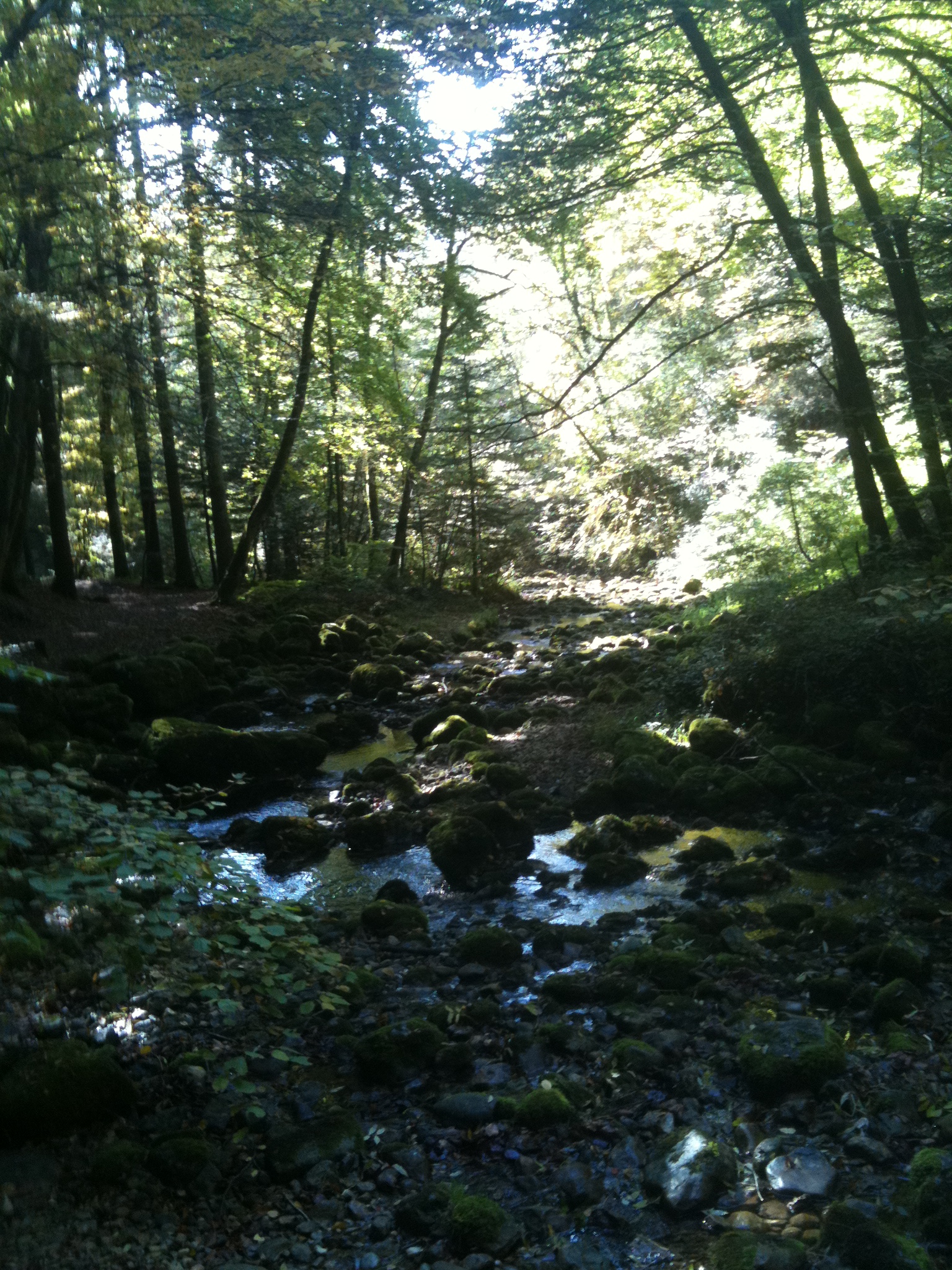
Afterwards I went for a walk in the beautiful woods near the source of the Allondon river. As I sat and listened to the sound of the water I was struck by how nature just does not worry about the meaning of life or the implications of its actions. It is not continually analyzing or counting. It is just faithful to its being. The river flows, the leaves fall, the seasons pass without the need to stand outside and observe their action. It is harder for us. Our minds are continually seeking active involvement with something. One instant, they run outward toward something, the next moment, they turn inward and away. Our practice is to try and develop stability and constancy in the mind, our capacity to simply be with life, and not always to think about it. As Pema Chodron reminds us, we cannot be in the present moment and run our storylines at the same time.

We tend to run our whole life trying to avoid all that hurts or displeases us, noticing the objects, people, or situations that we think will give us pain or pleasure, avoiding one and pursuing the other. Without exception, we all do this. We remain separate from our life, looking at it, analyzing it, judging it, seeking to answer the questions, ‘What am I going to get out of it? Is it going to give me pleasure or comfort or should I run away from it?” We do this from morning until night.

Charlotte Joko Beck

Leaves

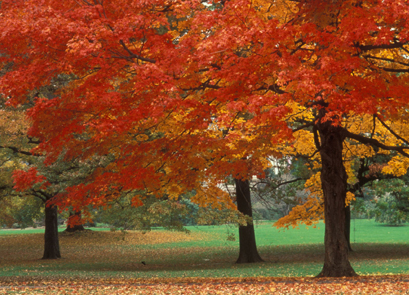
Autumn is a second
season when every
leaf is a flower.

Albert Camus

Comfort for the soul

Like Saint Francis yesterday, Mary Oliver finds comfort in the singing of a bird. For us too, nature is a great place to find comfort in our moments of difficulty. Sometimes we get glimpses of a deeper reality, when our heart opens wide and time seems to stand still:


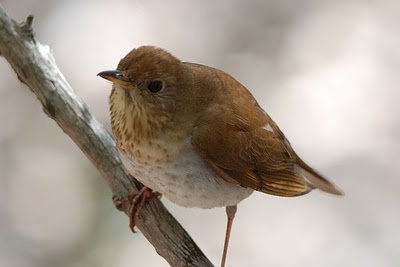
….. finally I heard him among the first leaves—
then I saw him clutching the limb

in an island of shade, with his red-brown feathers, all trim and neat for the new year.

First, I stood still

and thought of nothing.
Then I began to listen.
Then I was filled with gladness—
and that’s when it happened,

when I seemed to float, to be, myself, a wing or a tree—
and I began to understand what the bird was saying,

and the sands in the glass
stopped
for a pure white moment

while gravity sprinkled upward

like rain, rising, and in fact
it became difficult to tell just what it was that was singing—
it was the thrush for sure, but it seemed

not a single thrush, but himself, and all his brothers,
and also the trees around them,
as well as the gliding, long-tailed clouds
in the perfectly blue sky— all, all of them

were singing.
And, of course, yes, so it seemed,
so was I.
Such soft and solemn and perfect music doesn’t last

for more than a few moments.
It’s one of those magical places wise people
like to talk about.
One of the things they say about it, that is true,

is that, once you’ve been there,
you’re there forever.
Listen, everyone has a chance.
Is it spring, is it morning?

Are there trees near you,
and does your own soul need comforting?
Quick, then— open the door and fly on your heavy feet; the song
may already be drifting away.

Mary Oliver, Such Singing in the Wild Branches (2003)
Richard Davidson’s new project

We have already written about the work of Richard Davidson and his work at the Laboratory for Affective Neuroscience in the University of Wisconsin, Madison. He was featured in an interesting article last week in the New York Times where the Dalai Lama contributed 50,000 dollars to his recently established Centre for Investigating Healthy Minds. The short article is worth reading and charts the increasing scientific interest into the effects of meditation on the brain.

The center  is now working on an exciting new project, teaching meditation skills to school children in Madison. Based on earlier research,  they wish to see what the effects of teaching compassion and loving-kindness meditation has on the children. The children are led in meditation  focusing on kindness thoughts toward loved ones, strangers, even enemies. Previous research by Barbara Friedrickson would indicate that this will boost positive emotions and a general sense of well-being in life. The research which Davidson has commenced is longitudinal,  and so the children will be followed into middle school to see how their behaviour compares with a control group of non-meditators.

For the fully article check out www.nytimes.com/2010/09/27/us/27happy.html?_r=3&th&emc=th

Photo taken from the New York Times

As close to real as we can be

Things that are real pose no danger to the mind. The real dangers in the mind are our delusions, the things we make up, the things we use to cover up reality, the stories, the preconceived notions we impose on things. When we’re trying to live in those stories and notions, reality is threatening. It’s always exposing the cracks in our ideas, the cracks in our ignorance, the cracks in our desires. As long as we identify with those make-believe desires, we find that threatening. But if we learn to become real people ourselves, then reality poses no dangers.

This is what the meditation is for, teaching yourself how to be real, to get in touch with what’s really going on, to look at your sense of who you are and take it apart in terms of what it really is, to look at the things that you find threatening in your life and see what they really are. When you really look, you see the truth. If you’re true in your looking, the truth appears.

Thanissaro Bhikkhu