
The Wrong Trousers

Sometimes we get little reminders that our way of seeing the world is not always completely objective. We see the world not as it actually is, but as we are.

I recently bought some clothes, thinking that they looked nice. Shortly afterwards I was informed that the colour did not suit me and that they were a strange choice. For a moment I took refuge in the fact that maybe I have better taste, that I have an interesting dress sense, and anyway I don’t have too much interest in criteria like colour. I had a certain notion of how these clothes were right. Normally when our judgment is questioned we need to rationalize and reduce some dissonance between our “good judgment” and others’ opinions. However, I soon admitted to myself that others are probably more objective and that I was more than likely wrong.

I know that in most things, I see through my own subjective filters, so it is likely the same for my dress sense. We think we see something as it is. But really it is we see it through our own conditioning and history, and often through the story which is dominant in our life at that moment. Indeed, most thinking is not pure thought, but is rather a self-focused emotional activity. A similar process applies to the words we use. Something may be said to us with the best of intentions but we hear it through the emotional place we are standing. Or similarly, a simple email or text message which we send can be understood completely differently by the person receiving it, because of where they are at, and as a result they move to an interpretation which was never intended.

Practice is essentially clarifying our vision. We learn to sit still, to befriend ourselves. We return to sit each day in order to see through our mental processes, with all their noise; and to increasingly enter into reality as-it-actually-is. We see that we can hardly take a breath without a thought or opinion or judgment going through our head. We see that we prefer to relate to life through our thoughts and frequently our fears. Our natural calm mind is often clouded by the limited self-image created by habitual, obsessive, neuronal patterns. Practice works on this, allowing us let go of the fears that drive our thoughts, getting closer to the moment as it is. We observe the mind in order to not get lost in it. We learn to relate simply with the thoughts, feelings and experiences that arise as we sit. Slowly we get to see the world more objectively. To see things as they are, not as I want them to be.

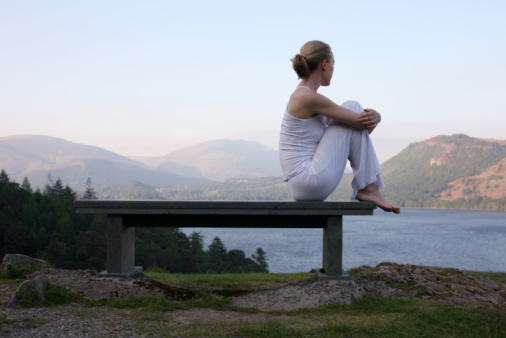
Balance 2: Resting

Our culture invariably supposes that action and accomplishment are better than rest, that doing something – anything – is better than doing nothing. Because of our desire to succeed, to meet these ever-growing expectations we do not rest.

Because we do not rest we lose our way. We miss the compass points that would show us where to go,  we bypass the nourishment that would give us succor.

We miss the quiet that would give us wisdom. We miss the joy and love born of effortless delight.

Wayne Muller, Sabbath: Finding Rest, Renewal and Delight in our Busy Lives.

Balance 3: Make time and space for questions

When I was a child in New York City in the 1940s there were laws that attempted to legislate the Biblical injunction, “Remember the Sabbath and keep it holy.” Businesses were closed. Shopping stopped. There were no convenience stores. People needed to remember, in advance of the Sabbath, to provide for the upcoming day of rest and spiritual reflection so that, on that day, they could rest. The community collectively caught its breath. Family members spent time with each other. They renewed connections. They visited neighbors.

I like to imagine that, whether or not people went to religious services, there was the possibility in that period of a pause for reflection. “What am I doing with my life?” “Is what I am doing good for me?” “Is it good for other people?” “Does my life make a difference in the world?” “Could my life make more of a difference in the world?”

All of the important fundamental questions in life seem to be waiting, so to speak, next on line at the top of the mind’s agenda, if only we give them the time and the space to present themselves.

Sylvia Boorstein

Thanksgiving

Today is a good day to cultivate the practice of being grateful, noticing what is good in our lives rather than noticing what is wrong. This practice helps us to wake up to all the gifts around us each day, as well as connecting us to a stream of basic goodness inside ourselves and in others. What little things could we be grateful for today?

“Practicing gratitude consistently leads to a direct experience of being connected to life and the realization that there is a larger context in which your personal story is unfolding. Being relieved of the endless wants and worries of your life’s drama, even temporarily, is liberating. Cultivating thankfulness for being part of life blossoms into a feeling of being blessed, not in the sense of winning the lottery, but in a more refined appreciation for the interdependent nature of life. It also elicits feelings of generosity, which create further joy. Gratitude can soften a heart that has become too guarded, and it builds the capacity for forgiveness, which creates the clarity of mind that is ideal for spiritual development. The understanding you gain from practicing gratitude frees you from being lost or identified with either the negative or the positive aspects of life, letting you simply meet life in each moment as it rises.”

Philipp Moffitt