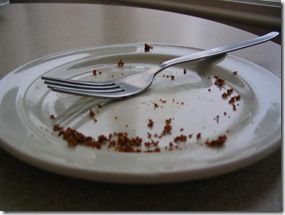
A world in tatters

I love desire, the state of want and thought
of how to get; building a kingdom in a soul
requires desire. I love the things I’ve sought-
you in your beltless bathrobe, tongues of cash that loll from my billfold- and love what I want: clothes, houses, redemption. Can a new mauve suit
equal God? Oh no, desire is ranked.

To lose a loved pen is not like losing faith.Acute
desire for nut gateau is driven out by death,
but the cake on its plate has meaning,
even when love is endangered and nothing matters.
For my mother, health; for my sister, bereft,
wholeness. But why is desire suffering?
Because want leaves a world in tatters?
How else but in tatters should a world be?
A columned porch set high above a lake.
Here, take my money. A loved face in agony,
the spirit gone. Here, use my rags of love.

Molly Peacock Why I am not a Buddhist

Our substitute life

The essence of the basic human problem is that we live a substitute life. From our basic human need for protection, security, and comfort, we’ve fabricated a whole maze of constructs and strategies to avoid being with our life as it is. And as a consequence of believing in this substitute life we are disconnected from awareness of our true nature, our naturally open heart.

Our substitute life is made of many different constructs: our identities, our self-images, our concepts of what life is, our opinions and judgments, our expectations, our requirements. All these we take as reality. As a consequence of these tightly held beliefs, we develop certain habitual behavioral strategies to deal with life as we interpret it.

All these strategies are based on core decisions that we made early on, about who we are and what our life is about. They are decisions we made to help us cope with the many inevitable pains of growing up.

Ezra Bayda

Sunday quote

Do not expect full realization;

Simply practice every day of your life.

Milarepa

How we look for certainty

One day Mara, the Buddhist god of ignorance and evil, was traveling through the villages of India with his attendants. He saw a man doing walking meditation whose face was lit up in wonder. The man had just discovered something on the ground in front of him. Mara’s attendants asked what that was and Mara replied, “A piece of truth.” “Doesn’t this bother you when someone finds a piece of the truth, O evil one?” his attendants asked. “No,” Mara replied. “Right after this they usually make a belief out of it.

Jack Kornfield, Stories of the Spirit, Stories of the Heart

The Spiritual  journey is not about finally getting to a place that’s really swell. Thinking that we can find some lasting pleasure is what in Buddhism is called samsara, a cycle that goes round endlessly and causes us to suffer greatly…. Instead,  this very moment is the perfect teacher, and lucky for us, it’s with us wherever we are. However, most of us do not take these situations as teachings. We run like crazy. We use all kinds of ways to escape. There are so many ways that have been dreamt up to get us away from this moment, to soften its hard edge, deaden it so that we do not have to feel the full impact of the pain that arises when we cannot manipulate the situation to make us come out looking fine.

Pema Chodron, When Things fall apart.


Stories 2: How the past defines us

More on story and myth, this time from an excellent recently-published Buddhist perspective:

The Buddha taught that,  over time, the unobserved thought settles into character. Character is more than our temperament and personality; it is the fundamental way we see life, including our suppositions, ideas and views of who we are and what life is. When we look out of our eyes we see what we have been conditioned to see, and part of that conditioning is the assumed reality of the person who is having the experience.

Character is reinforced through our narrative, the ongoing story of “me”. We confirm our current reality through the recollection of how we have always been. For instance, if we have assumed a victim mentality from our past, we may have a predisposition to overcompensate and react strongly when we are imposed upon. Our personal narrative reveals our strengths and limitations, and engenders a self-attitude. As our story moves on, each chapter predisposes “me” to behave in a certain way, and though this proliferating tendency was never specified in our early history, the ongoing story gets captured within its momentum.

Rodney Smith, Stepping out of Self-Deception