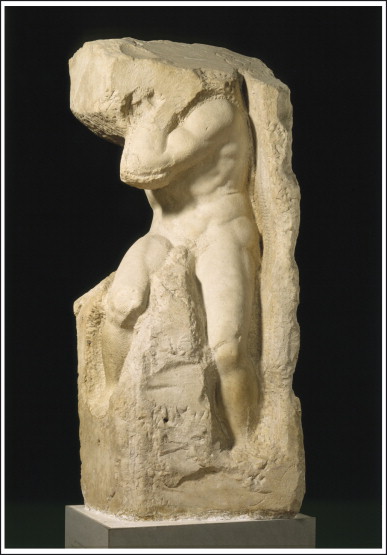
Unfinished symphonies

The goal of mindfulness practice is to increase the conditions which lead to our happiness and our freedom. However, the major world wisdom traditions seem to have come to an awareness that  full happiness may not be possible in this world and propose different perspectives based on that. The Buddhist tradition’s fundamental teaching is that life has ultimately an unsatisfactory quality to it and that our suffering comes from not recognizing that. The Old Testament believes that we are on this world with a timeless longing deep inside us, which means that we can never fully find a complete contentment here. As the author of the Book of Ecclesiastes puts it He has also set eternity in their heart. From this perspective therefore, there will always be an restless quality to our life here, because there are (eternal) desires in our hearts which cannot be satisfied by the (finite) experiences which we have. This goes against a lot of what advertising and modern society like to tell us, as they place in front of us a succession of created needs. Although both the Buddhist and the Judeo-Christian traditions differ in the way they resolve the problem, they agree in telling us that no person or no thing can ultimately satisfy our deepest longings and that we will not be fully happy unless we realize that. There is an unfulfilled quality which can manifest itself in our relationships, in disappointments in our families, in a job which does not live up to our dreams, in the place where we live seeming poor in comparison to other places and other lives. To be unfulfilled in this way is to be human. Realizing that it has to be so is the first step to genuine peace.

In the torment of the insufficiency of everything attainable, we finally learn that here in this life all symphonies must remain unfinished.

Karl Rahner

Don’t have to change

What this means is that we can find our own happiness and peace of mind
just as we are in this very moment, because it is within us. We don’t have to change our thoughts or change ourselves into someone else.

We don’t need to think that who we are, this “me,” is not good enough, smart enough,  or lucky enough to be happy.

Dzogchen Ponlop Rinpoche, Resting the Busy Mind

Getting to know you

Meditation, whatever method you are using, is simply getting to know your mind. It is not about meditating ‘on’ something or getting into a zone where you are blissfully removed from your mind’s contents.

Instead, the actual meaning of meditation is more like getting used to being with your own mind.

Dzogchen Ponlop Rinpoche

Love and fear

Happiness, anxiety, joy, resentment — we have many words for the many emotions we experience in our lifetimes. But deep down, there are only two emotions: love and fear. All positive emotions come from love, all negative emotions from fear. From love flows happiness, contentment, peace, and joy. From fear comes anger, hate, anxiety and guilt.

We have to make a decision to be in one place or the other. If you don’t actively choose love, you will find yourself in a place of either fear or one of its component feelings.

Every moment offers the choice to choose one or the other. And we must continually make these choices, especially in difficult circumstances when our commitment to love, instead of fear, is challenged.

Elizabeth Kubler Ross

The basic instruction

Buddhist nun Pema Chodron’s instruction on how to develop our hearts, how to work with the fears that arise when we touch our natural warmth and love.

Each of us has a “soft spot”: the place in our experience where we feel vulnerable and tender. This soft spot is inherent in appreciation and love, and it is equally inherent in pain.

Often, when we feel that soft spot, it’s quickly followed by a feeling of fear and an involuntary, habitual tendency to close down. This is the tendency of all living things: to avoid pain and cling to pleasure. In practice, however, covering up the soft spot means shutting down against out life experience. Then we tend to narrow down into a solid feeling of self against other.

The trick is to stay with the soft spot and not harden over it. That’s the basic instruction: stay with the soft spot.

How does this work? You’re going along, and your mind and heart are open. Then someone says something and you find yourself either frightened or starting to get angry. You feel the hair rising on the back of your neck, and something in you closes down. You’re on your way to becoming all worked up. At this point, you become unreasonable, and all your wisdom goes out the window. You’re hooked. This is what we work with as practitioners,  we have to be able to see where we get hooked like this. It’s easy to see. To interrupt the flow of it, though, is another matter.

Pema Chödrön, Stay with the Soft Spot of Bodhichitta.

Let go…move on…have no preferences

This week some things occured which were unexpected and which disrupted some directions which have seemed right for some time. However, they were out of my capacity to influence. In cases like this I have found that the practice of “no preferences” really helps. Even though I can feel that there is a much easier way to do things, I  try to work with having no preferences as to how things have turned out. This has given a perspective with regard to some news I received which I feel was unfair. In mindfulness, we try to see that difficultes and happiness are of of equal value.  I find this very hard but I try to work with what is.

It strikes me how much can change in a week. Last Saturday I was at an inspiring conference in Lerab Ling,  bringing together some of the finest researchers on meditation in the world.  I listened to a incredible talk on meditation by Sogyal Rinpoche as well as a moving reports on mindfulness by Jon Kabat Zinn and a beautiful talk on emotions by Erika Rosenberg. At the end of the day I felt that there was very little distance between experience and reflection: it just was and I felt whole.

This week I was made more aware of our capacity as humans to create distance between ourselves and our experience. We make life complicated by our continual reflecting on it and an excessive evaluation of it. We are never content to let things just be. I  find myself wishing for the simpler times of last week. But it is not to be. So I try to make  my practice to accept, let go and move on. Mindfulness is based on the belief that deep down things are naturally one and good. And even though others or circumstances make them complicated,  I find that I can drop into that natural calm in meditation.  However, moving on is still hard. Happiness is related to peace of mind. In difficult times  I work with that sense of peace and natural goodness. Therefore, on one level nothing can disturb me. However, on another level I struggle.

Pleasant conditions change into unpleasant ones, and unpleasant conditions eventually become pleasant. We should just keep this awareness of impermanence and be at peace with the way things are, not demanding that they be otherwise. The people we live with, the places we live in, the society we are a part of – we should just be at peace with everything. But most of all we should be at peace with ourselves-that is the big lesson to learn in life. It is really hard to be at peace with oneself. I find that most people have a lot of self-aversion. It is much better to be at peace with our own bodies and minds than anything else, and not demand that they be perfect, that we be perfect, or that everything be good. We can be at peace with the good and the bad.

Ajahn Sumedho