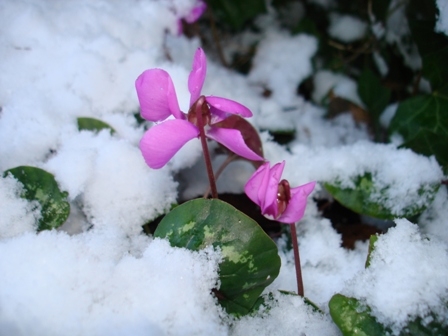
Peace comes dripping slow

Some sense of longing seems to be a part and parcel of human nature, and will never go away. It comes from the fact, as John O’Donoghue wrote in Anam Chara, that the human person is a threshold where many infinities meet. This can explain why, for many of us, a deep lasting peace is very hard to find in a world which is finite.

We intuitively know it exists, and look to find it in many ways.  However, it seems to me that true rest, in a lasting and definitive sense, is something which slips from our grasp. As much as we try to realize it and make it our own, it never seems to linger with us very long. It stays a while with us and then takes flight. We are restless and often struggle to find security within ourselves, to get our lives together, to create a real home for ourselves. However, even when we have fulfilling days, or a job that goes well, we can still go around with a subtle awareness that there are unfinished tasks, unrealized possibilities.  We have a feeling that there is something else that we should have remembered, done, or said. An underground sense of being unfulfilled underlies our filled lives.

Some profound sense of restlessness remains and will always do so. Recognizing that a complete answer to our deepest longings cannot be found in how hard we work, or how much we possess,  is a fundamental first step to attaining deeper peace. It means, paradoxically, accepting that we will always be somewhat unfinished.

However, there are real ways that we can increase our actual fulfillment and contentment in our day-to-day lives. Often it requires that we shift our focus, away from making life problem-free, to giving our ordinary,  everyday life a depth and value. In a sense,  we have to turn away from always looking for certainty and fulfillment, and instead, look more deeply at the reality of what is actually happening in our life. A focus on something external keeps us from resting on our own centre, leaving us outwardly turned and inwardly disconnected. If we imagine that others will be the source of our complete fulfillment we are attaching our hopes onto something that can lead to betrayal and let down. We have to stay with what actually is,  not what we would like to be there. And not just the parts which we like. Because if we keep running away from what is unpleasant, thinking that we should only have pleasant, and put an emphasis on control, then we have a recipe for a a cycle of unhappiness and disappointment, which leads to us feeling weaker and weaker.

The ways and means vary as to how this peace comes to us, how we find it. Amidst the hectic activities of our days, and the rush of modern life, we try to clear some space to be alone, to still the chatter in our heads and to taste a little bit of solitude. Peace comes dripping slow, as Yeats reminds us. We cannot rush it by grasping after it.
Step by step, we make our lasting happiness

Among all living creatures studied thus far by modern scientists, only human beings can be said with absolute certainty to have been endowed with the ability to make deliberate choices about the direction of their lives, and to discern whether those choices will lead them through the valley of transitory happiness or into a realm of a lasting peace and well-being. Though we may be genetically wired for temporary happiness, we’ve also been gifted with the ability to recognize within ourselves a more profound and lasting sense of confidence, peace, and well-being. Among sentient beings, human beings appear to stand alone in their ability to recognize the necessity to forge a bond between reason, emotion, and their instinct to survive, and in doing so create a universe—not only for themselves and the human generations that follow, but also for all creatures who feel pain, fear and suffering—in which we are all able to coexist contentedly and peaceably.

Yongey Mingyur Rinpoche

Remember, when your heart is frozen

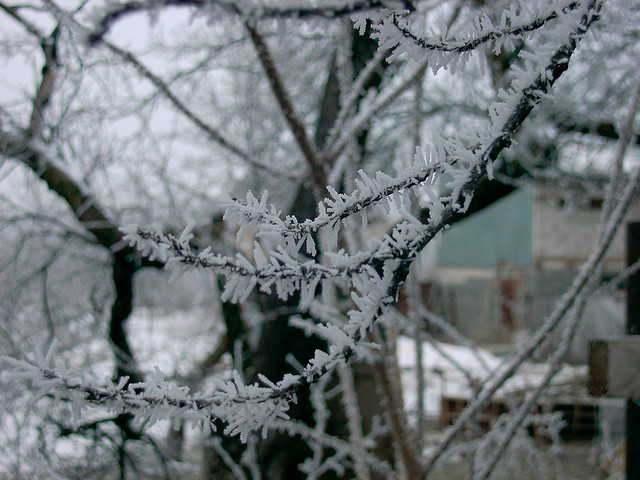
Pema Chodron also reflects here on snow and ice. She  reminds us to touch in with the springs of warmth which still exist inside us, no matter how cold a place we find ourselves in. When we are in an emotional or psychological midwinter, it is hard to believe that warmth and growth will return. We are tempted to disconnect or detach, to bury ourselves even deeper.  However, we are encouraged here to keep the heart open, by allowing our deepest self stay in connection with the deepest self of another person or thing. In this way we allow ourselves receive warmth from the presence or thought of another person when it is hard to generate warmth in oneself.

Our habits and patterns can feel just as frozen as ice. But when spring comes, the ice melts. The quality of water has never really disappeared, even in the deepest depths of winter. It just changed form. The ice melts, and the essential fluid, living quality of water is there. Our essential good heart and open mind is like that. It is here even if we’re experiencing it as so solid we could land an airplane on it.

When I’m emotionally in midwinter and nothing I do seems to melt my frozen heart and mind, it helps me to remember that no matter how hard the ice, the water hasn’t really gone anywhere. It’s always right here.

So I work on melting that hardness by generating more warmth, more open heart. A good way for any of us to do this is to think of a person toward whom we feel appreciation or love or gratitude. In other words, we connect with the warmth that we already have. If we can’t think of a person, we can think of a pet, or even a plant. Sometimes we have to search a bit. But as Trungpa Rinpoche used to say, “Everybody loves something. Even if it’s just tortillas.” The point is to touch in to the good heart that we already have and nurture it.

Pema Chodron, Shambala Sun, 1998

We cannot run away from ourselves

You can outdistance that which is running after you,

but cannot outdistance that which is running inside you.

African proverb

You are not alone

There are no quick fixes to some of the problems which people can face. Sometimes they can seem even greater by the sense of isolation which they produce.  Fear can close us in on ourselves. However, through remaining open to others and sharing, we realize that there is no law that states that we have to go through problems all alone.

The human story is both personal and universal. Our personal experiences of pain and joy, grief and despair, may be unique to each of us in the forms they take, yet our capacity to feel grief, fear, loneliness, and rage, as well as delight, intimacy, joy, and ease, are our common bonds as human beings. They are the language of the heart that crosses the borders of “I” and “you”. In the midst of despair or pain you may be convinced that no one has ever felt this way before. Yet there is no pain you can experience that has not been experienced before by another in a different time or place. Our emotional world is universal.

Christina Feldman. Compassion: Listening to the Cries of the World

Making barren places fruitful with kindness

When we consider that Helen Keller was blind and deaf, her words on how to make the most of life are reminders to  all of us  to look beyond the difficulties that come our way each day. Her focus was on what she could do for others and on not what the thoughts in her mind or others’ minds said she could not do.

Join the great company of those who make the barren places of life fruitful with kindness.  Your success and happiness lie within you.  External conditions are the accidents of life, its outer wrappings.  The great, enduring realities are love and service.  Joy is the holy fire that keeps our purpose warm and our intelligence aglow.  Resolve to keep happy, and your joy and you shall form an invincible host against difficulty.

Helen Keller