How is your heart doing?

A bit of a repost, but expanded in the prism of the pandemic and the type of disconnect it has caused in life.

We have had so many new technological innovations that we thought would make our lives easier, faster, simpler. Yet, we have no more “free” or leisurely time today than we did decades ago. For some of us, the “privileged” ones, the lines between work and home have become blurred. We are on our devices. All. The. Freaking. Time.

It doesn’t have to be this way.

In many Muslim cultures, when you want to ask them how they’re doing, you ask: in Arabic, Kayf haal-ik? or, in Persian, Haal-e shomaa chetoreh? How is your haal?

What is this haal that you inquire about? It is the transient state of one’s heart. In reality, we ask, “How is your heart doing at this very moment, at this breath?” When I ask, “How are you?” that is really what I want to know.

I want to know how your heart is doing, at this very moment. Tell me. Tell me your heart is joyous, tell me your heart is aching, tell me your heart is sad, tell me your heart craves a human touch. Examine your own heart, explore your soul, and then tell me something about your heart and your soul.

We need a different relationship to work, to technology. We know what we want: a meaningful life, a sense of community, a balanced existence. I want us to have a kind of existence where we can pause, look each other in the eye, touch one another, and inquire together: Here is how my heart is doing? I am taking the time to reflect on my own existence; I am in touch enough with my own heart and soul to know how I fare, and I know how to express the state of my heart.

How is the state of your heart today?

Let us insist on a type of human-to-human connection where when one of us responds by saying, “I am just so busy,” we can follow up by saying, “I know, love. We all are. But I want to know how your heart is doing.”

Omid Safi, The Disease of Being Busy
An experience of emptiness

Each chapter of the Bhagavad Gita concerns a particular yoga. This first chapter is called “the yoga of Arjuna’s despair” and it is significant that the experience of despair is a yoga; despair is often the first step on the path of spiritual life. It is very important to go through the experience of emptiness, of disillusion and despair. Many people do not awaken to the reality of God, and to the experience of transformation in their lives, until they reach the point of despair.

Bede Griffith, River of Compassion

A choice these days

We can let the circumstances of our lives harden us
so that we become increasingly resentful and afraid,
or we can let them soften us, and make us kinder.


We always have the choice.

The Dalai Lama

Sunday Quote: Oil and vinegar

Wrong solitude vinegars the soul

right solitude oils it.

How fragile we are, between the few good moments.

Jane Hirshfield, Vinegar and Oil

Not being afraid

As Chögyam Trungpa Rinpoche summarizes: “Ultimately, that is the definition of bravery: not being afraid of yourself.” Believing the seemingly non-stop, discursive commentary that courses through our heads simply interferes with letting ourselves be the brave beings we actually are. Such hyper-vigilance stems from fear, of course: “If I don’t check myself constantly, won’t I make a mistake?”

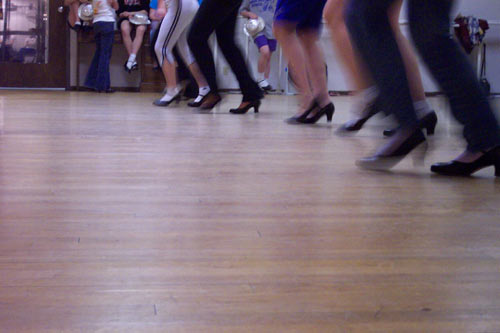
Letting go of incessantly measuring and comparing ourselves to others leads to spontaneous acts of courage and compassion. It’s like learning a dance step well enough that we no longer need to keep looking down at our feet.

Gaylon Ferguson, Natural Bravery

Finding your own way

We tend to focus on, and speak about the soul life of an individual in terms of spiritual comfort and deep nourishment…. but the equally unsettling and disturbing quality about this strange, often wild and courageous faculty of belonging inside us we have come to name ‘the soul’, is its ruthless, and almost tidal wish to find its own way to a full union with the world.

The soul is a planner’s nightmare, the biographer’s conundrum, an internal abiding spring that is both a source and a continual unstoppable flow, an internal stranger at the door of our outer life about to break everything apart and leave; a pilgrim suddenly more in love with the horizon than its home; and most disturbingly, someone who is willing to fail, often spectacularly, at their own life rather than succeed drably at someone else’s.

David Whyte