
If you plan on being anything less
than your true self
You will probably be unhappy
all the days of your life
A. Maslow.
photo : Croach Patrick, Ireland’s Holy Mountain.

Just as a snake sheds its skin,so we should shed our past, over and over again. The Buddha
For many ancient people, the snake was a symbol of life, shedding its skin again and again to be born anew. This was frequently represented in the image of the snake as a circle eating its own tail. Jung believed that this symbol had an archetypal meaning for humans, with snakes having the enviable quality of being able to let go of what was no longer needed for growth and start again, seeing the world from a fresh new perspective. For example, the Dunsun tribe in Northern Borneo have a myth about the origins of humankind, which really reveals their way of grappling with some of the ongoing realities of human existence. In their Creation Myth, humans are contrasted with snakes, who are seen to continually renew themselves by shedding their skin. In this way it was believed that they did not die. Growth for us sometimes means letting go and moving on from the past, shedding dead skin in order to live fully.
…The way to stay closest to the pulse of life, the way to stay in the presence of that divine reality which informs everything is to be willing to change. Still, change what? To change whatever has ceased to function within us. To shed whatever we are carrying that is no longer alive. To cast off our dead skin because dead skin can’t feel. Dead eyes can’t see. Dead ears can’t hear. And without feeling, there is no chance of wholeness, and wholeness remains our best chance to survive the pain of breaking.
Mark Nepo, The Book of Awakening
 It seems to me that almost all our sadnesses are moments of tension, which we feel as paralysis because we no longer hear our astonished emotions living. Because we are alone with the unfamiliar presence that has entered us; because everything we trust and are used to is for a moment taken away from us; because we stand in the midst of a transition where we cannot remain standing. That is why the sadness passes: the new presence inside us, the presence that has been added, has entered our heart, has gone into its innermost chamber and is no longer even there, is already in our bloodstream.
Rilke, Letters to a Young Poet

Things falling apart is a kind of testing and also a kind of healing. We think that the point is to pass the test or to overcome the problem, but the truth is that things don’t really get solved. They come together and they fall apart. Then they come together again and fall apart again. It’s just like that. The healing comes from letting there be room for all of this to happen: room for grief, for relief, for misery, for joy.
Pema Chodron
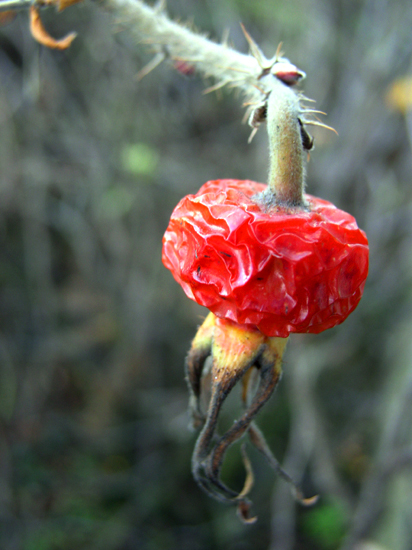 One of the mighty illusions that is constructed in the dailiness of life in our culture
is that all pain is a negation of worthiness,
that the real chosen people, the real worthy people,
are the people that are most free from pain.
bell hooks, American author and social activist
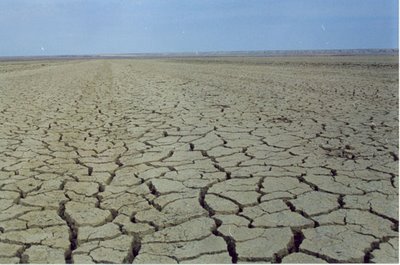 In the south of Kildare there is the small town of Castledermot, the Gaelic name of which is Diseart Diarmad. I was struck by this name as we passed it the other day, as the word diseart means “desert”. This refers to the monastery founded around 800 by the father of St. Diarmuid, after which the town takes its name. So the space where the monks lived was called a desert, even though, as you can imagine, dry deserts are somewhat hard to find in Ireland. However, in most religious traditions we find references to the desert. So what does it mean and is it relevant to us today?
The first obvious meaning of the word desert refers to a place where nothing grows and conditions are simple, even harsh. This absence of growth means that a person is removed from normal distractions and encouraged them to focus on what was really necessary. Familiar patterns and habits no longer apply. So for example in the Old Testament, the Prophet Hosea says that “The desert will lead you to your heart where I will speak”. I find it interesting that people found the need to create deserts in eight century Ireland when things were very quiet and remote compared to today. In a hectic pace of life, like todays, some creation in our schedules of a similar uncluttered space, both externally and internally, is even more necessary.
However, the desert can also be a metaphor for periods in our lives, as all of us can pass through moments when nothing seems to be moving or growing in us, when things seem barren and dry, or when familiar ways no longer seem to work. It can be said that at such times we enter our own “desert” where we are forced to re-evaluate what is important and simplify things down to what is really needed. Periods of change and difficulty – when we are faced with the removal of our usual points of reference or with no sustenance – can be somewhat frightening and confusing. We can no longer follow our old habits of fantasy, escape or distraction. When this happens it is hard to believe that our own empty and desolate moments can be in any way positive or moments of growth. And yet, one theme which we find in both eastern and western writers on meditation is that our problems become the very places where we can discover greater wisdom and depth. Sometimes we are encouraged to make “difficulties into the path”.
Not always easy. However, the word desert, and the name of the town remind me to hold difficulties in a different light. They may not be all negative. It would seem that the secret of the desert is learning to lose, to let things go, to simplify. Periods of dryness or confusion or doubt are challenges to stay with ourselves, to observe, to learn gentleness and allowing. The frequently found theme of the desert teaches us the importance of slowing down, of being patient and waiting for the meaning or the growth to appear in its own time. Difficult periods can be, as the Prophet says, a time for journeying deeper into our own heart.
 Mindfulbalance