Seeing ourselves as we truly are

People who are suffering want to change, but they do not know how. They feel…that they have to go into their problems, or get rid of them entirely. They do not know that to bring about true healing they have to learn to see themselves as they truly are.……Powerful emotional reactions have the capacity to take hold of us and drive our behavior. We believe in these reactions more than we believe in anything else, but they become the means by which we both hide from ourselves and attempt to cope with a world of ceaseless change and unpredictability.

Mark Epstein, Going on Being:Buddhism and the Way of Change.
Why difficulties are necessary

If we are going to achieve our purpose in life, we must be willing to fall out of grace and accept its lessons. When we feel righteous about ourselves, or deny our brokenness, we are fighting against the higher states of grace that await us. Failure is built into grace. You cannot have one without the other. It’s like two sides of a single coin. Everyone who has achieved a state of grace is certain at some point to fall, and to have fallen many times before. Every successful person, everyone you respect, will tell you that they have mountains of failure behind them…

When we are in grace, we begin to take things for granted and we actually stop working on ourselves. Falling out of grace shakes us up. It reconnects us to the larger universe in order for us to see ourselves anew. It forces us to rediscover where our true center begins, and to learn what needs to be set aside.

Sobonfu Some, Falling Out of Grace: Meditations on Loss, Healing and Wisdom

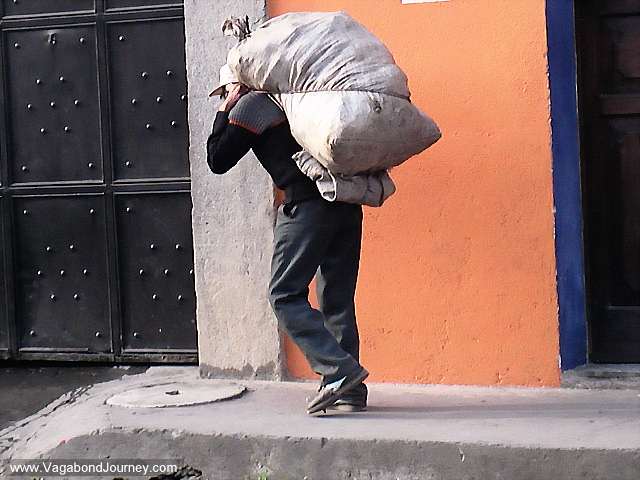
photo http://www.vagabondjourney.com

A meditation exercise in times of transition

Bring your awareness to focus on something in your life that is changing or ending or dying right now. Breathe gently as you consider whatever transition is most significant right now in your life. Note any feelings that arise – trepidation, excitement, resistance, anger, annoyance, or grief. Every time your feelings get the better of you, become aware of your breathing. Meet your troubled and contracted feelings with your calm and expansive breath. Breathe, sigh, and stretch out on the river of change. Remember times when you have resisted change in the past. Regard how things turned out in the end – maybe not how you thought they would or you wanted them to, but in the end, there you were. Wiser, stronger, still alive. Smile. Relax. Allow yourself to break open. Sit tall, with dignity and patience, watching your breath rise and fall, rise and fall. Pray for the courage to welcome this new change with openness and wisdom.

Then, open your eyes, go back into your life, and do what you have to do, but do it with grace, with hope, and with a lighter touch.

Elizabeth Lesser

Standing still?

There is a problem in thinking that you are supposed to be advancing in your practice all the time. You don’t have to constantly be on the road. If you have a flat tire, that is also part of the journey. Ambition makes you feel that you are not doing anything. There seems to be a hypnotic quality to ambition and speed, so that you feel that you are standing still just because you want to go so fast. You might actually be getting close to your goal.

Chögyam Trungpa

Staying awake in difficult times

I am fascinated by what it takes to stay awake in difficult times. I marvel at what we all do in times of transition — how we resist, and how we surrender; how we stay stuck; and how we grow. Since my first major broken-open experience — my divorce — I have been an observer and a confidante of others as they engage with the forces of their own suffering. I have made note of how fiasco and failure visit each one of us, as if they were written into the job description of being human. I have seen people crumble in times of trouble, lose their spirit, and never fully recover. I have seen others protect themselves fiercely from any kind of change, until they are living a half-life, safe yet stunted. But I have also seen another way to deal with a fearful change or a painful loss. I call this other way the Phoenix Process — named for the mythical phoenix bird who remains awake through the fires of change, rises from the ashes of death, and is reborn into his most vibrant and enlightened self.

Elizabeth Lesser, Broken Open

Where growth begins

Without darkness, Nothing comes to birth, As without light, Nothing flowers.

May Sarton

It has taken me a long time to recognize that darkness is an essential element for personal growth. No matter how many ‘right things.’ I do, darkness will still come unannounced and uninvited because it is an essential part of life. Without darkness I cannot become the person I was meant to be.

Joyce Rupp, Little Pieces of Light