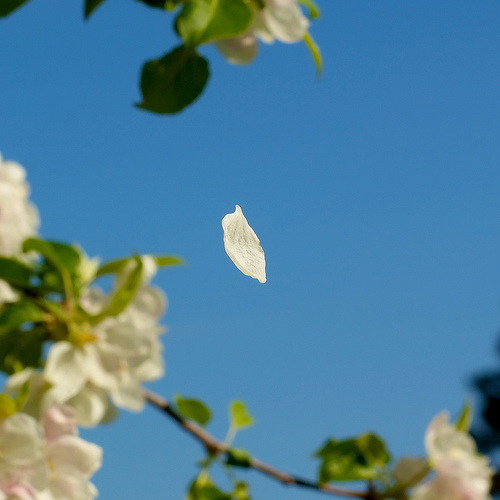
When depth comes through the broken bits

Growth can often involves a letting go of old ways, especially those that have ceased to serve. However, when we are in the midst of it, it can be hard to appreciate it in this way. We are more inclined to hold on to what is familiar and keep to what we know. However, sometimes the depth of new life can only be seen when the current one is broken open. It is true that there are occasions when we only grow when we pass through difficulties. With growth we move toward fuller healing and wholeness. It’s as if they had been waiting all along, until you made room for them to come into your life.

The world, I’ve come to think, is like the surface of a frozen lake.

We walk along, we slip, we try to keep our balance and not to fall.

One day, there’s a crack, and  so we learn that underneath us — is an unimaginable depth.

James Joyce, The Dead
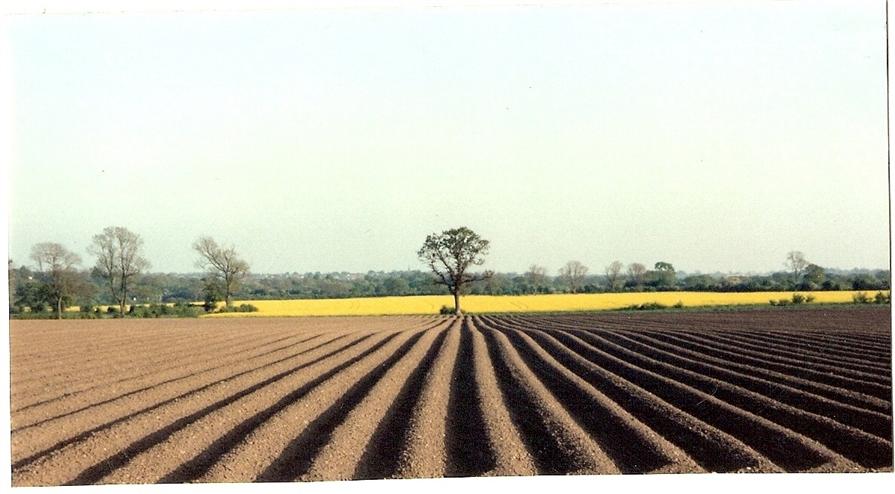
Change prepares for new growth

Cells die every day. Paradoxically that is how the body lives……Likewise ways of thinking die like cells, and we suffer greatly when we refuse to allow what is growing underneath make its way as the new skin of our lives. It is the stubbornness with which we refuse to let what’s growing underneath come through that pains us. It is the fear that nothing is growing underneath that feeds our despair. It is the moment that we cease growing in any direction that is truly deadly.Imagine if trees never shed their leaves, or if waves never turned over, or if clouds dumped their rain and disappeared.

I say this to remind myself as much as you: Little deaths prevent big deaths. What matters most is waiting its turn,  underneath all that is expending itself to prepare the way.

Mark Nepo, The Book of Awakening

Liberating our emotions

From a meditative perspective, various mind states including emotions, arise and pass away empty of any substantial nature. They come into being when certain conditions come together and disappear when the conditions change. None of them belong to anyone; they are not happening to anyone. In a very real sense each mind state is expressing itself: it is desire that desires, fear that fears, love that loves. Can you feel the difference between the experience of “I am angry” and the experience of “This is anger”. Through that distinction flows a whole world of freedom. As one Tibetan Buddhist text expresses it, mind states or emotions are like clouds in the sky, without roots, without home. Identifying with an emotion as being self is like trying to tether a cloud. Can we learn to liberate all emotions, letting them pass though the open sky of the heart and mind?

Joseph Goldstein, Insight Mediation

Not being frightened by change

Deviations from the norm are either something we resist or welcome.  What determines our reaction is how much our “norm” includes the possibility of change, surprise, unexpected occurrences.  If sameness is a demand we make of our partner, our job, our children, our friends, our world, then we are going to be seriously challenged when the inevitable happens.   People grow; they evolve; change their minds, rethink their politics, get new jobs, move to different cities. They find new friends, gain or lose weight, take up yoga while we sit in front of the TV.  If we feel a loss or a threat from their growth, it is time to expand our sense of what “normal” is.

As the song says “Everything must Change. Nothing stays the same.”  The temporariness of form or experience is something we can rely upon, absolutely. It is in the variations of weather, the ups and downs of relationships, the shift from toddler to teen, the necessity of learning new skills, that keeps us in harmony with the nature of things.  A kind of non resisting ability to let things flow is a high awareness and a healthy way to live. Knowing that change will surely come, we are more likely to treasure the moment and celebrate it now.

Carol Carnes

Seeing the depths in time

Experience has its own secret structuring. Endings are natural. Often what alarms us as an ending can in fact be the opening of a new journey – a new beginning that we could never have anticipated; one that engages forgotten parts of the heart. Due to the current overlay of therapy terminology in our language, everyone now seems to wish for “closure.” This word is unfortunate: it is not faithful to the open-ended rhythm of experience. Creatures made of clay with porous skins and porous minds are quite incapable of the hermetic sealing that the strategy of “closure” seems to imply. The word completion is a truer word. Each experience has within it a dynamic of unfolding and a narrative of emergence. Oscar Wilde once said, “The supreme vice is shallowness. Whatever is realized is right.” When a person manages to trust experience and be open to it, the experience finds its own way to realization.

The nature of calendar time is linear; it is made up of durations that begin and end. The Celtic imagination always sensed that beneath time there was eternal depth. This offers us a completely different way of relating to time. It relieves time of the finality of ending. While something may come to an ending on the surface of time, its presence, meaning, and effect continue to be held into the eternal. This is how spirit unfolds and deepens. In this sense, eternal time is intimate; it is where the unfolding narrative of individual life is gathered and woven.

John O’Donohue, To Bless the Space Between Us

A mix of strength and weakness

Our lives are a mystery of growth from weakness to weakness, from the weakness of the little baby to the weakness of the aged. Throughout our lives we are prone to fatigue, sickness and accidents. Weakness is at the heart of each one of us. Weakness becomes a place of chaos and confusion, if in our weakness we are not wanted; it becomes a place of peace and joy, if we are accepted, listened to, appreciated and loved.

Some people are infuriated by weakness. Weakness awakens hardness and anger in them. But to deny weakness as part of life is to deny death, because weakness speaks to us of the ultimate powerlessness, of death itself.  To be small, to be sick, to be dying, are stages of powerless, they appear to us to be anti-life and so we deny them.  If we deny our weakness and the reality of death, if we want to be powerful and strong always, we deny part of our being, we live an illusion. To be human is to accept who we are, this mixture of strength and weakness. 

Jean Vanier,  Becoming Human