Naming what is dormant

Fall is when nature plants her seeds. And yet, the seeds of possibility planted with such hopefulness in the fall must eventually endure winter, a season when the potentials planted at our birth appear to be dead and gone. As we look out upon the winter landscape of our lives, it seems clear that whatever was planted is now frozen over, winter-killed, buried deep in the snow. Far too many teachers, physicians, and other professionals find the winter metaphor an all-too-apt description of the inner landscape of their lives.

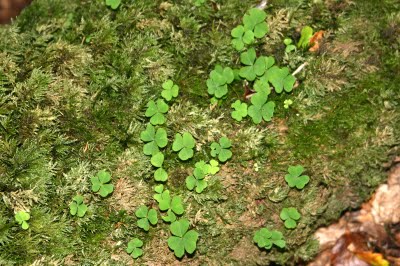
But as we come to understand winter in the natural world, we learn that what we see out there is not death so much as dormancy. Some things have died, of course, but much that is alive goes underground in winter to await a season of renewal and rebirth. So winter gives us a chance to name, metaphorically, whatever may feel dead in us, to wonder whether it might be not dead but dormant — and to ask what we can do to help it, and ourselves, to “winter through” until spring. As adults, we like to think of ourselves as fulfilled, not partially dormant. When we drop that pretense and acknowledge how much remains unfulfilled in us, good things can happen, and not for us alone.

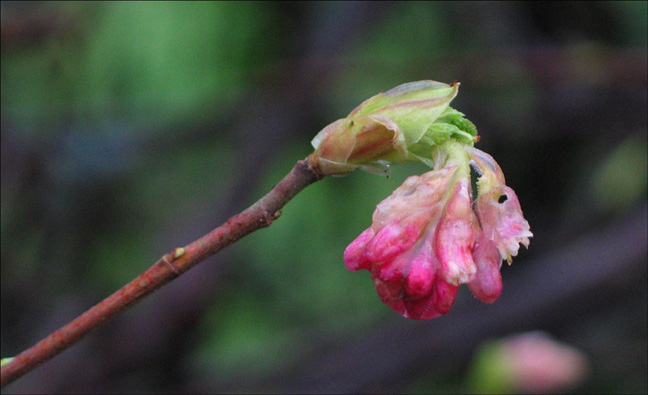
Spring is the season of surprise. Now we realize that, despite our winter doubts, darkness yields to light, and death makes way for new life. So one metaphor for this season is “the flowering of paradox”. As winter’s darkness and death give rise to their apparent opposites, spring invites us to contemplate the many both-ands we must hold to live life fully and well: the deeper our faith, the more doubt we must endure; the deeper our hope, the more prone we are to despair; the deeper our love, the more grief we are likely to know. Spring reminds us that, as creatures of the natural world, we know how to embrace paradox as instinctively as we know how to breathe both in and out. Our challenge is to stop using our minds to divide everything into forced choices, into either-ors. 

Parker Palmer, Teaching with Heart and Soul

Seeing that change is just part of life

Just as there are seasons in the world around us, so there are in our interior life.     Teresa of Avila

We can learn a lot around the change of the seasons, as in these days when Winter gives way to Spring. Not just the ongoing lesson about change and impermanence but from the fact that there is a parallel between our interior rhythm and the movement of the seasons. Winter is a time for conserving energy and reducing activity, whereas,  in some Eastern Wisdom traditions,  Spring is seen as having an energy which is expansive and outward moving. It is a time of new beginnings and potentially a renewal of spirit. And all around us we begin to see this, as there is a delicate but still fragile sense of renewal and new life. We see seeds beginning to sprout, flowers bloom, and the sun gently warming the earth. And we begin to see that despite the darkness and cold much has been going on unseen and underground for months. However, we also see the harm which the severe cold has done to some of the plants, who need cutting back or digging up. We too start again, making room for change, moving towards a sense of lightness, letting go of unhelpful habits of mind which hold us back or no longer give life.

There are seasons in your life in the same way as there are seasons in nature. There are times to cultivate and create, when you nurture your world and give birth to new ideas and ventures. There are times of flourishing and abundance, when life feels in full bloom, energized and expanding. And there are times of fruition, when things come to an end. They have reached their climax and must be harvested before they fade. And finally, of course, there are times of cold and cutting and empty, times when the spring of new beginnings seems like a distant dream.

These rhythms in life are natural events. They weave into one another as day follows night, bringing, not messages of hope and fear, but messages of how things are. If you realize that each phase of your life is a natural occurrence, then you need not be swayed, pushed up and down by the changes in circumstance and mood that life brings.

Chogyam Trungpa Rinpoche, How to Rule

Some neuroscience links to practice

I was reading recently neuroscientist Antonio Damasio’s work on the development of our sense of self. I find his emphasis on the body harmonizes very well with our practice, especially with how we work with difficult emotions. We frequently carry into the present unworked material from the past,  which can be tied up with fearful emotions and inhibit our freedom. Our emphasis is on holding the emotions as they manifest in body sensations in awareness without feeling the need to fix them or judge them or push them away. This is because the body has a wisdom which is broader than the thinking, fixing part of the mind, and we can make use of the way our past manifests in the body, as it is the “pivot around which the conscious mind turns” and allow us get in touch with our primordial experience.

You may not yet be able to bring your unconscious mind activity into awareness as thoughts, but it will always be reflected in the body as an emotion, and of this you can become aware.

Eckhart Tolle

The body is a foundation of the conscious mind … the special kind of mental images of the body produced in body-mapping structures, constitute the protoself, which foreshadows the self to be … the body is best conceived as the rock on which the protoself is built, while the protoself is the pivot around which the conscious mind turns….I hypothesize that the first and most elementary product of the protoself is primordial feelings, which occur spontaneously and continuously whenever one is awake.  They provide a direct experience of one’s own living body, wordless, unadorned, and connected to nothing but sheer existence ……..all feelings of emotion are complex musical variations on primordial feelings.

Antonio Damasio, Self comes to mind.

A need for the timeless

One of the signs of work that’s debilitating is when you feel constantly besieged by time, when you are constantly trying to fit your work into a schedule. Now there’s no work that is immune to the sense of deadline or of being limited. But if you don’t have a cyclical visitation of the timeless in your endeavours, I’d say that’s a pretty good sign it’s not your conversation, it’s not your work and you should be elsewhere. Or you should move on from something that perhaps once brought that into your life but no longer does.  The whole idea of pilgrimage is not necessarily moving on from a particular form of conversation, but finding – and I do think work is a kind of out loud, visible conversation – it’s keeping that conversation real, and in order to do that, finding new forms appropriate to it.

David Whyte

Blessings ……Beannachtai

Following on the poem this morning, some thoughts on the blessings we have received and the place of  gratitude in our lives. It is interesting that in loving kindness meditation we always begin with blessings directed towards ourselves. So an ongoing good practice is to reflect on all who have touched us in our lives,  or just at the end of each day –  to see what blessings have come our way,  to take them in and be grateful for them. It seems to me that a lot of the time most of us feel as if we are looking for something, and we live our days or  weeks more or less happy or unhappy, but mostly not really paying attention to what is actually going on each day. Having space to notice and then be grateful for the small blessings of each day and the larger blessings of our life and history allows us to celebrate our life, come what may, moments of sadness and joy, being close or far away. 

Blessing is a very concrete reality. The word “blessing” is related in English to the word “blood.” Blessing is like the spiritual bloodstream that flows through the universe. When we bless something we are returning what we have received to its source. We know we receive life and breath from a source which is beyond us. We haven’t bought it or earned it. We are just put here and life comes to us from some mysterious source, and we can give it back. That is like the blood coming from the heart and going back to the heart. That blood keeps on flowing and if we tune in to the bloodstream of blessing the world comes alive. The same thing happens if we cut off the bloodstream or drain the sap from a tree; life withers. The gifts or blessings of life are always there but if we are not aware of them, they don’t do much for us. That is where gratefulness comes in. Gratefulness makes us aware of the gift and makes us happy. As long as we take things for granted they don’t make us happy. Gratefulness is the key to happiness.

David Steindl-Rast.

Beannachtai na Féile Padraig oraibh go léir! The blessings of  Saint Patrick’s Day to you all.

Some words for inner strength.

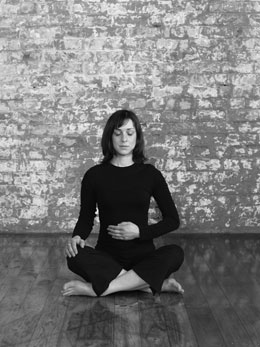
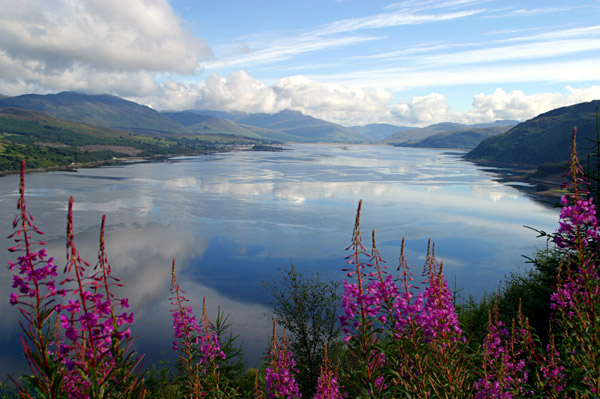
Because of the Day that is today, two works from different periods in Irish history, a far cry from some of the twee sentimental blessings you will see attributed to Ireland on this day.  The first,  a simple but beautiful morning prayer for strength and protection,  is attributed to Saint Patrick himself. It draws into the person the strength and stability which nature has  –  the calm depths of the sea, the firm constancy of the mountains. The second, by John O’ Donohue, has a similar theme, praying that the strength seen in nature be “an invisible cloak” in times of difficulty. Both give us an inspiration for a simple practice. While sitting  we bring to our minds eye the solidity of a mountain or the calmness of the ocean. We stay with these for the period of our sitting, becoming, in one sense, the mountain of the ocean, seeing their unchanging nature despite changing weather or surface turbulence.  Meditating like this works particularly well when we feel pulled in many different directions or momentarily out of control as it allows us to attach our inner sense with the unchanging aspects of the natural world.

We see in both pieces the inspiration which Irish spirituality found in the natural world. In the Celtic mind the space between nature and the other world was always very close, and our inner self could be nourished every day not in church but right there on the land, in every field and on every hilltop. Their sense of self was connected to the landscape, which gave to every person an inner geography. As some writers have said, nature for them was a “thin place”, where the space between the holy and the ordinary is very thin and it is easier to connect with our true self. It helps, in mindfulness terms, to come home to the present, and see that ordinary experience is whole and complete,  and that the holy becomes ordinary – this step, this flower, this conversation, this life.

The Breastplate of Saint Patrick

I arise today, through the strength of heaven:
Light of sun
Brilliance of moon
Splendour of fire
Speed of lightning
Swiftness of wind
Depth of sea
Stability of earth
Firmness of rock.

John O Donohue, Beannacht (“Blessing”)

On the day when the weight deadens
on your shoulders and you stumble,
may the clay dance to balance you.

And when your eyes freeze behind
the grey window and the ghost of loss
gets in to you,
may a flock of colours, indigo, red, green, and azure blue
come to awaken in you a meadow of delight.

When the canvas frays in the currach of thought
and a stain of ocean blackens beneath you,
may there come across the waters
a path of yellow moonlight to bring you safely home.

May the nourishment of the earth be yours,
may the clarity of light be yours,
may the fluency of the ocean be yours,
may the protection of the ancestors be yours.
And so may a slow wind work these words
of love around you, an invisible cloak to mind your life.

La Fhéile Padraig sona dibh! A Happy Saint Patrick’s Day to you.