Getting to know our fears well

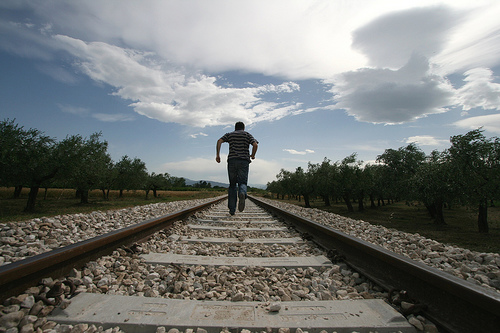
Finding the courage to go to the places that scare us cannot happen without compassionate inquiry into the workings of ego…… Flexibility and openness bring strength ……. running from groundlessness weakens us and brings pain. But do we understand that becoming familiar with the running away is the key? Openness doesn’t come from resisting our fears but from getting to know them well.

Pema Chodron, The Places That Scare You: A Guide to Fearlessness in Difficult Times,

Learning from the less pleasant moments

It is essential to learn to confront the less pleasant aspects of existence. Our job as meditators is to learn to be patient with ourselves, to see ourselves in an unbiased way, complete with all our sorrows and inadequacies. We have to learn to be kind to ourselves. In the long run avoiding unpleasantness is a very unkind thing to do to yourself. Paradoxically, kindness entails confronting unpleasantness when it arises. When you are having a bad time, examine that experience, observe it mindfully, study the phenomenon and learn its mechanics. The way out of a trap is to study the trap itself, and learn how it is built. You do this by taking the thing apart, piece by piece. The trap can’t trap you if it has been taken to pieces. The result is freedom.

Bhante Gunaratna, Mindfulness in Plain English

Lessons in every season

Ah, world, what lessons you prepare for us,
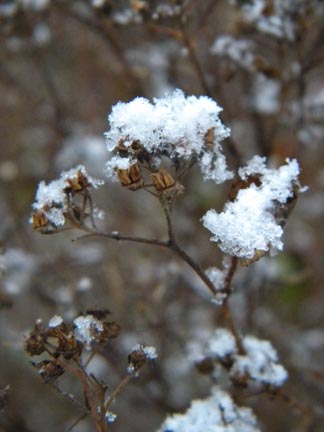
even in the leafless winter,
even in the ashy city.
I am thinking now of grief, and of getting past it;

I feel my boots trying to leave the ground,
I feel my heart pumping hard. I want

to think again of dangerous and noble things.
I want to be light and frolicsome.
I want to be improbable beautiful and afraid of nothing,
as though I had wings.

Mary Oliver, Starlings in Winter

A winter grace

Authenticity is the expression of what is genuine and natural. It commands great respect because, unfortunately, it is so rare. The desire to be accepted, or to engage in competition and comparison, drives us to limit our behavior to what falls within narrowly prescribed, predictable norms. Ridding ourselves of old patterns and accessing the authentic self are entry ways to freedom and the domain of wisdom. In fact, as we discover how to befriend these processes, ageing and renewing our character can be what Carl Jung called, “A winter grace.” Jung believed that if we do not develop inner strength as we age, we will become defensive, dogmatic, depressed, resentful, and cynical. Our homeland of authenticity is within, and there we are sovereign. Until we rediscover this ancient truth in a way that is unique for each of us, we are condemned to wander, seeking solace in the outer world where it cannot be found.

Angeles Arrien, The Second Half of Life

Trusting, even when our energy is low

There seems to be an expectation today that we should always be in good mood, and unhappiness is taken as a sign that something is wrong. Therefore we are continually bombarded in advertising with images of smiling and cheerful people and families.  When we find that the reality of our day-to-day encounters with life involves occasional challenges or simply ordinary routine, we can be tempted to think that something is wrong. The prevailing model has no place for the dips in mood or even depressions that are a normal part of life and which can be seen in the cycles of nature. We have to learn not to fear those moments when we do not feel completely in control or lose our sense of direction for a while. Often our psyches are wise and know when they need to rest.  As Jung states here, the lack of energy is marking a period of transition as the energies needed for growth are stored for the future and  this is felt as a lack of energy in the present. This can happen over a weekend or over months or even years. What I have learned in listening to people on their journey is to hold a space and trust, even though the meaning of what they are going through is not clear just yet.

There are moments in human life when a new page is turned. New interests and tendencies appear which have hitherto received no attention, or there is a sudden change of personality. During the incubation period of such a change we can often observe a loss of conscious energy: the new development has drawn off the energy it needs from consciousness. This lowering of energy can be seen most clearly before the onset of certain psychoses and also in the empty stillness which precedes creative work.

Jung, The Psychology of the Transference, CW 16.

Seeing things differently

Being lost is not at all a bad thing – if you know you’re lost and you know how to benefit from it spiritually. Most of us consider being lost a bummer, highly undesirable or even terrifying. We all have important things to do, there’s not enough time in the day as it is, thank you, and getting lost is a major fly in the ointment of success, a monkey wrench in the gearbox of progress. In the Western world, where “progress is our most important product,” we are encouraged from our earliest years to know exactly where we are at all times and precisely where we are going. Yes, such knowledge is often desirable if not necessary, but not knowing is of equal benefit. Indeed, the deepest form of wandering requires that we be lost.

Imagine yourself lost in your career or marriage, or in the middle of your life. You have goals, a place you want to be, but you don’t know how to reach that place. Maybe you don’t know exactly what you want, you just have a vague desire for a better place. Although it may not seem like it, you are on the threshold of a great opportunity. Begin to trust that place of not knowing. Surrender to it. You’re lost. There will be grief. A cherished outcome appears to be unobtainable or undefinable. In order to make the shift from being lost to being present, admit to yourself that your goal may never be reached. Though perhaps difficult, doing so will create entirely new possibilities for fulfillment.

Bill Plotkin, Being Lost