Things we are not aware of

When an inner situation is not made conscious, it appears outside as fate. That is to say, when the individual … does not become conscious of his inner opposite, the world must perforce act out the conflict.

C.G. Jung

A lot of the time, we are not fully conscious of everything that is going on within us; our unlived life, or the parts that have been formed by the unlived lives of others,  is out of sight but exercising influence over our choices. We can see this sometimes when we look back at decisions made or life choices and wonder why we ended up in a certain place. Or when we see repeating patterns in our relationships. Jung suggests that if we do not attend to what is going on inside us, things or people appear in our outer lives in accord with that inner dynamic, and the outer choices we make reflect this inner drama. He suggests that the more we ignore the inner issues, the more we act them out in the world  around us. If we do not do this work, we risk remaining on the surface of life, rather than than incorporating our opposites into healthy choices.

If it ain’t broke….

Some similar ideas to the post yesterday, taken from the excellent blog Medicine to live By!

It strikes me that for many of us, our “self-work” becomes a full time job and overtakes some of the rest of the naturalness of life.  I know because I have long been a “professional evolver,” one who is in constant analysis of myself and what this or that situation in life has taught me.  It’s taught me a lot, but when I get too stuck in “how to heal and perfect my own nature,” I become a white bread and mayonaise, boring, stiff version of my colorful, goofy, tender, insecure self–the one who’s a real human being.

I don’t know about you, but I find myself, far too often, responding to myself or to someone else in my life with these pre-digested strategies for wellness when the best medicine might be simply to go out and live fully and robustly, noticing the many dimensions of life and filtering a little less of ourselves.   Seeking the “proper experiences,” whether the best meditation training, the most inspiring yoga class, is not the right prescription for happiness if we’ve failed to use it to give us flexibility in life.

Malynn Utzinger, “The Tyranny of Self Help” www.doctormalynn.com

Spiritual Bypassing

Following yesterday’s reflection on the need to assimilate the feminine and masculine dimensions within ourselves, another post on integrating the different aspects of our lives. John Welwood has written some excellent books on the links between relationships, psychology and spiritual growth. He draws attention to the need to ground our selves in the vulnerability of our human condition, not run away from it.  He reminds us that we exist on different dimensions, including the key one of close relationships with other people, and notes the difficulties we can have in bringing our full awareness to that area.   A key concern of his is understanding how we relate to love. One term he uses is “spiritual bypassing”, which happens when we use the spiritual life to run away from our actual life, or from human, psychological work which needs to be done.

While many teachers are extremely warm, loving, and personal in their own way, they often do not have much to say about the specifically personal side of human life.  Coming out of a philosophy based on traditional Asian societies, they may have a hard time recognizing or assessing the personal, developmental challenges facing Western students. They often do not understand the pervasive self-hatred, shame, and guilt, as well as the alienation and lack of confidence in these students. Still less do they detect the tendency toward spiritual bypassing— using spiritual ideas and practices to sidestep personal, emotional “unfinished business,” to shore up a shaky sense of self, or to belittle basic needs, feelings, and developmental tasks, all in the name of enlightenment. And so they often teach self-transcendence to students who first of all need to find some ground to stand on.

In this way, spirituality becomes just another way of rejecting one’s experience. When people use spiritual practice to try to compensate for low self-esteem, social alienation, or emotional problems, they corrupt the true nature of spiritual practice. Instead of loosening the manipulative ego that tries to control its experience, they are further strengthening it.

Sunday quote

Do not expect full realization;

Simply practice every day of your life.

Milarepa

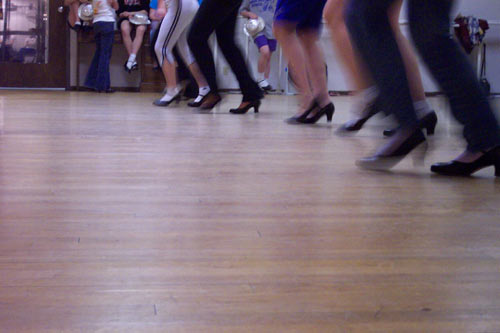
Life Dances

Life dances and you have to dance with it, whether it is taking you on a wonderful ride or is stepping on your toes. This is the necessary price and transcendent gift of being incarnate; alive in a body. But it is just life dancing. Life will move you in the rhythm and direction of its own nature. Each moment is a fresh moment in the dance, and if you are lost in clinging to the past or clinging to your fears of the future, you are not present for the dance.

Philip Moffitt

Within each one of us lies great potential, the potential to relate ot others and this world in a more authentic way.  However, not every potential is fulfilled. Sometimes, it is a fear of change or a fear to take a risk which blocks the development,  creating  a narrowness of attention and a loss of confidence. We can doubt whether we have the strength to do what is before us, or we sometimes can be held back by what others or convention dictates. Courage is needed to reach our full potential and allow situations emerge. Developing our future happiness can demand that we take the risk to engage with our lives.

Every day we unconsciously take refuge in something that we think will offer us security and protection. It can be fear, as it seems better not to reach out or not to try new things.  It is easier to remain in our comfort zone, preferring to avoid possible scenarios. It has been shown that whether we make positive – “approach goals” –  or  mainly negative, – “avoidance goals” –  can lead to the difference between a life that is thriving and a life that is focused on surviving. Often when a future outcome is not clear, the first instinct is to move away. As recent posts stated, we can be dominated by experiences in the past, conscious or unconscious , or the fear of the future. We can get stuck, unable to see the rich, fluid potential of now.

How can we create a space where we’re not trapped by negativity and respond more fully to the richness offered in this moment? We begin by settling the mind, settling the body, and getting in touch with the breath. When we stay in the here-and-now, we can see the stories that arise continually much more clearly. Now is now. There is not another now. If we realize that, we stop putting things off and engage in our life in a more wholehearted way.

Meditation helps our mind to not dwell on what might happen or on what we have lost. If we practice setting our minds on those things all the time, we can miss the fact that each moment is fresh, offering a new start.   In meditation we strengthen confidence in our natural mind, which is limitless. Working in this way reduces the fear of the future, allowing us create ourselves afresh.  We step out onto the floor and take the chance. We accept the other’s hand. We dance. The greatest sadness is not the possibility that we will appear foolish;  it is that we will not get up off our seat.
Stories 1: The Myths that sustain us

We are always guided by some myths, whether we are aware of it or not. From an early age we gather the elements which will come together as our personal myth. In our first relationships of love we get the attitudes and information which will determine the story we tell ourselves about the trustfulness of others. In this way,  our basic sense of self is consolidated in the first two or three years of life.

Dan McAdams*, Professor of Psychology and Professor of Human Development and Social Policy at Northwestern University, has studied the stories which we tell ourselves as we make our way through life. He says that we have already by age three established a narrative tone, which lasts with us into adulthood. This narrative tone can be optimistic, stating that the world is trustworthy, predictable, knowable and good, or it can be pessimistic, believing that the world is unpredictable and unsafe, and that stories will end up with unhappy endings. Thus, as yesterdays post said, deep down we see life as fundamentally friendly or as frightening. This narrative tone is the most pervasive element underlying  the personal myth which we use to guide us throughout our adult years, and gives our life a unity. For some people this unity can take the shape of an ongoing worry or fear, for others a belief that hope will prevail.

*Dan P. McAdams, The Stories we live by: Personal myths and the making of the self