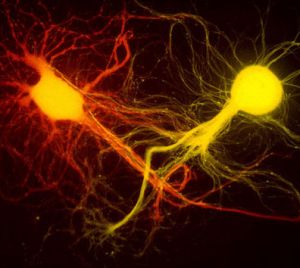
Noticing the effects of a frantic age 3: Changing the Brain?

There is no doubt that the effects of  online and technology usage on the brain will be the subject of a great deal of research in the years ahead. Such research is in its early days, and few conclusions can be drawn on the basis of it. One person who is looking at it is UCLA  psychiatry professor Gary Small – Director of the Memory and Ageing Research Centre at the University of California, Los Angeles, and a specialist in the effects on the brain of the ageing process – who was named by Scientific American magazine as one of the world’s top innovators in science and technology.  In 2007 he began research which  found that even moderate internet use – subjects were asked to spend an hour a day online, searching the Internet – changed the activity patterns in the brain dramatically. This news was greeted initially with delight, seeing that internet surfing can make the brain sharper and more intelligent, and a potential help in the aging process. In itself, there is nothing strange about this as temporary synaptic rewiring happens whenever anybody learns anything. As Dr. Small states: It’s a basic principle that the brain is very sensitive to any kind of stimulation, and from moment to moment, there is a very complex cascade of neurochemical electrical consequences to every form of stimulation. If you have repeated stimuli, your neural circuits will be excited. But if you neglect other stimuli, other neural circuits will be weakened.

But, as Dr Small continues his research, the problems implicit in the second part of that statement are becoming more clear. He has noted that other neural circuits, and other human behaviours –  such as social skills and communication –  can be weakened as we strengthen processes in other parts of the brain. For example, the more we reduce our concentration by expecting information to be entertaining, by concentrating on soundbites and by using short messages such as those favoured by Twitter, the less our ability to concentrate on material that requires deeper processing.  As Dr. Elias Aboujaoude, director of Stanford University’s Impulse Control Disorders Clinic states: The more we become used to just sound bites and tweets, the less patient we will be with more complex, more meaningful information. And I do think we might lose the ability to analyze things with any depth and nuance. Like any skill, if you don’t use it, you lose it. This idea seems to be backed up by Dr Patricia Grenfield, who reviewed more than 40 studies of the effects of different  types of media on intelligence and learning ability. She came to the conclusion that  every medium develops some cognitive skills at the expense of others. Because we use the internet and other hand-held devices much more now, we have seen the widespread and sophisticated development of visual-spatial skills. But this advantage can mean the weakening of our capacity for the kind of deep processing that underpins mindful knowledge acquisition, inductive analysis, critical thinking, imagination, and reflection.

These processes have led Dr. John Ratey, Clinical Professor of Psychiatry at Harvard Medical School, to use the term “acquired attention deficit disorder” to describe the way technology is rewiring the modern brain. It reminds me of Jon Kabat Zinn’s phrase which I heard some years ago, that from the point of view of Mindfulness practice, the whole of modern society suffers from ADD. Dr Small has noted what too much time spent online can do to other mental processes, such as the ability to maintain eye contact, or interact easily with others, but other studies have linked voluntary and excessive online use to depression, poor school performance, increased irritability and ordinary Facebook use to lower self-esteem.

A new study published this year goes even further, and suggests that  excessive time online rewires structures deep in the brain, and indeed, seems to shrink surface-level brain matter in relation to excessive amounts of time spent online. It looked at 18 college-age students who spent long hours online, up to 10 hours a day. They were compared to 18 healthy controls who spent less than two hours a day online. All of the subjects were subjected to MRI scans of the brain. The results of the study were that several small regions in the brains’ of the excessive online users shrunk, in some cases as much as a 10 to 20%. The affected regions included the dorsolateral prefrontal cortex, rostral anterior cingulate cortex, supplementary motor area and parts of the cerebellum. The longer the usage, the more pronounced the tissue reduction. The researchers suggest this shrinkage could lead to negative effects, such as diminished goal orientation. With its small sample size, this research can only suggest possible directions for future, more in-depth study. However, taken with the reflection from other philosophical and mindfulness perspectives, it challenges us to reflect on the role new technologies are playing in all our lives.


Noticing the effects of a frantic age 2: The Sabbath Manifesto

One response to the increasingly frantic and plugged-in character of today’s world can be seen in an initiative entitled “The Sabbath Manifesto”. This manifesto was developed by a small group of artists, writers, filmmakers and media professionals who began to feel the need to respond to an increasingly fast-paced way of living.  The idea developed to set aside one day of the week – based on the ancient notion of Sabbath –  to unwind, unplug, relax, reflect, get outdoors, and spend time with loved ones. They created Ten core Principles to guide their  efforts on those days, principles such as “Find Silence“, “Avoid Commerce“, “Get Outside”, “Connect with Loved Ones” and “Avoid Technology“. Their efforts to promote reflection on taking periodic vacations from the technology jungle have met with some media interest, and they promote a “National Day of Unplugging” , the next one taking place on March 23-24, 2012. They are not beyond using technology to help them, recommending an app to help people take a “digital detox”. Their site is an encouragement to all to reflect on the role which technology is playing in their lives.

That such a reflection is necessary can be seen in anecdotal reports from some therapists about couples who are so busy that they communicate almost entirely through text, email and phone messages and of families where each member may be in the same room but everyone is on a separate screen, be it a laptop checking mail, or computer gaming, or texting or watching tv.  Another increasing phenomenon is that of checking more than one screen at a time, such as checking email or texting while watching television or a movie. Further evidence of technology’s effect can be seen in ongoing research on the brain, which I will look at in the next post.

www.sabbathmanifesto.org/about

Taking time to rest today

Resting is a very important practice; we have to learn the art of resting. Resting is the first part of meditation. You should allow your body and your mind to rest. Our mind as well as our body needs to rest. The problem is that not many of us know how to allow our body and mind to rest. We are always struggling; struggling has become a kind of habit.

When an animal in the jungle is wounded, it knows how to find a quiet place, lie down and do nothing. The animal knows that is the only way to get healed-to lay down and just rest, not thinking of anything, including hunting and eating.  What it needs is to rest, to do nothing, and that is why its health is restored.  In our consciousness there are wounds also, lots of pains. Our consciousness also needs to rest in order to restore itself. Our consciousness is just like our body. Our body knows how to heal itself if we allow it the chance to do so.

Thich Nhat Hahn

New Studies on the Effects of Mindfulness meditation 3

Sometimes the studies on MBSR can be quite small and therefore it is hard to make very solid claims based on the research. Different ways of doing research can be  used and this makes it sometimes difficult to compare results. In order to overcome this problem, a new study was conducted, looking at all the studies carried out on MBSR and MBCT in the past 30 years, but using only the more rigorous, randomized,  trials which used control groups,  and only those studies with a minimum of 33 participants.

The research team, led by Lone Fjorback,  who works at the Research Clinic for Functional Disorders and Psychosomatics, Aarhus University Hospital in Denmark,   performed a systematic review of all the articles published with these criteria. Using this type pf meta-analysis, they found that they showed that MBSR was beneficial for reducing stress and distress, alleviating depressive symptoms, and improving anxiety in both clinical and non-clinical populations.  Looking at MBCT, they found that it was shown to reduce the risk of relapse in depressive patients who had recovered from three or more previous episodes of depression.

The researchers concluded that Mindfulness Based Stress Reduction has a significant evidence base for its approach towards improving mental health for both clinical and non-clinical populations.

Fjorback, L. O., Arendt, M., Ornbol, E., Fink, P., & Walach, H.  (2011).  Mindfulness-based stress reduction and mindfulness-based cognitive therapy – A systematic review of randomized controlled trials.  ACTA Psychiatrica Scandinavica, Volume 124, Issue 2, pages 102–119, August 2011

New studies on the effects of Mindfulness meditation 2: Exam stress

Another recent study on the beneficial effects of a mindfulness meditation programme, this time MBCT,  for university students facing exams. It has been found that students, under the stressful conditions of exams and the need to successfully complete their studies, are prone to depression, anxiety, automatic thoughts, and dysfunctional attitudes. This can lead to much lower scores and under-achievement.

To test this non-clinical population, a controlled study was conducted in Iran, with participants randomly assigned either to take part in an 8-week MBCT Course or remain in a waiting list control group. The MBCT group followed the standard Mindfulness programme, including 40 minutes of personal practice each day for the duration of the Course. They were assessed at 5 different points: pre-test, session 4, session 8, first follow-up (1 month) and second follow-up (6 months).

The results found that mindfulness was effective in helping the students to deal with their anxiety and depressive feelings before, during and after stressful circumstances. Furthermore, the reductions in negative automatic thoughts and dysfunctional attitudes were significant.

This is an interesting study because of the population and provides evidence that Mindfulness interventions might be of significant use in supporting well-being in students and others who are susceptible to experience anxiety and depression in real life situations as well as improving performance at crucial times.

Hossein Kaviani , Foroozan Javaheri , Neda Hatami, “Mindfulness-based Cognitive Therapy (MBCT) Reduces Depression and Anxiety Induced by Real Stressful Setting in Non-clinical Population” International Journal of Psychology and Psychological Therapy, Volume 11 Num. 2,  June 2011.

New studies on the effects of Mindfulness meditation 1.

An interesting study has been recently published on the effects of a Mind-Body approach – namely, mindfulness meditation  – on Irritable Bowel Syndrome (IBS). IBS is characterized by chronic pain in the abdomen, discomfort and a sense of bloating. Although the exact cause the complaint is still unknown, stress seems to be involved and there is no question but it dramatically affects the quality of the sufferer’s life. This study was a Randomized Controlled Trial involving 74 female IBS patients. They were split into two groups, both of which met for 8 weeks,  including a half day retreat. For the 8 weeks one group did the Course in  mindfulness meditation,  and the other group followed an IBS support group programme.

Following the eight week intervention, the patients who attended the mindfulness meditation training reported a 26.4 % decline in the severity of their symptoms, compared to a 6.2% decline in the support group participants. At a three-month follow-up, the mindfulness meditation group’s reduction increased to 38.2%, while the support group reduction increased to 11.8 %. The researchers concluded that “mindfulness meditation has a substantial therapeutic effect on bowel symptom severity, improves health-related quality of life, and reduces distress”, with the beneficial effects persisting for at least 3 months after group training.

This study is another piece of evidence that mind-body therapies can be used as effective adjuncts to conventional medical treatment for a number of common clinical conditions, including, among others, rheumatoid arthritis, fibromyalgia, headaches, insomnia, and chronic low back pain.

Gaylord, S., et.al., “Mindfulness Training Reduces the Severity of Irritable Bowel Syndrome in Women: Results of a Randomized Controlled Trial” The American Journal of Gastroenterology, June 21, 2011.