Problems and Inconveniences

bberry

If you break your neck, if you have nothing to eat, if your house is on fire, then you have a problem.

Everything else is an inconvenience.

Life is an inconvenience.

Learn to separate the inconveniences from the real problems.

You will live longer.

Robert Fulghum, American author and Unitarian Minister

Uh-Oh: Some Observations from Both Sides of the Refrigerator Door

Fail better

File:Chalciporus piperatus LC0182.jpg

One of the biggest challenges in life is how we deal with disappointment:

Ever tried. Ever failed. No matter. Try Again. Fail again. Fail better.

Samuel Beckett, Worstword Ho, 1983

So what I’m saying is: fail. Then fail again, and then maybe you start to work with some of the things I’m saying. And when it happens again, when things don’t work out, you fail better. In other words, you are able to work with the feeling of failure instead of shoving it under the rug, blaming it on somebody else, coming up with a negative self-image — all of those futile strategies.

“Fail better” means you begin to have the ability to hold what I call “the rawness of vulnerability” in your heart, and see it as your connection with other human beings and as a part of your humanness. Failing better means when these things happen in your life, they become a source of growth, a source of forward, a source of, “out of that place of rawness you can really communicate genuinely with other people.” Your best qualities come out of that place because it’s unguarded and you’re not shielding yourself. 

Pema Chodron

photo jorg hempel

Inner confidence

File:A boy sits at the Pentagon Memorial Sept 120911-D-NI589-162.jpg

Suffering sometimes arises when we seek outside ourselves – in others or in achievements – what has to be found within:

I have nothing to defend,  for all is of equal value to me.

I cannot lose anything in this
place of abundance
I have found.

Catherine of Siena,  Catholic Saint and mystic, 1347 – 1380

Not always rushing

File:Wicklow Mountains National Park Glendalough Valley 04.JPG

The Buddhists define spirituality as shamatha, or “tranquil abiding.” We are drawn to a spiritual path out of a desire for tranquil abiding. Just saying the words feels wonderful, like an antidote to the fear, unhappiness, and anxiety with which we often approach life. Fear of what? Fear of our basic human condition. If we stop long enough to take a quiet look at our situation, we’ll hear the tick-tick-ticking of time’s impersonal progress. For each of us, time’s march breeds a different fear: for some it is the terror of death; for others it is the worry of a life unlived; for some it signifies the loss of what we hold dear and familiar. These are not thoughts with which we usually enjoy lingering. Spirituality invites us to linger. It gives us a way of standing naked in the truth of the human condition; meeting it head-on with curiosity and openness. This is serious work, but the mysterious outcome of the work is a lightness of heart — what we call happiness.

Elizabeth Lesser, The Seekers Guide: Making your life a Spiritual Adventure

photo of Glendalough in autumn by  J.-H. Janßen

Keep knocking

doorIt must be said that things do not always work out as we would like. This teaches us patience and trust.
However, sometimes we get news of  reward after long effort that is richly deserved. We don’t expect it, find it hard to believe,  and yet –  as Heaney says –  it is like a gust of wind that can catch “the heart off guard and blow it open”. This teaches us the unforced nature of  joy:

Work. Keep digging your well.
Don’t think about giving up from work.
Water is there somewhere.

Keep knocking, and the joy inside
will eventually open a window
and look out to see who’s there.

Rumi

Stop pushing

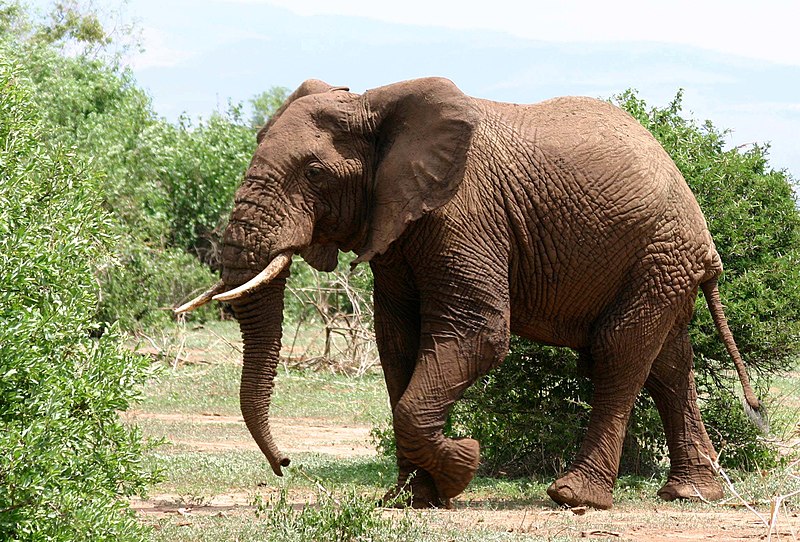
File:African Elephant walking.JPG

In one of his insightful talks Zen master Shunryu Suzuki said that in your practice you should walk like an elephant. “If you can walk slowly, without any idea of gain, then you are already a good Zen student.” There’s a mantra for your religion: Walk like an elephant. It means to move at a comfortable pace. No rushing toward a goal. No push to make it all meaningful.

Thomas Moore, A Religion of One’s Own: A Guide to Creating a Personal Spirituality in a Secular World

photo charlesjsharp

with thanks to the always inspiring and nourishing blog https://davidkanigan.com/