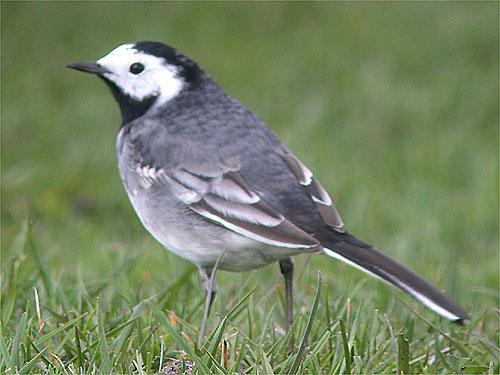
 Had some lovely visitors to the garden this morning, as an adult wagtail fed its chicks, probably not long out of the nest. The young ones followed the adult, waiting for food and running across the grass when they saw some being offered. We do not normally get wagtails visiting the garden, even allowing for the fact that they keep a low profile when nesting. However, this year we are extremely lucky with the amount of birds we see, especially the blackbirds who are nesting in the trees at the end of the garden. After the thunderstorms of the past two days they love to fill the air with song.
The instinctive tenderness of the adult’s care for the chick was very moving. It seems to me that, when we are not afraid, we have a natural movement of kindness and compassion towards others. It is only when fear enters into the equation that we withdraw and hold back, and our natural desire for caring connection is blocked and gets confused. At some level, even though we may not be aware of it, this causes a division within, some kind of cognitive dissonance and we deal with this by blaming the other or by justifying ourselves. These stories simply mean that we stay cut off from our deep self and from others, ensuring that we will never be fully happy as most of the energy from that part of our life or our history goes into splitting and withdrawal rather than into kindness.
Mindfulness practice is about cultivating a space in our minds and a harmony with our inner capacity for compassion. This means noticing when the mind is fearful or defensive. When we see this it is a good practice is to focus on the warmth of our own kindness and direct it first and foremost towards ourselves. We need to have the same tenderness that the mother bird demonstrated this morning towards the hungry, weak and frightened parts of our own heart. In this way we gradually find strength not to automatically run away from the fear when it arises. We can let go of what we carry within and relax in the more natural condition of love and trust.
The only reason we don’t open our hearts and minds to other people is that they trigger confusion in us that we don’t feel brave enough or sane enough to deal with. To the degree that we look clearly and compassionately at ourselves, we feel confident and fearless about looking into someone else’s eyes.
Pema Chodron
 To free ourselves from our neurotic ego is ultimately to accept the conditions of existence and to see ourselves not as victims or opponents of the givens of reality, but as adults who face up to them honestly. These givens include the following: things change and end; life is not always fair; we pay for growth with suffering; things do not always go according to plan; people are not always loyal or loving.